
Managing your money well means knowing what tools to use. Comparing financial planning and investment management helps you see what supports your current goals better. One is about organising your finances. The other focuses on growing your investments. Together, they create long-term financial stability, particularly in the context of Portfolio Management vs Financial Planning.
What is the Real Difference Between Portfolio Management and Financial Planning?
Understanding the difference between financial planning and investment portfolio services is simple. Financial planning covers your entire financial life. It includes saving, budgeting, taxes, insurance, and planning for major milestones like a home purchase or retirement. Portfolio management deals only with the investments you choose to grow your savings.
When you compare financial planning and investment management, you see that one gives you direction and the other drives growth. They work best when used together.
Understanding the nuances of Portfolio Management vs Financial Planning can significantly impact your financial strategy.
At a Glance: Portfolio Management vs Financial Planning
| Feature | Financial Planning | Portfolio Management |
| Primary Goal | Help you reach life goals | Grow your investments |
| Scope | Budgeting, taxes, savings, insurance, estate and investing | Investment selection and performance |
| Time Horizon | Long term, usually many years | Short- or long-term, based on your strategy |
| Key Question | How can I use my money to reach my goals | How can I make my investments perform better |
| Deliverable | A clear step-by-step financial plan | A well-managed portfolio that suits your goals |
What is the Role of a Financial Planner?
A financial planner works with you to understand your income, expenses, savings, and goals. They build a custom plan that supports every area of your financial life.
What Financial Planners Do
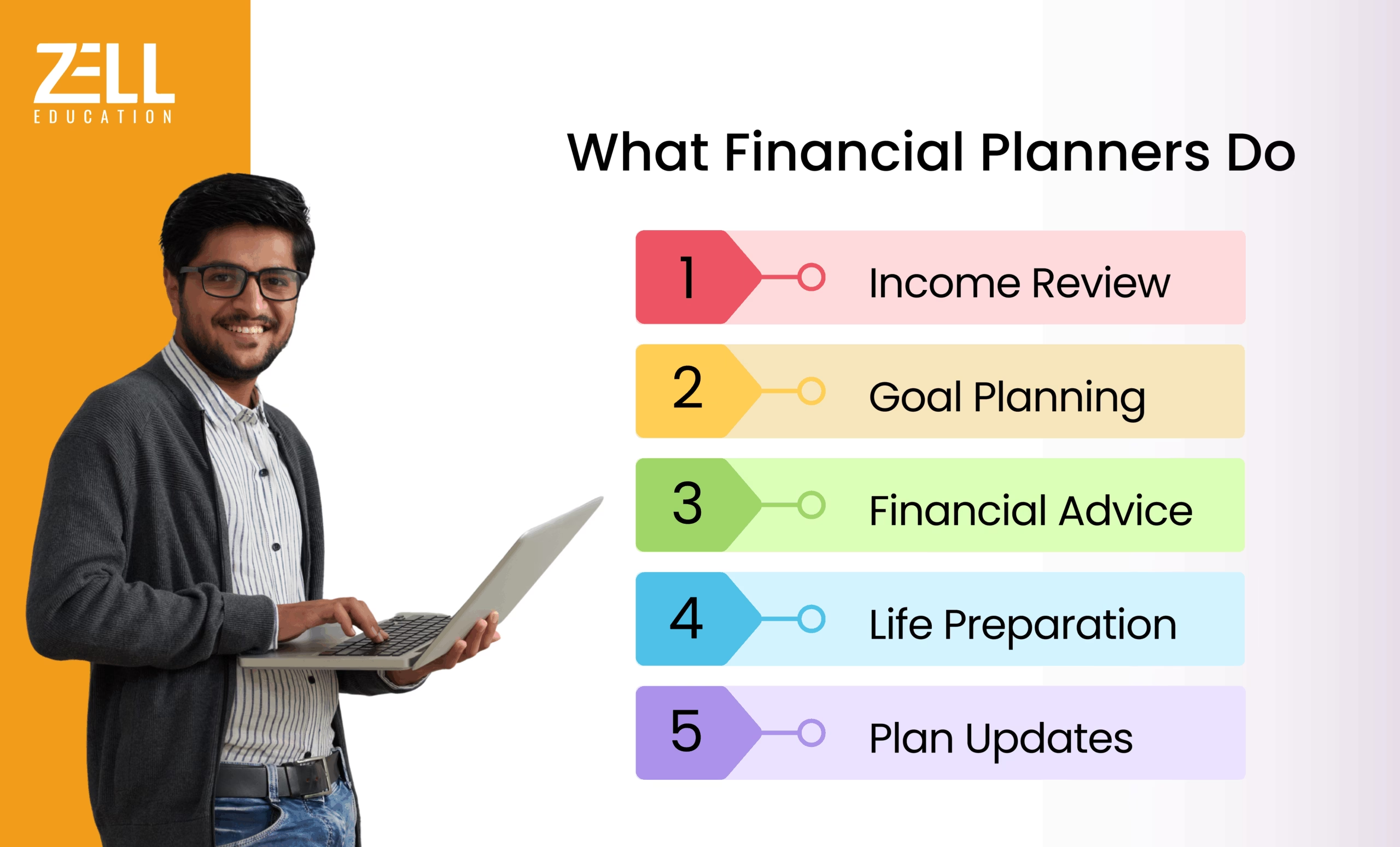
- Review your monthly income and spending.
- Build a plan for saving towards specific goals.
- Advise on taxes, insurance, and retirement.
- Prepare for life events like education or relocation.
- Keep your plan up to date as things change.
Core Benefits of Financial Planning
- Clear financial direction.
- Covers all your financial needs
- Helps you achieve both short-term and long-term goals
- Reduces stress by giving you control and clarity
What is the Role of a Portfolio Manager?
Portfolio managers handle your investments. They help you choose the right mix of assets and adjust things based on market conditions and your risk tolerance.
What Portfolio Managers Do
- Build a balanced mix of assets that match your goals.
- Choose investments like mutual funds, stocks, or bonds.
- Adjust the portfolio based on how markets are performing.
- Aim to increase returns while managing risk.
- Save you time by making investment decisions on your behalf.
Core Benefits of Portfolio Management
- Professional strategy for growing your wealth.
- Reduced risk through smart allocation.
- Consistent performance checks
- Peace of mind for people who do not want to track markets daily.
Curious About Portfolio Management vs Financial Planning?
How to Choose between a Financial Planner and a Portfolio Manager?
Before you decide which expert to work with, think about where you are in your financial journey and what you need most right now. Do you need someone to help you shape a clear plan for all parts of your finances, or do you need an expert to focus on growing the money you’ve already saved?
The scenarios below will help you figure out whether to start with a financial planner, a portfolio manager, or both.
Consider Working with a Financial Planner If:
- Lack clarity about where your income is going each month
- A specific goal like buying a home or funding education is on the horizon.
- Support with budgeting, debt control, or saving strategies would ease your stress.
- Tax planning and insurance decisions feel overwhelming.
- A detailed plan for long-term financial wellness is missing.
A Portfolio Manager Might Be Right If:
- There’s already some money saved, and you’re ready to grow it.
- Confidence in selecting and managing investments is low.
- Researching market trends and assets feels overwhelming.
- Professional input could help align investments with your goals.
- A consistent, structured investment plan is what you’re aiming for.
The Integrated Approach When You Need Both
- Long-term financial stability is your priority.
- You’re juggling both short-term needs and future plans like retirement.
- A single source of clarity across planning and investing would simplify things.
- Life transitions like a career change, marriage, or a jump in income.
- Comprehensive guidance is needed for planning and execution alike
How the CFA Program Equips You for Careers in Portfolio Management and Financial Planning?
If you’re wondering what is CFA? It is the Chartered Financial Analyst program, one of the most valued credentials in global finance.
The CFA course prepares professionals to take on both types of roles. It includes deep learning in investment strategy, portfolio analysis, financial planning, and ethics. You will be trained to guide clients on budgeting, saving, and goal setting, while also building strong portfolios.
If you want to explore a career in either of these areas, check out Zell Education’s e-learning platform for full details on the CFA papers.
Planning to Accounting and Finance Career?
To Book Your Free Counselling Session
Conclusion
Choosing between financial planning and a portfolio growth strategy depends on what you need today. If your focus is on setting goals, reducing debt, or organising your finances, start with planning. If your money is ready to grow and you want expert guidance, portfolio services make sense.
Some people need one. Others need both. The real benefit comes from balancing long-term planning with smart investment decisions.
So instead of asking which one is better, ask yourself what you need right now or whether it’s time to combine structured money planning with portfolio expertise to build long-term stability.
That is how you win with money by making the choice between life planning and wealth-building, based on where you are in your journey.
FAQs on Portfolio Management vs Financial Planning
Should I start with financial planning or portfolio management?
Start with financial planning if you need help setting goals and organising your finances. Move to portfolio management once you’re ready to invest and grow your savings.
What is wealth management and how does it relate to portfolio management and financial planning?
Wealth management includes both planning and portfolio services. It may also include legal, tax, and estate guidance depending on your needs.
Which one costs more: portfolio management or financial planning?
Portfolio managers usually charge a percentage of assets. Financial planners may charge a fixed fee or hourly rate.
What is the main cost difference between financial planning and portfolio management?
Financial planning usually involves a flat or annual fee, depending on the service. Portfolio managers typically charge a percentage of the assets they manage for you.
What’s the difference between portfolio management and wealth management?
Portfolio management handles just your investments. Wealth management covers everything: investments, taxes, estate planning, and overall financial strategy.


Current Role
Co-Founder & CEO at Zell Education
Education
- ACCA – Association of Chartered Certified Accountants, Finance (2011 – 2014)
- Bachelor of Commerce (BCom), Financial Markets from H.R. College Of Commerce & Economics (2010 – 2013)
Location
Mumbai, India
Expertise
ACCA Certified
Why Zell?
- • Largest Provider for Global F&A Courses
- • 4.6 Google Review Rating
- • 1000+ Global Placement Partners
- • Placement Opportunities at the Big 4
- • 100+ Global & Indian Rank Holders
- • 100+ Faculty Network
- • 10,000+ Students Placed
Speak to A Career Counselor
Zell's 10th Anniversary Offer - Avail a 10% Scholarship