
Is it too late to pursue a CFA at age 40? Not at all. There is no strict CFA age limit, so anyone can start, provided they meet the eligibility criteria. The CFA age requirement is flexible, so it suits people changing careers or with work experience. Doing CFA Level 1 after 40 can open doors in investment banking, asset management, or corporate finance.
It also strengthens your skills and adds credibility to your profile. While the journey may feel challenging, experience can be an advantage. Age should never be a barrier. Your determination matters more than the age limit for the CFA course.
Age and Career Choices in Finance
Many people pause and ask: is it too late for CFA at age 40? The answer is no. Age doesn’t decide your career; curiosity does. But what is CFA? It’s a respected finance qualification for investment and financial professionals. The CFA age limit does not block anyone from starting.
The CFA course has no specific age limit for entry, and you can complete this qualification at any stage of your career! Therefore, whether it is to further develop your career or establish yourself as a financial professional in a new field, you are always welcome to learn!
Why Doing CFA Later Works:
- Builds strong financial knowledge, even mid-career.
- Shows commitment and passion to employers.
- Opens doors in investment, banking, and asset management.
- Gives a clear path to new opportunities and roles.
- Proves that age doesn’t stop learning or progress.
Got Questions Regarding Is It Alright to Do CFA Level 1 After 40?
Click Here for a Free Counselling Session
Understanding the CFA Program
The CFA program is for anyone who wants to grow in finance. It teaches investment, portfolio, and ethical skills. Level 1 starts with the basics, then it builds up. Many take it later in life and still do well. Employers value it around the world. It helps you understand finance better and opens doors to new roles. This program gives you confidence and helps you think through decisions better. Age isn’t an issue. Curiosity and effort matter far more.
What is CFA, and Why is it Valued Globally
CFA is a qualification for finance professionals. The course covers areas such as investments, portfolio management, and standards of ethics in finance. Employers across the world respect it. It shows knowledge, discipline, and practical skills. Many pursue it even later in their careers.
Key Points:
- Teaches practical skills used in real finance jobs.
- Acknowledged and highly regarded by employers worldwide.
- Encompasses investments, portfolio management and ethical standards.
- It helps you open new career doors and gain respect at work.
- It also shows that you are committed and disciplined, no matter your age.
Structure of CFA Levels and Exam Timeline
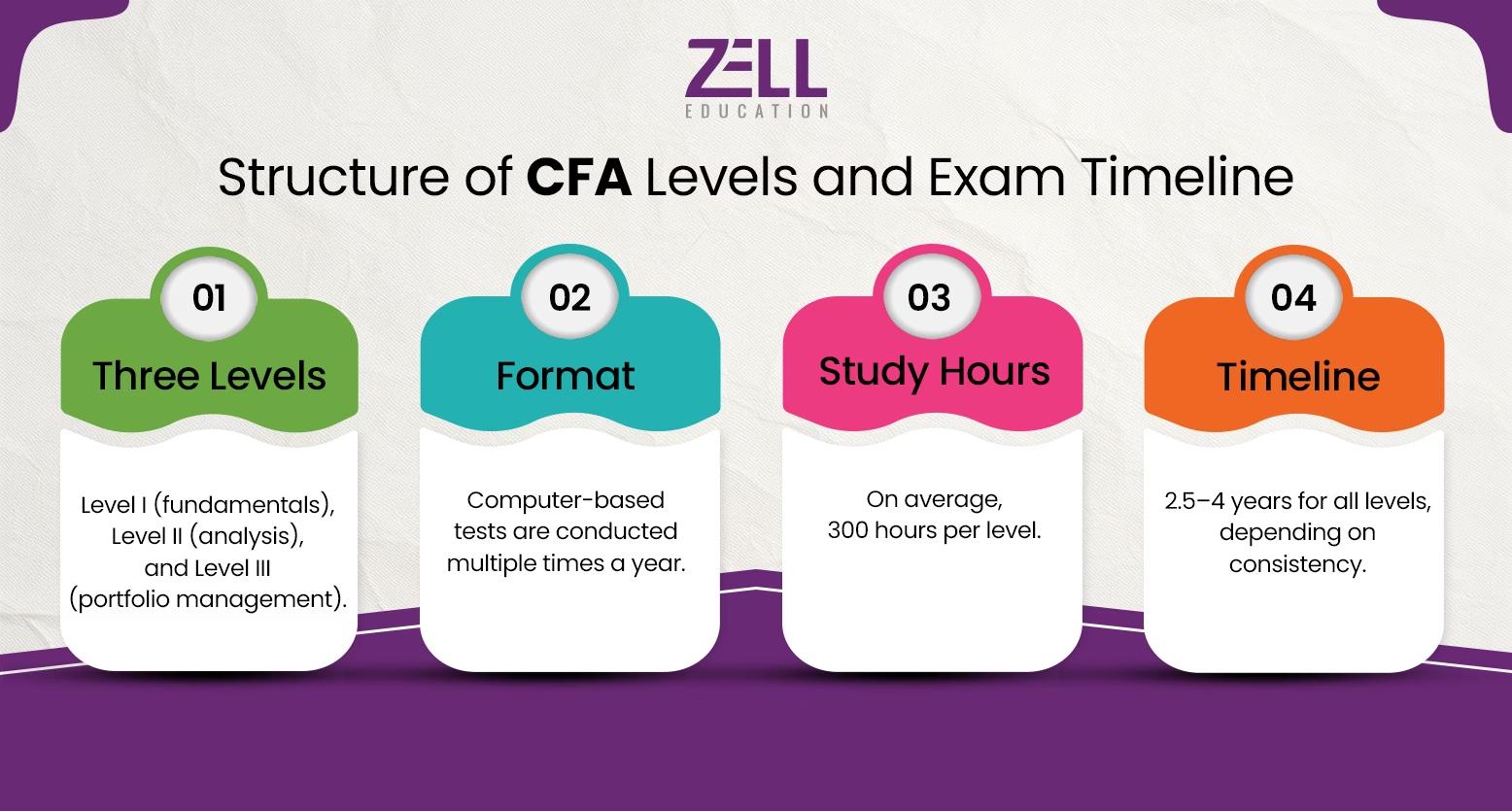
The CFA program has three levels. Each one takes you a step deeper into the world of finance. Level 1 builds your base, Level 2 tests how well you can apply what you’ve learnt, and Level 3 focuses on strategy and portfolio work.
Exams are held a few times a year, mostly in February, May, August, and November. You can plan your attempt around what suits you best. There’s an enrolment fee when you start, and separate fees for each level. Most people finish the course in about two to four years. It’s not easy, but it’s worth every bit of effort.
Source for CFA Structure – CFA Institute
Is 26 Too Late to Start CFA Level 1?
Starting CFA at 26 is far from too late. There is no strict CFA age limit, so the age limit for CFA course is flexible. The CFA age requirement mainly asks for a degree or relevant work experience. Many start in their twenties, thirties, or even later.
Learning at this stage can give you an edge in finance. It helps you learn more, feel confident, and gain respect at work. Your age doesn’t decide what you can achieve in your career. Even CFA at age 40 can open doors, so 26 is just the beginning. Focus, effort, and consistency matter more than the numbers.
Average Age of CFA Candidates
The average age of CFA candidates is usually in the late twenties to early thirties. There is no strict CFA age limit, so people of all ages can join. The CFA age requirement only asks for a degree or relevant work experience. Many individuals who choose to pursue the CFA do so around the age of 40 or later. The age limit for CFA course should not stop anyone motivated to grow. Experience often helps in understanding concepts better and applying them in real work.
Career Stage Considerations at 40
Turning 40 doesn’t mean slowing down. Many choose to learn new skills at this stage. CFA can be a strong option. Here’s why it works:
- A lot of people take CFA at age 40 to explore new paths or grow in their current roles.
- What you learn can be used directly in finance and management work.
- Years of experience make it easier to understand and use the concepts.
- There is not a definite age limit for the CFA program; you can be eligible at any age.
- Taking CFA at age 40 shows drive and commitment.
Benefits of Starting CFA in Mid-40s
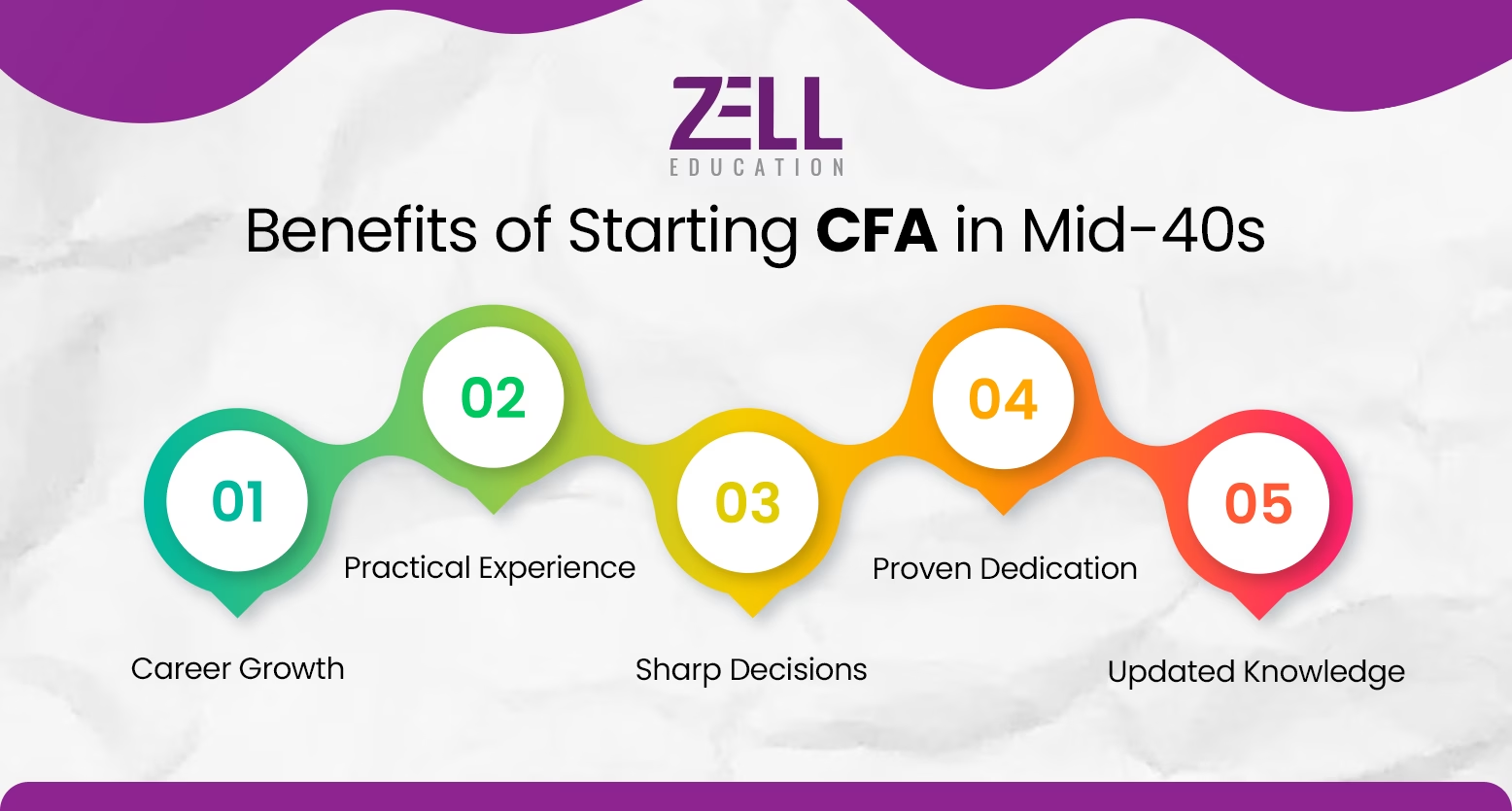
Starting CFA at age 40 might seem tough, but it can really pay off.
- It can open new career paths and opportunities.
- Your work experience helps make sense of the concepts.
- Learning at this stage sharpens decision-making skills.
- It adds credibility and shows dedication to growth.
- It keeps your knowledge up to date and relevant.
Career Opportunities After CFA at 40
Completing CFA at age 40 can change your career. Your experience counts as much as the exam.
- You could take senior roles like Finance Manager or Director.
- Investment jobs such as Portfolio Manager or Analyst become possible.
- Leadership positions in corporate finance, like CFO or Controller, are achievable.
- You could move into advisory roles, such as a Wealth Consultant or Financial Planner.
- Strategy roles, like Investment Strategist or Board Advisor, also become possible.
Source for Career Opportunities After CFA at 40 – CFA Institute
Roles in Investment Banking, Equity Research & Portfolio Management
- In investment banking, you work with companies to handle deals and raise money.
- You may work on mergers, acquisitions, or company valuations.
- Equity research involves studying companies and markets closely.
- You guide investors by sharing insights and reports.
- Portfolio managers look after client investments and decide where money should go.
- They balance risk and reward carefully.
- All these roles need good analytical skills and finance knowledge.
- CFA helps you understand markets, numbers, and strategies better.
- These careers give global exposure and room to grow.
Opportunities in Risk, Consulting & Corporate Finance
- Risk roles involve spotting potential financial problems and managing them.
- Consulting roles involve helping companies work better and make smarter choices.
- Corporate finance roles focus on planning budgets and handling investments.
- Professionals in these fields use both experience and analytical skills.
- CFA knowledge adds credibility and helps in solving complex business challenges.
Advantages of Pursuing CFA at 40
Starting CFA at age 40 can feel scary, but it works. You learn things you can use at work right away. Employers notice the effort, not your age. Experience makes it easier to understand tricky topics. It can help you get better roles in finance or investments. For example, individuals who begin CFA at the age of 40 will often ascend to a team lead position within just a few years. It also helps with maintaining their skills and their overall mental agility. CFA at age 40 shows it’s never too late to grow.
Better Focus and Work Experience Leverage
When you begin CFA a bit later in life, you tend to be more focused. You have a clear idea of why you’re doing it and what you want to get out of it. Work experience makes learning much easier. You can relate concepts to real situations at your job.
Mistakes from earlier years guide you better this time. You spend time on what really matters. Employers notice the mix of knowledge and experience. It helps in interviews and career growth. You can make smarter decisions at work. Studying CFA later turns experience into an advantage, not just theory.
Long-Term Career Growth
CFA can give your career a boost even later in life. It creates avenues for opportunities at higher levels in finance and management. The skills you pick up help you make smarter choices in your role. Experience combined with CFA knowledge makes you stand out. It can lead to promotions and higher responsibilities. Employers see both your dedication and expertise. Over time, it builds credibility and trust. CFA at age 40 shows that growth is possible at any stage.
Challenges to Keep in Mind
- Balancing work, family, and study can be tough.
- Some topics may feel harder without recent academic practice.
- Keeping up with your study schedule takes focus and commitment.
- Pressure to perform well can be stressful at times.
- It may take longer to complete all levels, depending on your schedule.
Balancing Work, Studies, and Personal Life
Juggling work, CFA, and life is not easy. Start small and plan your day. Use short breaks to read or practise questions. Tell your family what you are doing so they can support you. Maintain a routine; however, don’t overthink it if the routine changes. Focus on one thing at a time. When you feel worn out, take a short walk or give yourself a break. Celebrate small wins to keep motivated. Learning slowly but steadily works better than cramming. With patience, it can all fit together.
Time Commitment and Discipline Needed
CFA takes regular effort. You need to set aside time every day. Even short sessions help a lot. It is easier if you make it part of your routine. Life and work can get busy, so discipline matters. Sticking to small steps makes the goal achievable.
Want to Pursue CFA Finance Career?
To Book Your Free Counselling Session
Conclusion: Is 26 the Right Age to Start CFA?
26 is a great age to start CFA. You have time to plan and grow. Learning now gives you an edge in your career. Experience is not always needed at this stage, but determination helps. You can finish all levels while building work experience.
Employers notice effort and knowledge, no matter your age. It can open doors to finance, investments, and strategy roles. You will face challenges, but keeping at it matters more than rushing. Starting at 26 shows drive and determination. It proves that early steps can lead to big rewards.
FAQs on Is It Alright to Do CFA Level 1 After 40
What is the best age to start CFA?
Any age works, but starting in your twenties or early thirties gives more time to plan.
Is 26 too old to do CFA Level 1?
Not at all; 26 is a great age to begin and grow your career.
Can CFA help in a career switch after 40?
Yes, CFA at age 40 can open new doors and boost credibility.
How long does it take to complete CFA if I start at 26?
Most people take around three to four years, depending on pace and work commitments.

Current Role
Co-Founder & CEO at Zell Education
Education
- ACCA – Association of Chartered Certified Accountants, Finance (2011 – 2014)
- Bachelor of Commerce (BCom), Financial Markets from H.R. College Of Commerce & Economics (2010 – 2013)
Location
Mumbai, India
Expertise
ACCA Certified
Why Zell?
- • Largest Provider for Global F&A Courses
- • 4.6 Google Review Rating
- • 1000+ Students placed Annually
- • 500+ Active Hiring Partners
- • Placement Opportunities at the Big 4
- • 100+ Global & Indian Rank Holders
- • 100+ Faculty Network
Speak to A Career Counselor
Zell's 10th Anniversary Offer - Avail a 10% Scholarship