
With today’s fast-changing business environment, Environmental, Social, and Governance (ESG) principles are no longer a choice, it’s a necessity. Whether you’re a working professional seeking to deepen your knowledge or a student who’s planning a sustainability-related ESG career, an ESG course can offer you the skills and knowledge required to work in this crucial sector.
What Is ESG (Environmental, Social, and Governance)?
ESG meaning: ESG stands for three core metrics applied in order to quantify an investment’s sustainability and social impact when an individual invests in a business or firm. Such criteria assist in determining companies’ future financial performance (risk and return) better, often referred to as “sustainable investing.”
- Environmental: This dimension analyses how well an organisation does as a guardian of nature. These include factors such as energy consumption, waste, pollution, conservation of natural resources, and treatment of animals.
- Social: This assesses how well it treats its workers, its suppliers, customers, and communities within which it has operations. This includes matters such as workers’ rights, working conditions, and corporate social responsibility.
- Governance: This addresses a firm’s leadership, executive compensation, audits, internal controls, and shareholders’ rights.
Understanding these elements is essential for anyone interested in pursuing ESG-based roles or initiatives.
Environmental, Social, and Governance Explained
Environmental
The environmental standard takes into account how well a firm acts as a custodian for nature. Such factors as:
- Climate change policies
- Carbon footprint
- Waste management
- Resource usage (water, energy)
- Biodiversity impact
Social
The social aspect analyses how an organisation is handling its stakeholders’ relationships. The following are some important considerations:
- Employee treatment and benefits
- Community engagement
- Customer satisfaction
- Human rights adherence
- Diversity and inclusion efforts
Governance
Governance includes a firm’s leadership and internal controls. Governance entails:
- Board diversity and structure
- Executive compensation
- Audit practices
- Shareholder rights
- Transparency and ethics
Why ESG Matters for Businesses and Investors
ESG Importance for Businesses
Integrating ESG factors can result in:
- Enhanced Reputation: Strong ESG companies tend to have an enhanced public reputation.
- Risk Management: Proactive tackling of ESG issues will help reduce possible legal and financial risks.
- Operational Efficiency: It can result in cost savings, for example, lower energy use.
ESG Importance for Investors
For investors, ESG considerations can:
- Identify Growth Opportunities: Stronger-than-usual ESG performance can put companies on track for long-term success.
- Reduce Risk: Those companies with low ESG scores could be subject to regulatory penalties or reputational losses.
- Align Investments with Values: Investors are able to invest in businesses that share their personal or institutional values.
ESG and Legal Compliance
With increased global awareness about social and environmental issues, regulatory frameworks around ESG continue to broaden. More and more companies are having to report information related to ESG, and non-compliance can lead to:
- Fines and Penalties: Failure to abide by ESG compliance can result in serious monetary penalties.
- Reputational Damage: Firms can experience reputational damage for failure to comply with ESG standards.
- Legal Actions: Shareholders and stakeholders can pursue legal action for deceptive ESG disclosures from companies.
ESG Management and Corporate Responsibility
Effective ESG management requires embedding ESG factors into a firm’s core operations. This may be done through:
- Sustainable Supply Chains: Making sure that supply chain partners meet ESG requirements.
- Employee Training: Training workers on ESG importance and how they can contribute towards implementing it.
- ESG Reporting: Ongoing issuance of ESG performance reports to stakeholders.
Corporate responsibility goes beyond maximising profit for benefit to positive contribution to society and nature. Such companies, having adopted this broader approach, commonly experience:
- Increased Customer Loyalty: People are likely to patronise organisations that prove themselves socially responsible.
- Attraction of Top Talent: Top professionals like working for organisations that share similar values as they do.
- Long-Term Profitability: Sustainable practices will generate cost savings and additional sources of revenue.
The Real-World Impact of ESG on Our Lives
ESG principles impact many areas of daily life, such as:
- Product Choices: Consumers have products from businesses that focus on sustainability.
- Employment Opportunities: Candidates may favor those employers who have high ESG commitments.
- Investment Decisions: Investors may invest in companies that share their ethical standards.
Through investing in ESG-friendly businesses, people participate in promoting a cleaner and fairer world.
Incorporating ESG into Daily Life and Business Strategy
Individuals and companies can incorporate ESG principles through:
- Adopting Sustainable Practices: Minimising waste, saving energy, and making ethical choices.
- Advocating for ESG Policies: Encouraging organisations to adopt and report on ESG policies.
- Educating Others: Sharing knowledge about ESG and the significance of ESG among peers and colleagues.
For companies, harmonising strategy and ESG objectives can result in:
- Enhanced Brand Image: Such companies tend to have a positive public image.
- Customer Retention: Customers will be more likely to stay loyal if brands align themselves with customers’ personal values.
- Regulatory Compliance: Being forward-looking about ESG and addressing ESG concerns can secure ESG compliance with changing legislation.
How to Strategise Sustainability for Long-Term Impact
To develop a sustainable strategy, consider:
- Setting Clear ESG Goals: Setting clear ESG goals refers to establishing explicit, quantifiable objectives pertaining to environmental, social, and governance aspects.
- Engaging Stakeholders: Engage employees, customers, and shareholders in ESG activities.
- Monitoring Progress: Regular review and reporting of ESG performance for ongoing improvement.
Long-term sustainability will entail an embrace of integrating ESG principles into all aspects of business operations.
Why Businesses Should Care About ESG
Businesses should prioritise ESG for several reasons:
- Investor Expectations: Investors increasingly apply ESG factors in determining their investment choices.
- Consumer Demand: Consumer demand has been shifting toward products and services from businesses that have robust ESG practices.
- Regulatory Requirements: Governments are implementing stricter ESG-related regulations, making compliance essential.
Through adopting ESG, corporate organisations can improve their reputation, reduce risks, and position themselves for long-term prosperity.
Choosing the Right ESG Course
When choosing an ESG sustainability course, consider:
- Accreditation: Ensure that the course is accredited by relevant professional bodies.
- Curriculum: Search for in-depth treatment of ESG themes, which include environmental, social, and governance factors.
- Format: Select a course that suits your learning style, either online, in class, or a mix of both.
- Duration: Consider the time commitment required and how it fits into your schedule.
Responsible organisations that provide ESG courses are:
- Corporate Finance Institute: Provides various courses and certifications that are related to ESG.
- Harvard Business School: Offers executive education courses in sustainable business practices.
- University of California, Berkeley: Provides online courses in ESG and sustainability.
Who Should Take an ESG Course
An ESG sustainability course is useful for:
- Business Professionals: Who wish to incorporate ESG principles within their organisation’s strategy
- Investors: Investors who seek to make investment choices based upon ESG factors
- Students: Students who are planning for a ESG career that is in sustainability, finance, or corporate governance and wish to enhance their CVs with an ESG certification
- Compliance Officers and Risk Managers: Those who are responsible for maintaining regulatory compliance in ESG will find value in an improved understanding of emerging standards and frameworks.
- Entrepreneurs and Start-up Founders: The entrepreneurs who are starting businesses that prioritise sustainability and ethical conduct can utilise ESG principles for long-term strategy formulation and attracting socially responsible consumers and investors.
Through an appropriate ESG sustainability course, professionals from all industries can acquire the foundation needed to manage ESG issues and play meaningful roles in corporate sustainability efforts.
Got Questions Regarding ESG Course?
Click Here for a Free Counselling Session
Career Opportunities After Completing an ESG Course
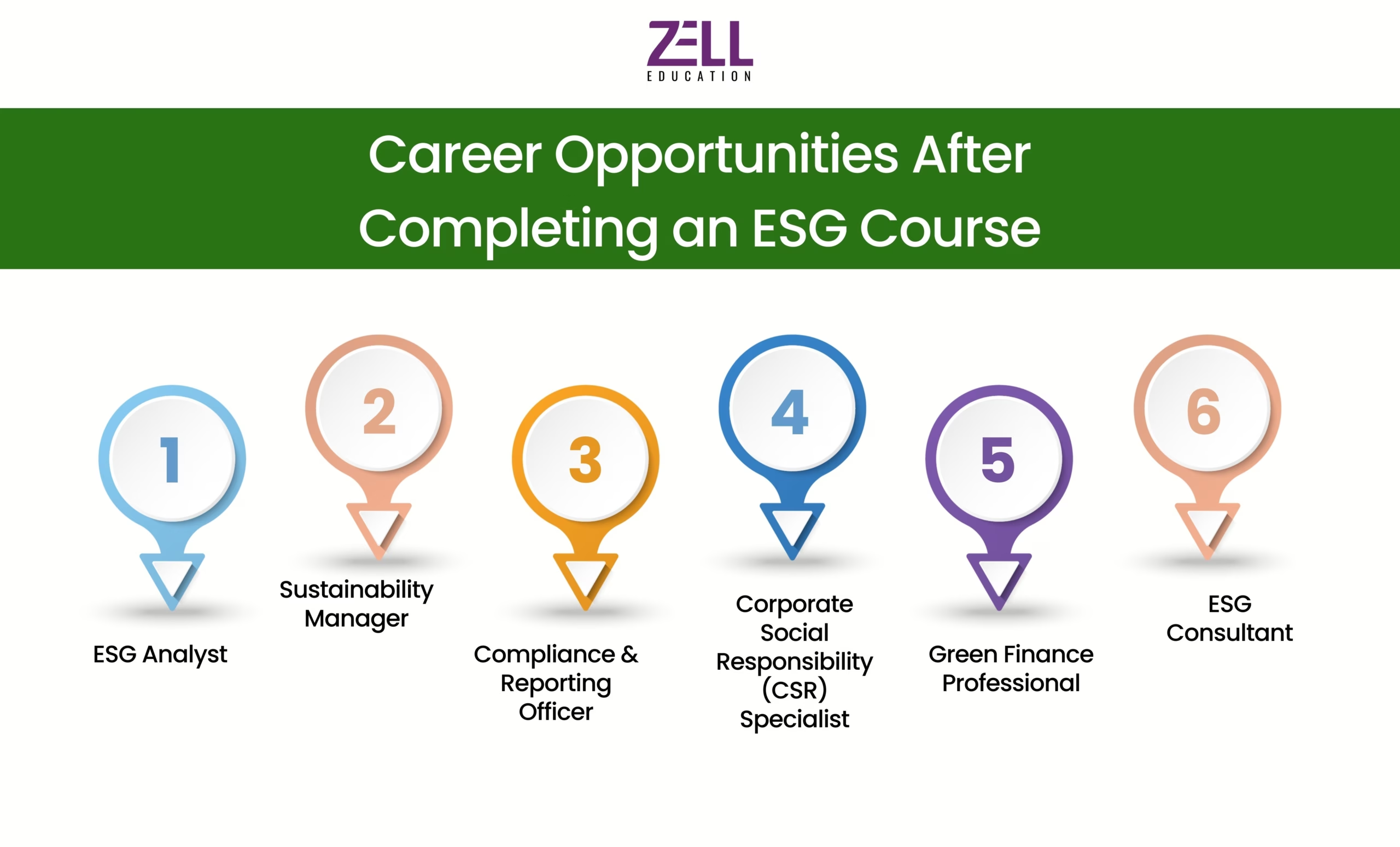
Obtaining an ESG certification opens doors for a vast number of potential careers. With businesses, governments, and organisations increasingly focusing on sustainability, there is an increasing need for professionals who are trained in ESG. Typical ESG careers are:
1. ESG Analyst
An ESG analyst analyses a company’s environmental, social, and governance practices, typically working for an investment firm or rating agency. Among their duties are collecting ESG information, reporting, and making strategic recommendations.
2. Sustainability Manager
Sustainability managers craft and implement corporate ESG strategies that align with corporate objectives as well as regulatory needs.
3. Compliance & Reporting Officer
With increasing regulation around ESG compliance, there is a requirement for experts capable of monitoring and reporting ESG performance against GRI, SASB, or TCFD frameworks.
4. Corporate Social Responsibility (CSR) Specialist
The position is dedicated to the ‘Social’ aspect of ESG, working towards initiatives that impact communities, workers, and stakeholders.
5. Green Finance Professional
Professionals in finance use their knowledge of ESG to develop green bonds and sustainable investment portfolios and provide guidance for lending and investing based on ESG risk.
6. ESG Consultant
Consultants assist companies in auditing, enhancing, and aligning their ESG strategies according to global best standards.
Whether you are a fresh graduate or an established working professional looking to advance your ESG career, an ESG course can provide an important stepping stone into meaningful careers that result in tangible impact.
Planning to Pursue ESG Career?
To Book Your Free Counselling Session
FAQs on Everything About ESG Course
What do I need to know about ESG?
You should know the three fundamental pillars of ESG, environmental, social, and governance and how these impact corporate strategy, investment choices, and regulatory requirements. You need to know how ESG drives long-term value, ethical behavior, and business alignment with global sustainability objectives.
What are the 4 pillars of ESG?
Technically, ESG consists of three pillars, which are environmental, social, and governance. But various frameworks add a fourth pillar, economic sustainability which describes making sure there is financial sustainability while fulfilling environmental and social obligations.
How do I start learning about ESG?
Begin with an ESG sustainability course from a certified provider, study ESG reports issued by major world companies, and keep current about recent trends and requirements in ESG. Structured courses with an ESG certification provide credentials that enhance your employability.
What are the basics of ESG?
At its essence, ESG centers around environmental issues:
- Environmental: Climate change, pollution, waste management.
- Social: Labor rights, community impact, diversity.
- Governance: Board structure, ethical practices, transparency.

Why Zell?
- • Largest Provider for Global F&A Courses
- • 4.6 Google Review Rating
- • 1000+ Global Placement Partners
- • Placement Opportunities at the Big 4
- • 100+ Global & Indian Rank Holders
- • 100+ Faculty Network
- • 10,000+ Students Placed
Speak to A Career Counselor
Zell's 10th Anniversary Offer - Avail a 10% Scholarship