
E-accounting functions through electronic systems which handle all aspects of financial transaction documentation, financial transaction administration and financial transaction assessment. The guide provides a complete explanation of e-accounting, which includes its characteristics and its advantages for contemporary enterprises.
Comprehensive Guide on ‘What Is E-Accounting?’
- E-Accounting: E-Accounting refers to the use of digital tools and cloud software to manage accounting records, financial transactions, and reporting electronically.
- What Is E-Accounting? Understanding what is e-accounting enables businesses to shift their operations from traditional bookkeeping methods toward contemporary automated financial systems.
- Benefits of E-Accounting: It provides three main benefits to organisations through improved accuracy of financial data, faster report creation and decreased operational costs.
- Features of E-Accounting: Key features of e-accounting include automation, real-time data access, cloud storage, and integration with banking systems.
- Digital Accounting Transformation: Modern organisations adopt e-accounting to improve financial transparency and decision-making.
- Cloud Financial Systems: Businesses using e-accounting can manage finances remotely through secure cloud-based platforms.
Imagine the ability to manage and process thousands of financial transactions without the hassle of paper and manual calculations. Today’s businesses have increasingly adopted the use of technology for the processing and management of financial information in the most accurate and timely manner possible. This has led to the development of e-accounting as a means of managing finances through the use of technology and other forms of electronic systems.
Understanding what e-accounting is essential for companies and professionals adapting to digital finance. With automation, real-time reporting, and cloud access, e-accounting systems simplify financial management while providing several benefits of e-accounting, including improved efficiency, accuracy, and compliance.
Ready for a global career? Call now to plan your journey today
 Consult for Free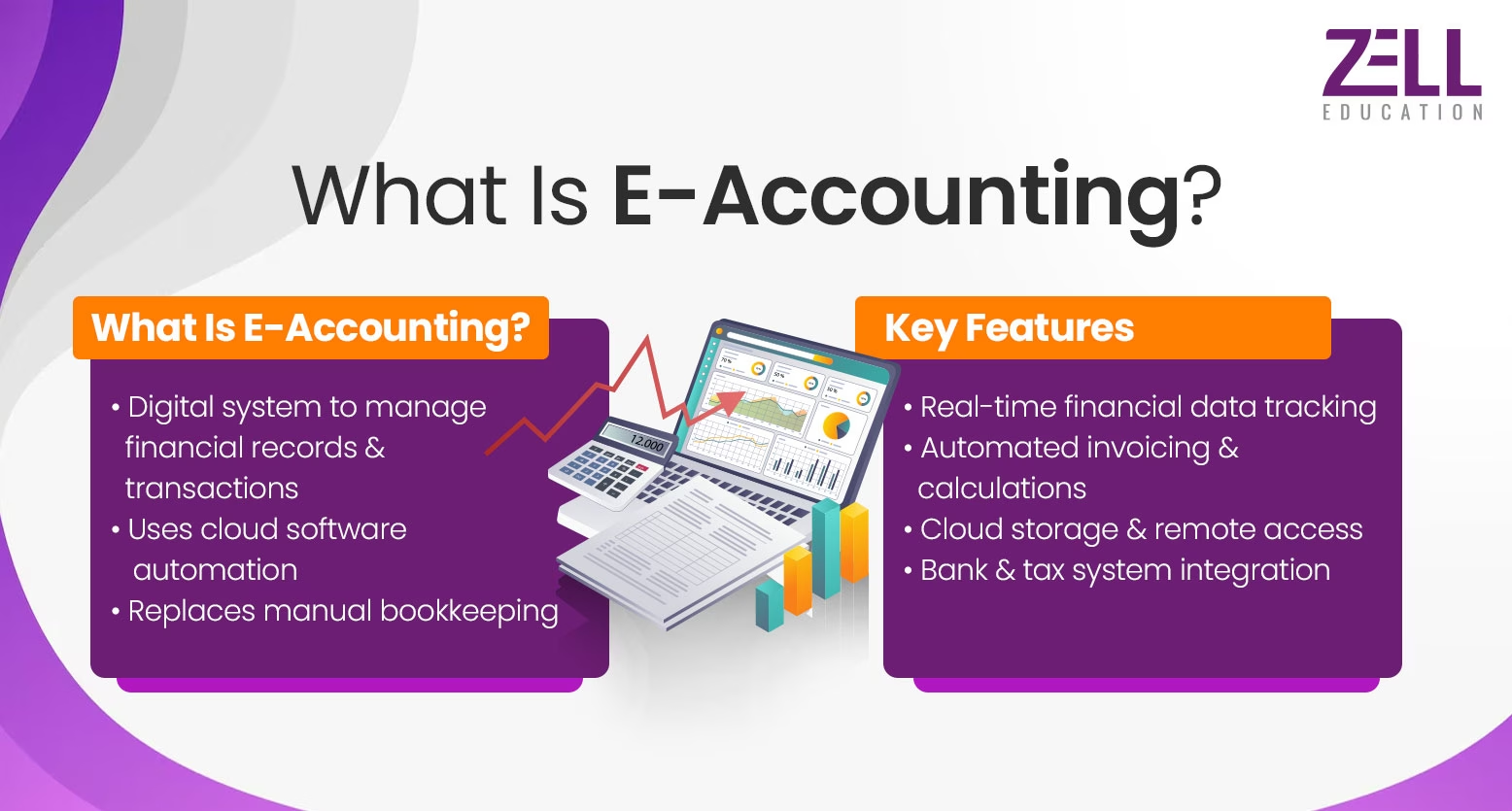
How Is E-Accounting Transforming Financial Management?
E-accounting has brought about the transition from traditional manual accounting systems to the electronic systems that have been adopted in the management of finances in today’s businesses. The benefits of e-accounting include the following:
- Faster financial data processing
- Real-time financial reporting
- Reduced paperwork and manual errors
- Improved decision-making through analytics
Defining Electronic Accounting (E-Accounting)
E-accounting consists of organisations implementing accounting tasks through internet-based computer systems. The primary components of e-accounting operations include the following four elements.
- Digital recording of financial transactions
- Automated bookkeeping processes
- Cloud-based financial storage
- Online financial reporting and analysis
Traditional Accounting vs. E-Accounting: Key Differences
Traditional accounting relied on manual recordkeeping and documentation procedures. The system of e-accounting enables organisations to execute their accounting operations through automated digital solutions.
| Feature | Traditional Accounting | E-Accounting |
| Record Keeping | Manual ledgers | Cloud-based records |
| Speed | Time-consuming | Real-time updates |
| Accuracy | Higher risk of human error | Automated calculations |
| Accessibility | Limited to office location | Accessible from anywhere |
Manual Ledger Entry vs. Automated Cloud Data
All financial transactions must be recorded by manual accounting through direct entry into the ledger. The e-accounting systems automatically perform data registration through their built-in functions. The improvements include:
- Automated transaction recording
- Faster data processing
- Reduced manual bookkeeping effort
- Secure cloud data storage
What Are the Core Features of an Effective E-Accounting System?
Modern e-accounting systems construct their financial management systems through essential tools which assist users in their business operations. The most important features of e-accounting focus on automation, integration, and real-time reporting.
Real-Time Financial Data Tracking
E-accounting systems enable the real-time tracking of financial data. The importance of e-accounting includes the following:
- Instant updates of financial transactions
- Continuous monitoring of business performance
- Improved financial planning and budgeting
Automated Invoicing and Billing Workflows
The automated invoice and billing system functions as another fundamental element of e-accounting. The process of cash flow management benefits from automation because it reduces mistakes. The system offers essential functions through its following capabilities:
- Automatic invoice generation
- Recurring billing for subscriptions
- Payment reminders to clients
- Integration with payment gateways
Seamless Integration with Banking and Tax Portals
Another important feature of e-accounting systems is the integration with banking systems. Key advantages include the following:
- Automatic bank transaction imports
- Faster reconciliation processes
- Integration with tax filing systems
API Connectivity and Third-Party App Syncing
Advanced e-accounting solutions support API connectivity, which allows the accounting system to connect with different software applications. The following demonstrates this.
- Payroll management software
- CRM platforms
- Inventory management systems
- Payment processing tools
Know which is better: Traditional Accounting vs. E-Accounting
 Chat on WhatsApp
What Are the Top Benefits of Implementing E-Accounting in 2026?
The increasing number of businesses now implements e-accounting solutions because these solutions deliver both efficient operations and trustworthy performance. The three main advantages of e-accounting systems include automation, cost savings, and better financial insights.
Enhanced Data Accuracy and Reduction of Human Error
The process of manual accounting creates financial data errors because it depends on humans to perform mathematical computations. E-accounting improves the accuracy of the information by:
- Automated calculations
- Built-in validation systems
- Error detection tools
This significantly reduces financial discrepancies.
Cost-Efficiency: Saving on Paper, Storage, and Labor
Another important advantage of e-accounting is the reduction of costs incurred by businesses by:
- Paper-based records
- Physical storage costs
- Excess manual accounting labor
Digital accounting systems make operations more efficient.
Instant Financial Reporting and Data Analytics
Another important advantage of E-Accounting is the generation of financial reports instantaneously. The important reports generated are:
- Profit and loss statements
- Balance sheets
- Cash flow reports
Real-time insights help managers make better decisions.
Remote Accessibility: Managing Accounts from Anywhere
Another important advantage of e-accounting is the ability of the business owner to manage the accounts from anywhere by:
- From any location
- On laptops or mobile devices
- Through secure cloud platforms
This flexibility increases operational efficiency.
The Role of Cloud Security in Protecting Financial Records
Security provided by the E-Accounting system is essential, enabling the protection of financial records by:
- Data encryption
- Secure cloud servers
- Multi-factor authentication
These security features protect sensitive financial data.
What Are Popular Examples of E-Accounting Software?
Companies employ e-accounting software expenses as their main tool for managing financial information. These platforms provide automation, reporting, and integration capabilities.
Cloud-Based Solutions: QuickBooks, Xero, and Zoho Books
These tools are widely used by small and medium-sized businesses. Popular cloud-based e-accounting software includes:
- QuickBooks
- Xero
- Zoho Books
Enterprise Resource Planning (ERP): SAP and Oracle NetSuite
Large organisations often use enterprise-level e-accounting systems. These platforms integrate accounting with enterprise operations. Examples include:
- Oracle NetSuite
Specialized Tools for Small Businesses and Freelancers
Both freelancers and small businesses can gain advantages from using e-accounting tools. Such solutions make accounting accessible even for non-finance professionals. The tools usually offer the following functions:
- Simplified bookkeeping features
- Invoice automation
- Expense tracking
How Does E-Accounting Simplify Tax Compliance in India?
Tax compliance is the major advantage of e-accounting software. Digital accounting simplifies tax filing and financial documentation.
Direct Integration with GST Portals and Income Tax Filing
Modern e-accounting software provides direct integration with tax portals. The advantages of using e-accounting software include:
- Automated GST calculations
- Faster tax return preparation
- Reduced compliance errors
Digital Audit Trails for Easy Regulatory Inspections
The digital audit trails function as an additional benefit for e-accounting software. The advantages of e-accounting include:
- Complete transaction history
- Easier regulatory compliance
- Faster financial audits
Conclusion: Is Your Business Ready for a Paperless Future?
The transition from manual accounting to e-accounting is a significant milestone in the development of financial management systems. Modern businesses need e-accounting systems that deliver fast and accurate results to meet their financial requirements.
Businesses that understand what is e-accounting can use modern financial management tools to boost their productivity and operational efficiency. E-accounting provides financial management solutions through its automatic system, which users can easily access and obtain relevant information from.
E-accounting serves as a crucial component for businesses that seek to implement digital financial systems, enhancing operational efficiency, transparency, and growth making it highly relevant for professionals pursuing the ACCA certification.
FAQs on What Is E-Accounting
What is the main difference between computerised accounting and e-accounting?
While computerised accounting makes use of software installed on computers, e-accounting makes use of internet platforms for financial management.
Is e-accounting safe for sensitive financial data?
E-accounting systems are safe and secure for sensitive financial data with the encryption and security provided by the cloud.
Can e-accounting software help with GST filing in India?
E-accounting software can directly interface with GST portals to make GST filing in India much simpler.
Do I need a professional accountant if I use e-accounting software?
While E-Accounting makes financial management much simpler, the services of a professional accountant are always required for financial planning and compliance.
What are the hardware requirements for setting up an e-accounting system?
The hardware requirements for E-Accounting are a computer or mobile device with an internet connection and accounting software.

Current Role
Co-Founder & CEO at Zell Education
Education
- ACCA – Association of Chartered Certified Accountants, Finance (2011 – 2014)
- Bachelor of Commerce (BCom), Financial Markets from H.R. College Of Commerce & Economics (2010 – 2013)
Location
Mumbai, India
Expertise
ACCA Certified
Why Zell?
- • Largest Provider for Global F&A Courses
- • 4.6 Google Review Rating
- • 1000+ Global Placement Partners
- • Placement Opportunities at the Big 4
- • 100+ Global & Indian Rank Holders
- • 100+ Faculty Network
- • 10,000+ Students Placed
Speak to A Career Counselor
Zell's 10th Anniversary Offer - Avail a 10% Scholarship