
This guide will walk through the trade life cycle in investment banking and the associated technologies and challenges and finally point out the entry-level jobs available in the sector.
How Can You Understand the Trade Life Cycle in Investment Banking?
The trade life cycle is an important concept in the global marketplace. Understanding the life cycle will facilitate any individual involved in trading, operations, compliance, and settlements. The life cycle will demonstrate the process involved in a trade from inception to completion and ultimately to reconciliation. The number of trades processed daily by banks is in the millions, and a life cycle is important in order to avert discrepancies and risks.
Investment banking course are taken up by quite a number of people to understand the process of trading, but proper groundwork in the process will be known if the above cycle is understood. The sector of the financial services where investment banking services fall is the making of the marketplace and the trade life cycle process.
What Is a Trade Life Cycle?
The trade life cycle refers to the entire process that a trade goes through, from the point where the buy/sell order is generated to where the trade is finally reconciled. The trade life cycle ties the front office, middle office, and back office of a trade together and depicts the entire process involved in a trade to facilitate a smooth transaction of funds for the investor/investment institution.
The question people commonly ask is, “What is trade life cycle in investment banking?” The best answer to that question is: “It’s the process flow that ensures each and every trade is processed properly and in a safe manner.” This is the fundamental process that constitutes the trade life cycle in investment banking and is important in educating new employees in the way in which financial products flow through the process chain.
Due to the strict regulations associated with trading, each and every process reduces the risks associated with it.
Curious About Trade Life Cycle in Investment Banking?
What Are the Key Stages of the Trade Life Cycle?
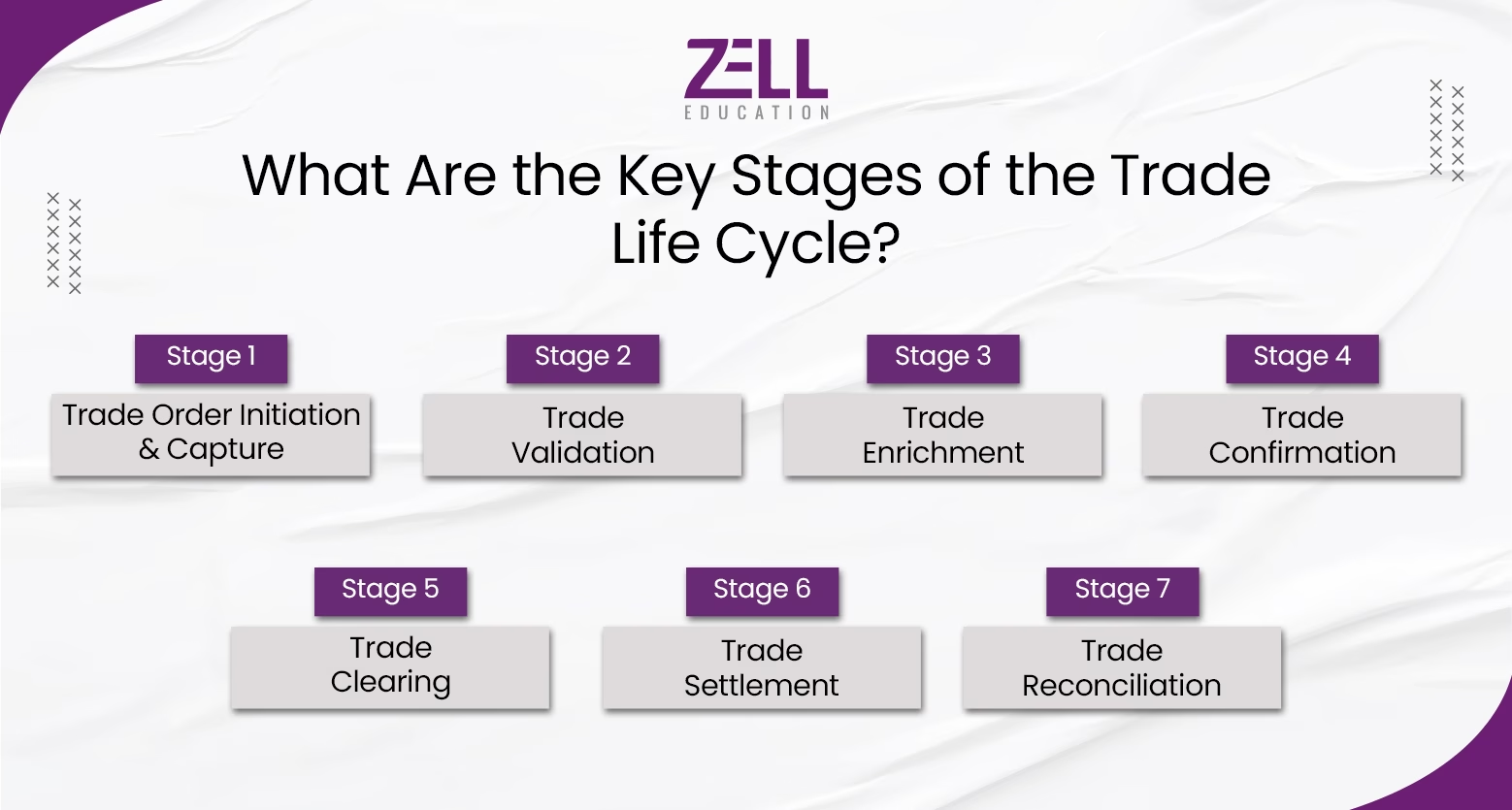
The trade life cycle in investment banking involves a number of interrelated steps. Each step ensures that things are correct and in order.
Stage 1: Trade Order Initiation & Capture
Trading begins with the placement of an order by the investor, trader, or the financial institution. The order contains information such as the instrument, price, number of instruments, and the type of order. The system implemented to enter the above information is crucial in the sense that any piece of incorrect information will result in an error in the next process.
The order initiation process marks the beginning of the trade life cycle in investment banking and is primarily managed by traders and the sales function in investment banking. The process of recording information helps in a smooth execution process in the end.
Stage 2: Trade Validation
Validation ensures the trade information satisfies company rules and regulatory and market standards. Validation focuses on client qualifications, trade limits, instrument qualifications, and exemptions.
This verification process prevents any fraudulent and inaccurate exchange from taking place, thus securing the company against any possible repercussions.
Stage 3: Trade Enrichment
The trade enrichment adds the following information that is required in order to settle the trade: tax rates, charges, settlement instructions, counterparty information, and clearing instructions. This will make the trade complete to be confirmed and cleared.
This phase enhances the levels of accuracy, thus enabling the trade to be performed automatically without the need for human intervention.
Stage 4: Trade Confirmation
Within the trade confirmation process, the bank and the counterpart confirm whether the terms of the trade are agreed upon by both the bank and the counterpart. The process averts the tendency to have discrepancies in the trade, known as trade breaks, that cause delays in the settlement process.
The process of confirmations is crucial in the equity, bond, derivatives, and FX areas of trade. Smooth confirmations mean reduced risks and faster trading cycles.
Stage 5: Trade Clearing
Clearing determines the obligations for each party, who pays and who receives. Clearinghouses often act as intermediaries to guarantee the trade, reducing counterparty risk.
This phase is crucial because it brings order to the funds and assets that need to flow through the settlement process. Clearing is a safety feature in the global marketplace because it gives an added layer of security to the entire process.
Stage 6: Trade Settlement
Settlement is when the actual exchange of cash and securities takes place. Markets usually follow settlement cycles like T+1 or T+2. A trade is considered complete only after settlement is successful.
Settlement plays an important role in the life cycle of trade in the investment banking process to ensure that everyone honours their commitments.
Stage 7: Trade Reconciliation
Reconciliation involves comparing internal records to external records to verify correctness. This involves a comparison of the books of the bank to the reports of the brokers, exchange records, and/or the clearing house.
The last phase involves keeping regulatory and accounting records up to date, thereby concluding the basics of trade life cycle in investment banking.
Why Is the Trade Life Cycle Important in Investment Banking?
The trade life cycle ensures a degree of predictability and consistency in the trading process. If the trade life cycle is absent, organisations experience a higher number of discrepancies, latency, and issues with the regulatory process.
It makes sure each and every trade, from validation to settlement, is examined. The life cycle is a safety feature because a marketplace is fast-paced, and a single blunder leads to enormous losses.
Ensuring Accuracy and Compliance
Precision is important in this gov sector. Each process verifies data to avert problems of government regulation. Government regulations such as MiFID II, EMIR, and Dodd-Frank need effective trade tracking, which the life cycle assures.
Minimising Operational Risk
Many risks in financial markets arise from human errors, mismatches, or wrong data inputs. The structured workflow reduces the chances of these events. This is why a strong trade life cycle process in investment banking protects institutions from operational, compliance, and financial risk.
Improving Transaction Transparency
Transparency is important to clients, regulators, and other stakeholders. Having an effective life cycle of trade management will give an enhanced audit trail and assist in making better decisions. Every phase involves gathering information that helps enhance confidence in a trade.
What Technology Is Used in the Trade Life Cycle?
The importance of “technology” is that the current marketplace demands “speed and accuracy”.
OMS (Order Management System)
OMS is responsible for order capture and routing. The traders make use of OMS to view their orders and their positions. They also make use of OMS to ensure routing to the correct exchange. OMS plays a crucial role in the initial phases of the trade lifecycle.
EMS (Execution Management System)
EMS systems help execute trades across various exchanges. They provide real-time pricing, smart routing, and algorithmic trading features. EMS ensures trades are executed at the best available price.
STP (Straight-Through Processing)
STP eliminates the manual process involved in the entire trade flow by automating the process. This leads to faster processing and fewer mistakes because of human intervention. STP plays a crucial role in accelerating confirmation and settlement.
What Challenges Commonly Occur in the Trade Life Cycle?
Despite the robust systems in place, some of the problems associated with trading include complex markets and large trade volumes.
Trade Breaks
This refers to events where the data doesn’t match for the two sides involved in the trade. They result in delays and have to be solved manually. Breaks often originate from incorrect data entry or timing mismatches.
Compliance Failures
Failure of compliance occurs when trades violate the rules of the market or internal controls. Omitted client information, incorrect documents, and suspicious indicators of marker abuse generate alerts. Validation prevents such problems.
Settlement Delays
Delays occur in the following instances: when the involved parties fail to provide necessary instructions, when there is a mismatch of data, and when the markets close early. Delays increase the risk of counterparties and liquidity issues.
What Careers Are Connected to the Trade Life Cycle?
Trade Analyst
The trade analysts assist the trading desks in the front office through monitoring, exception handling, and trade booking. They facilitate the smooth execution of trades in the early life cycle of a trade transaction.
Operations Analyst
Operations analysts focus on confirmations, clearing, and settlements. They perform operations to ensure proper processing and handle trade breaks and play an important part in the middle to latter portion of the life cycle process.
Risk & Compliance Analyst
These people assess the trades against rules and in-house policies. They focus on discrepancies, suspicious trades, and possible cases of fraud. The process shields the entire life cycle.
Want to Pursue Investment Banking Career?
Book Your Free Counselling Session Today
Conclusion: Why Is Understanding the Trade Life Cycle Crucial for IB Roles?
Understanding the trade life cycle in investment banking is crucial for people who are keen to work in the financial marketplace. No matter what area of investment banking you want to work in, be it trading, operations, risk management, or even compliance, understanding the basics of trade life cycle in investment banking that you perform every day.
If you’re studying investment banking, understanding the framework discussed in this article will bridge the gap between theory and process. Understanding the essential elements of the trade life cycle in investment banking will increase your confidence level and enhance the quality of your preparedness to enter the job market.
A thorough understanding of the life cycle of a trade will prepare you well for any number of things: interviews, testing exercises, and indeed the ‘real world’, regardless of whether you are working in equities, derivatives, bonds, FX, and this knowledge helps you excel in core investment banking roles
FAQs on Trade Life Cycle in Investment Banking
What are the main steps involved in the trade life cycle?
The basic steps include order capture, validation, enrichment, confirmation, clearing, settlement, and reconciliation.
Why is the settlement step so important?
Settlement is important because it ensures the actual exchange of securities and cash, completing the trade.
Which systems support the trade life cycle?
Systems such as OMS, EMS, and STP support different stages of the trade life cycle.
What usually causes trade breaks?
Trade breaks occur due to discrepancies of information, incorrect booking, and lacking details between the two sides.
Which roles require strong trade life cycle knowledge?
The skills required in the function of a trade analyst/operations analyst and a compliance/risk analyst include a deep understanding of the entire process flow because the work performed in those.

Current Role
Co-Founder & CEO at Zell Education
Education
- ACCA – Association of Chartered Certified Accountants, Finance (2011 – 2014)
- Bachelor of Commerce (BCom), Financial Markets from H.R. College Of Commerce & Economics (2010 – 2013)
Location
Mumbai, India
Expertise
ACCA Certified
Why Zell?
- • Largest Provider for Global F&A Courses
- • 4.6 Google Review Rating
- • 1000+ Students placed Annually
- • 500+ Active Hiring Partners
- • Placement Opportunities at the Big 4
- • 100+ Global & Indian Rank Holders
- • 100+ Faculty Network
Speak to A Career Counselor
Zell's 10th Anniversary Offer - Avail a 10% Scholarship