
Deciding between the Enrolled Agent vs. US CMA certification? This comprehensive Enrolled Agent vs. CMA comparison delves into roles, scope, salary, and career prospects to guide you towards the best decision.
What Are the Differences Between Enrolled Agent and US CMA Certifications?
Deciding between the proper finance certifications can be daunting. Enrolled Agent vs. CMA is one comparison that students and professionals in accounting and the field of finance use frequently.
- EA: Best suited for those interested in U.S. taxation and IRS representation
- CMA: Ideal for those aiming for global roles in corporate finance and management accounting
This blog will guide you through EA course details, the course of the enrolment agent, enrolled agent salary comparison, examination pattern, and career opportunities to enable you to reach a decision.
What Is an Enrolled Agent (EA)?
Overview and Role of an EA
An Enrolled Agent (EA) is a taxpayer advocate authorised by the IRS to represent individuals, businesses, and organisations in every case that involves taxes.
Key EA responsibilities include:
- Preparing tax returns for individuals and businesses
- Representing clients during audits, collections, and appeals
- Advising clients on tax planning and compliance strategies
- Working with CPAs and attorneys in complex tax matters
EAs are qualified to practise across the 50 U.S. states, making them uniquely influential within the world of tax. They can be found to be highly demanded within the U.S. as well as within the outsourcing market, such as in India.
Industries where EAs work:
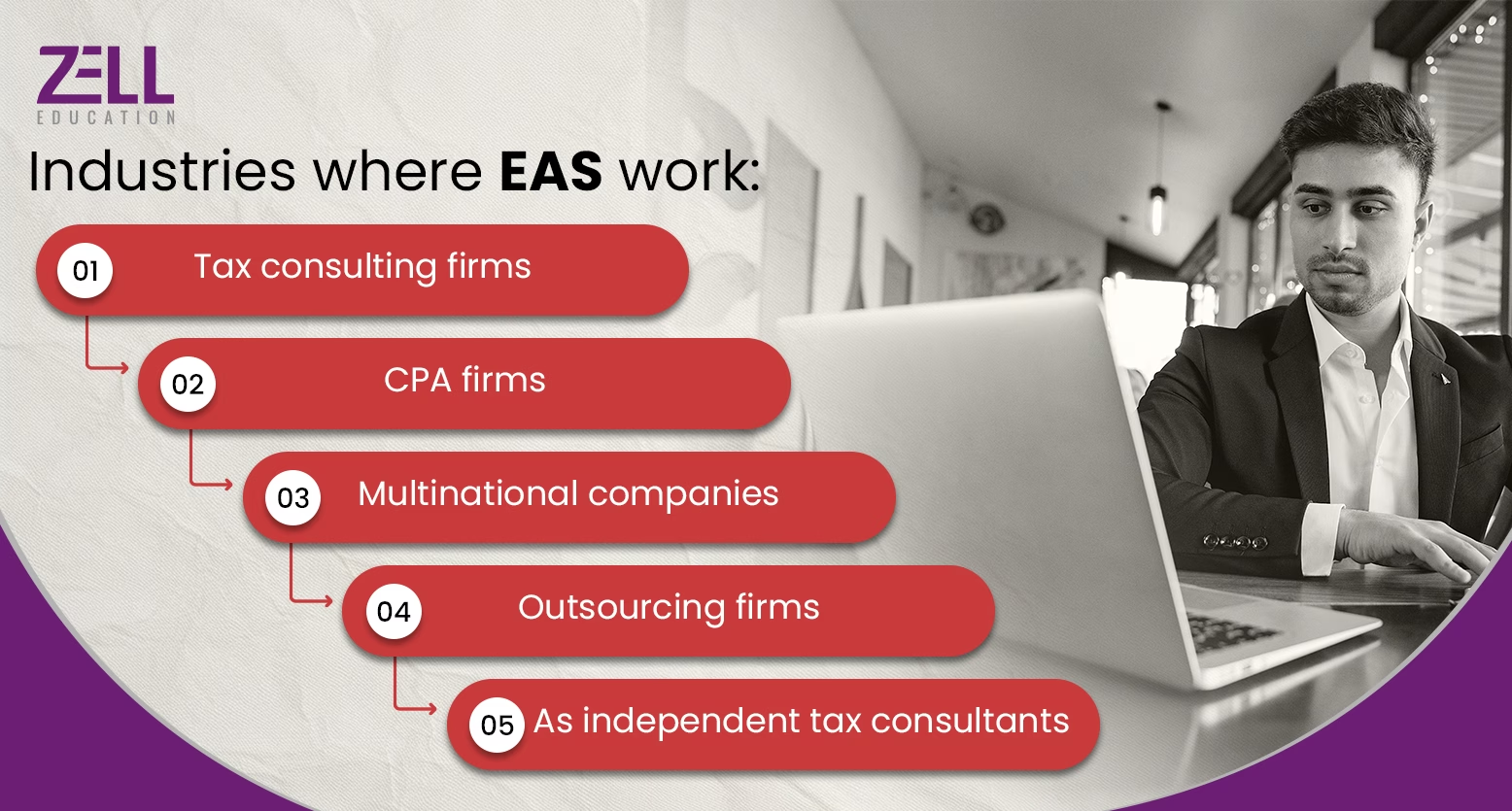
- Tax consulting firms
- CPA firms
- Multinational companies
- Outsourcing firms
- As independent tax consultants
The position is suited to individuals who are analytical and detail-driven and have interests in U.S. tax law.
Eligibility, Exam, and Certification Process
One of the most appealing things about becoming an Enrolled Agent (EA) is that it is so affordable; you don’t need a college degree or any previous experience to begin. As such, it’s the best option for someone who is looking to get into the field of U.S. taxation quickly and inexpensively.
These are the EA course details you should be aware of:
Eligibility Criteria:
- No educational background is needed; one should be knowledgeable about taxes in general.
- There is no required work experience, as opposed to most other finance certifications.
- The requirement is to successfully pass the Special Enrolment Examination (SEE) as well as the IRS’s background check requirements.
Steps to Become an Enrolled Agent:
- Get a Preparer Tax Identification Number (PTIN) issued by the IRS.
- Pass the Special Enrolment Examination (SEE), a challenging 3-part examination.
- Clear a background check done through the IRS to ensure proper ethics.
- After passing the three sections, you can enrol as a candidate and be issued with a licence.
EA Exam Structure:
The SEE examination consists of three parts:
- Part 1 – Individuals: Focuses on income tax, deductions, credits, and filing requirements for individuals.
- Part 2 – Businesses: Encompasses business tax returns, partnerships, corporations, and payroll taxes.
- Part 3 – Representation, Practices, and Procedures: Encompasses IRS practices, ethics, power of attorney, and client representation.
Each section is a 3.5- to 4-hour examination with multiple-choice questions as well as scenario-based problem-solving.
About the Enrolment Agent Course:
- The enrolment agent course can be finished within 6–12 months, depending on the preparation time.
- Tests are offered at Prometric testing centres in India as well as globally.
- This course is available to:
- Graduates (any stream)
- Working professionals
- Students looking for a fast-track global credential
Because the EA credential is awarded by the IRS, it is worth forever. But to stay in active status, you’ll need to:
- Complete 72 hours of Continuing Professional Education (CPE) every 3 years
- Renew your PTIN annually
This adaptable certification provides a hands-on and respectable professional career path in U.S. taxation, without the time and expense of longer programmes. The EA course details are especially tempting to individuals who desire to be job-ready within less than one year.
Curious About Enrolled Agent vs. US CMA?
What Is a US CMA?
Overview and Role of a CMA Professional
The US Certified Management Accountant (CMA) professional certification is awarded to management accounting professionals by the Institute of Management Accountants (IMA), USA.
CMA professionals handle:
- Budgeting and forecasting
- Cost control
- Financial planning and analysis
- Strategic business decisions
- Performance management
Whereas EAs deal with taxation, CMAs practise management accounting, assisting businesses in maximising performance as well as profits.
Industries employing CMAs:
- Finance departments of MNCs
- Manufacturing and retail
- Tech companies
- Financial services firms
CMAs can be promoted to senior positions such as:
- Finance Manager
- Business Analyst
- Corporate Controller
- Chief Financial Officer (CFO)
Eligibility, Exam Structure, and Certification Requirements
Eligibility:
- Bachelor’s degree (from any discipline)
- Two years of work experience in accounting or finance
CMA exam structure:
- Part 1: Financial Planning, Performance & Analytics
- Part 2: Strategic Financial Management
Each section is a 4-hour examination with 100 MCQs and 2 essays.
Duration to complete: 12–18 months (on average)
Pass rates are approximately 45–50%, indicative of the extent of depth and preparation level.
Even though CMA is less investment-orientated compared to a CFA course, it will give you hands-on exposure to corporate management as well as strategic management. So, if you are wondering what is CFA, it is actually a course for investment professionals, quite different from CMA.
What Are the Key Differences Between an Enrolled Agent and a US CMA?
Scope and Career Focus
| Criteria | Enrolled Agent | US CMA |
| Focus | U.S. taxation and representation | Financial planning, analysis, and strategy |
| Roles | Tax preparer, tax advisor, IRS representative | Finance manager, analyst, CFO |
| Work Areas | CPA firms, tax consultancies | Corporates, MNCs, startups |
| Licence Validity | Lifetime (with renewal) | Valid with IMA membership |
- The enrollment agent course is less in scope but highly specialised.
- The CMA includes a wider variety of positions within international finance and accounting.
Exam Difficulty and Duration
EA:
- Easier to complete if you have a tax background
- Shorter preparation time (6–12 months)
- Straightforward format
CMA:
- More rigorous and analytical
- Requires financial knowledge
- Takes 12–18 months on average
If you want a faster certification, the EA course information presents a good pathway into compliance and tax careers.
Salary and Global Opportunities
Enrolled Agent Salary:
- India: ₹4-6 LPA (Entry) and ₹10-15 LPA (Experienced)
- US: $50,000–$100,000+
Source for Enrolled Agent Salary – PayScale
CMA Salary:
- India: ₹6 – 8 LPA (Entry) and ₹18 – 25 LPA (Senior)
- US: $70,000–$150,000+
Source for CMA Salary – PayScale
In Enrolled Agent vs. CMA, CMA typically presents higher salary potential and international portability. The enrolled agent salary, however, is also respectable in the field of tax firms as well as outsourcing companies, primarily for those working independently or establishing their own tax practice.
Which Certification Should You Choose Based on Your Goals?
EA vs. CMA: Based on Career Goals
Go for EA if you:
- Want to specialize in U.S. taxation
- Are interested in IRS dealings
- Want to start working quickly
- Plan to work with tax firms or start your own consultancy
Go for CMA if you:
- Want to work in business and strategy roles
- Aspire for leadership in corporate finance
- Are aiming for multinational companies
- Want global recognition
Between Enrolled Agent vs. CMA. Most students successfully pass the enrolment agent course earlier so that they can earn earlier and then go for CMA to broaden their scope.
EA vs. CMA: Based on Skill Set and Industry Preference
| Skill Set | Recommended Path |
| Analytical + Detail-Oriented | EA |
| Strategic and Business-Savvy | CMA |
| Compliance & Tax Law | EA |
| Budgeting & Decision Making | CMA |
Your personality as well as strength also matter. If you enjoy solving tax riddles, EA suits you. If you happen to be passionate about enhancing company performance, CMA is the option.
Want to Pursue CMA Accounting Career?
Book Your Free Counselling Session Today
Conclusion: How Do You Decide Between EA and CMA?
The enrolled agent vs. CMA decision depends on interests and professional aspirations, as well as the desired timeframe to begin working.
- Opt for the enrollment agent course if you are looking at a fast start to a tax-centric job with high earnings potential. It’s affordable, versatile, and very reputable among American tax firms.
- Select the CMA if you want to pursue a long-term career as a financial management professional, strategic planner, or in leadership positions.
Both are strong. You can even go for both in the long run; begin with the EA course information, get some work exposure, and then opt for CMA certification to gain wider opportunities.
FAQs on Enrolled Agent vs. US CMA
What is the main difference between an Enrolled Agent and a US CMA?
An enrolled agent specialises in U.S. taxation and can represent clients before the IRS. A CMA focuses on financial analysis and corporate strategy in business settings.
Which course has better global recognition: EA or CMA?
CMA is recognised and accepted in over 100 countries around the world. EA is centred around the U.S., yet growing in demand in international outsourcing markets.
Can I pursue both EA and CMA certifications?
Yes, it is a good idea to pursue both. Begin with EA for quicker job preparedness, then go for CMA for leadership positions and international finance careers.
Which qualification offers higher salary potential?
CMA generally covers wider salary potential since it can be applicable in the corporate world. Enrolled agent salary can be as rewarding, though, in the tax-specialist positions or in freelance consulting.

Current Role
Co-founder and Executive Director at Zell Education
Education
- Chartered Accountant (CA) from The Institute of Chartered Accountants of India (2010 – 2015)
- Company Secretary (CS) from The Institute of Company Secretaries of India (2011 – 2013)
- Bachelor in Financial Markets, Finance, General from H.R. College Of Commerce & Economics (2010 – 2013)
Location
Mumbai, India
Expertise
CA Certified, CS Certified
Why Zell?
- • Largest Provider for Global F&A Courses
- • 4.6 Google Review Rating
- • 1000+ Global Placement Partners
- • Placement Opportunities at the Big 4
- • 100+ Global & Indian Rank Holders
- • 100+ Faculty Network
- • 10,000+ Students Placed
Speak to A Career Counselor
Zell's 10th Anniversary Offer - Avail a 10% Scholarship