
Key Takeaways
- What to do after CMA? After earning your US CMA, the best next step depends on your career goals, and salary ambitions.
- What are popular courses after CMA? Popular courses to pursue after US CMA include the US CPA, CFA, MBA, or data analytics.
Comprehensive Guide: Course After US CMA
- What is US CMA?
US CMA is a certification focusing on financial planning, analysis, and strategic management accounting.
- What is the best course after US CMA?
A US CPA, CFA, or an MBA in finance is widely considered one of the best options.
- Who should choose CPA after CMA?
Choose CPA if you want to specialise in US public accounting, auditing and taxation compliance.
- Who should choose ACCA after CMA?
Choose ACCA if you want an internationally recognised qualification for global accounting and IFRS.
- Who should choose FRM after CMA?
Choose FRM if you want to pursue corporate risk management, banking, or treasury management.
- Who should choose CFA after CMA?
Choose CFA if you want to build a career in investment banking or portfolio management.
Not Sure Which Course to Pursue After US CMA? Let’s Help You Decide
 Speak to Mentor
Why Pursue Another Course After US CMA
While a CMA certification from the IMA shows strong management accounting skills, a second credential can broaden your career opportunities and leadership potential. If you’re wondering “What is CMA”, knowing where it came from will help you make smarter education decisions over the long term.
A complementary qualification enhances technical knowledge, increases global career flexibility and prepares you for senior finance and executive leadership roles across a wide range of industries.
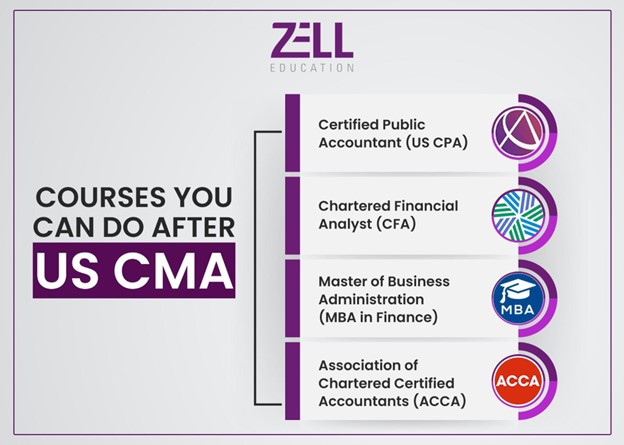
Top 5 Courses to Pursue After US CMA

Choosing the right course after US CMA depends on your long-term career goals, whether in taxation, investment management, corporate auditing, or executive leadership. The following globally recognised qualifications strengthen specialised expertise, expand career opportunities, and enhance your professional value across diverse finance industries.
1. CPA USA: Best for Accounting, Audit & Compliance
US CPA Certification is a good course after US CMA and is a blend of management accounting skills, and public accounting, statutory audit and international compliance knowledge. This powerful mix prepares professionals for leadership throughout global organisations.
- Public accounting and audit careers
- Global reporting and compliance
- High credibility with multinational employers
2. CFA: Best for Investment & Financial Analysis
The Chartered Financial Analyst certification is ideal for professionals interested in investment careers rather than traditional accounting. Its curriculum develops expertise in portfolio management, equity research, asset management, investment banking, and advanced financial valuation, creating strong opportunities within capital markets.
- Portfolio management expertise
- Equity research and valuation
- Investment banking and asset management
3. MBA in Finance: Best for Leadership & C-Suite Roles
A top-tier MBA is a valuable course after US CMA, complementing technical accounting expertise with leadership, strategic decision-making, financial planning, and executive communication skills. This combination prepares professionals for senior management and C-suite leadership positions across global organisations.
- Leadership and business strategy
- Executive communication skills
- Strong professional networking opportunities
4. ACCA: Best for Global Financial Reporting
The ACCA qualification helps enhance knowledge in international accounting standards, IFRS, tax, and finance management in the international market. Professionals who have a US CMA will benefit greatly from paper exemptions. This makes this path very lucrative in Europe, the Middle East, and multinational finance departments.
- IFRS and global reporting
- International accounting standards
- 3 Potential paper exemptions for US CMAs
5. FRM: Best for Risk Management Roles
Following US CMA, FRM certification is a strategic course for the professionals who are looking to build career in banking and financial risk. It develops expertise in credit risk, market risk, operational risk and capital adequacy to help organisations manage uncertainty and protect financial stability in changing market conditions.
- Credit and market risk management
- Adequacy of capital frameworks
- Banking & Enterprise Risk Jobs
Confused Between CFA, ACCA, CPA or MBA After US CMA?
 Get Finance Guidance
Quick Comparison: Which Course to Choose After US CMA?
The right course after US CMA depends on your career aspirations, your preferred industry and your long term growth objectives. Use this quick comparison to find the certification that best suits your professional goals.
| Course | Average Duration | Best For | Career Impact |
| CPA USA | 12–18 months | Audit & Compliance | Global accounting opportunities |
| CFA | 2–4 years | Investment & Portfolio Management | Strong finance and investment careers |
| MBA in Finance | 1–2 years | Leadership & Management | Faster progression into managerial roles |
| ACCA | 2–3 years | Financial Reporting | International accounting careers |
| FRM | 1–2 years | Risk Management | Specialist roles in banking and finance |
Job Opportunities After US CMA
Strong CMA career options include strategic finance, planning and corporate leadership, in addition to traditional accounting. CMA USA job opportunities can be found in manufacturing, consulting, banking, healthcare and multinational companies, as the certified professionals are the valued decision-makers who make the companies more profitable, improve performance and lead the organisations to sustainable long-term business growth through well-informed financial leadership.
Financial Analyst
A Financial Analyst builds forecasting models, analyses market trends, tracks budget variances, and prepares performance reports for senior leadership. Strong analytical insights help executives evaluate opportunities, manage financial risks, improve profitability, and make confident business planning decisions supported by accurate, data-driven recommendations.
Average annual Financial Analyst salaries in India: 6.4 LPA to 7 LPA

Source for Financial Analyst salaries in India: AmbitionBox
Management Accountant
A Management Accountant watches over the internal financial operations of the company, prepares reports for management, controls budgets and evaluates the business performance. The expanding scope of US CMA in India within multinational corporations leads to a higher demand for professionals who can enhance operational efficiency with financial insights and back informed day-to-day management decisions.
Average annual Management Accountant salaries in India: 12.2 LPA to 13.5 LPA

Source for Management Accountant salaries in India: AmbitionBox
Cost Accountant & Budget Analyst
A Cost Accountant & Budget Analyst analyses supply chains, calculates product margins, controls inventory costs, drafts departmental budgets and identifies ways to cut costs. Their financial analysis enhances operational efficiency, cuts down unnecessary costs, improves pricing decisions and boosts the overall product profitability across all business functions.
Average annual Budget Analyst salaries in India: 6.5 LPA to 7.2 LPA

Source for Budget Analyst salaries in India: AmbitionBox
Financial Controller
The Financial Controller is responsible for the management of accounting teams, approval of ledger balances, compliance with international reporting standards, financial reporting processes and strong internal controls. This leadership role bridges day-to-day finance operations with executive strategy to enable sustainable organisational growth and confidence from regulators.
Average annual Financial Controller salaries in India: 26.6 LPA to 29.4 LPA

Source for Financial Controller salaries in India: AmbitionBox
FP&A Manager
An FP&A Manager leads financial planning and analysis teams, develops forecasting strategies, evaluates financial trends, and delivers executive recommendations. Growing job opportunities after CMA in India continue creating demand for professionals who transform business data into practical strategies supporting long-term organisational performance and profitability.
Average annual FP&A Manager salaries in India: 22 LPA to 24.3 LPA

Source for FP&A Manager salaries in India: AmbitionBox
Chief Financial Officer (CFO)
A Chief Financial Officer (CFO) designs capital structures, leads acquisition strategies, manages investor relationships, oversees board-level financial planning, and directs long-term corporate strategy. This executive position represents the highest level of financial leadership, combining strategic vision with strong commercial and governance expertise.
Average annual Chief Financial Officer salaries in India: 60.3 LPA to 66.7 LPA

Source for Chief Financial Officer salaries in India: AmbitionBox
US CMA Salary in India and Globally
The growing US CMA scope in India creates rewarding careers across finance functions worldwide. These salary ranges reflect realistic market trends, while advancing your qualifications can unlock senior positions and higher earnings. Strong job opportunities after CMA in India continue expanding across multinational companies, consulting firms, and global capability centres.
| Corporate Role | India Salary (₹ LPA) | Global Salary (USD) |
| Financial Analyst | 6–10 | $65,000–$90,000 |
| Management Accountant | 7–12 | $70,000–$100,000 |
| FP&A Manager | 15–28 | $100,000–$140,000 |
| Financial Controller | 22–40 | $120,000–$170,000 |
| Chief Financial Officer (CFO) | 45–90+ | $180,000–$350,000+ |
Top Companies Hiring US CMA Professionals
US CMA professionals are in great demand from global corporations, consulting firms and financial institutions.
- Deloitte, PwC, EY, and KPMG (Big 4 Firms) are hiring for multiple CMA career options.
- Large international companies such as Amazon, Microsoft, Oracle and IBM employ finance specialists.
- JPMorgan Chase, HSBC and Citi are global banks with growing CMA USA job opportunities.
- Shared service centres are a great launch pad for fresh graduates seeking a career in international finance.
Conclusion
CMA certification from IMA provides a solid base for a career in global finance. Picking the right course after US CMA can be a great boost to your professional growth, broaden your career prospects and enhance your expertise further. Talk to a career coach who is an expert in your industry today and make the educational decision that fits your long-term goals.
FAQs on Course After US CMA
Which is better after the US CMA: CPA or CFA?
CPA is better for accounting and corporate finance, while CFA is best for investments.
Can I do an MBA after a US CMA?
Yes, an MBA combines strategic business leadership with your practical financial management skills perfectly.
What is the highest-paying job after US CMA?
Chief Financial Officer is the highest-paying corporate leadership position you can eventually achieve.
Is the US CMA enough, or do I need another certification?
While highly valuable alone, adding a CPA or CFA accelerates your senior management growth.
Which course after US CMA is best for Indian professionals?
The US CPA is highly recommended for Indians targeting prominent roles in Big Four firms.

Current Role
Co-Founder & CEO at Zell Education
Education
- ACCA – Association of Chartered Certified Accountants, Finance (2011 – 2014)
- Bachelor of Commerce (BCom), Financial Markets from H.R. College Of Commerce & Economics (2010 – 2013)
Location
Mumbai, India
Expertise
ACCA Certified
Why Zell?
- • Largest Provider for Global F&A Courses
- • 4.6 Google Review Rating
- • 1000+ Students placed Annually
- • 500+ Active Hiring Partners
- • Placement Opportunities at the Big 4
- • 100+ Global & Indian Rank Holders
- • 100+ Faculty Network
Speak to A Career Counselor
Zell's 10th Anniversary Offer - Avail a 10% Scholarship