
Preparation for the CPA examination involves a good grasp of what each section of the examination covers, how study materials can be utilised, and how a study timetable can be constructed. Using a well‑crafted study plan for the CPA, adequate study time for the CPA, and the appropriate study materials, you can manage the CPA exam requirements successfully.
What makes the right CPA exam study plan matter?
Choosing a successful study approach for the CPA and what to review for each part of the CPA examination are also paramount. Otherwise, you could waste a lot of time on weaker areas, not review enough for a few, or burn out.
A good strategy aligns your study time for the CPA with the need for the CPA exam, makes your CPA self-study courses or review materials usage optimal, and ensures you cover all relevant forma so you go into it with confidence.
What is the CPA exam structure?
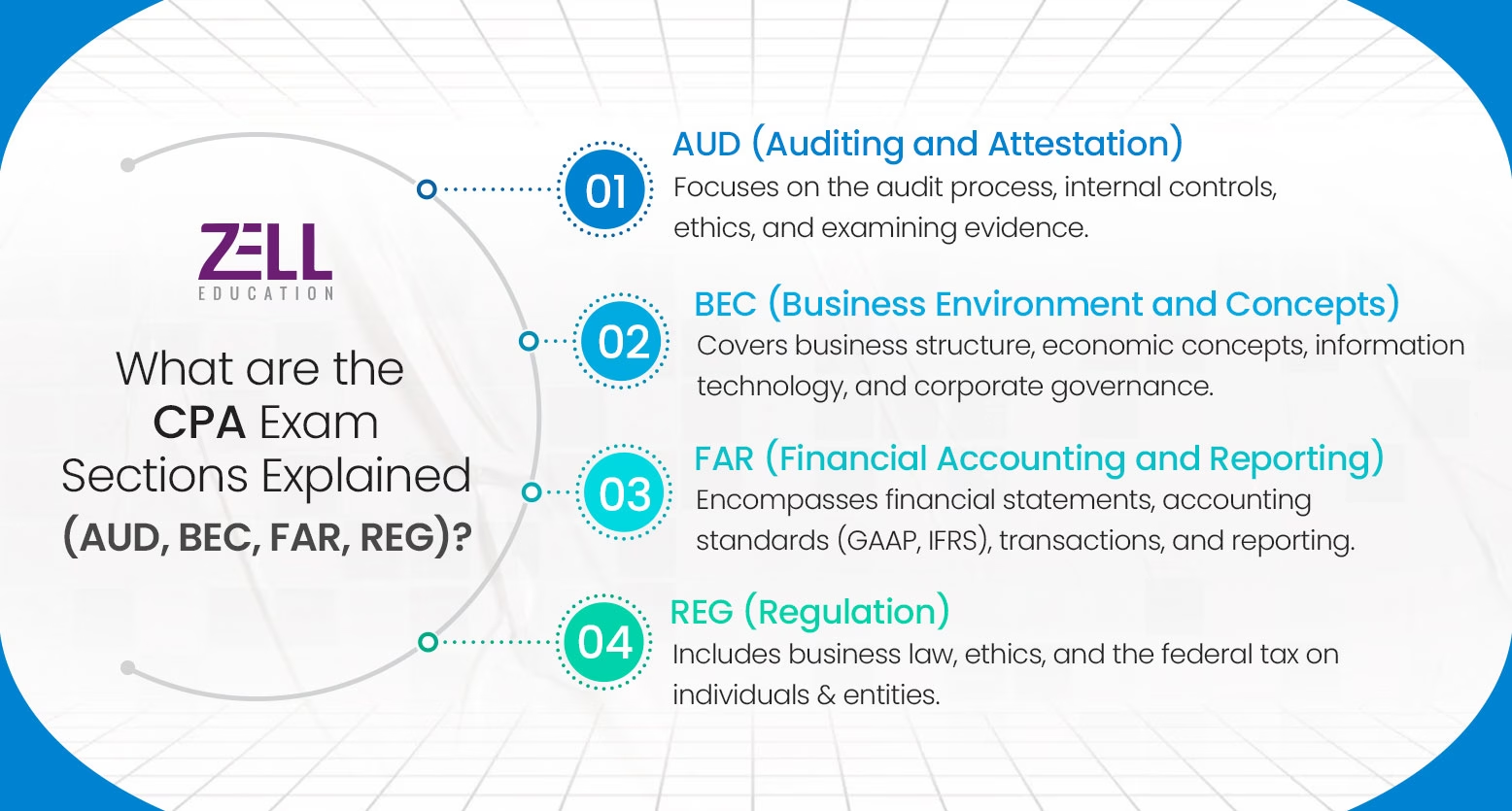
What are the CPA Exam Sections Explained (AUD, BEC, FAR, REG)?
The examination consists of four core sections:
- AUD (Auditing and Attestation): Focuses on the audit process, internal controls, ethics, and examining evidence.
- BEC (Business Environment and Concepts): Covers business structure, economic concepts, information technology, and corporate governance.
- FAR (Financial Accounting and Reporting): Encompasses financial statements, accounting standards (GAAP, IFRS), transactions, and reporting.
- REG (Regulation): Includes business law, ethics, and the federal tax on individuals & entities.
Each section requires a unique set of skills: knowledge, application, and analysis. To study for the CPA effectively, understand which section you are better at so you may focus your time for the CPA study appropriately.
What is the Exam Format & Question Types?
- Every section also includes multiple‑choice questions (MCQs), task‑based simulations, and written communications (BEC includes the written communication).
- Dependence of the number of questions/simulations on the section. FAR typically includes more content and simulations.
- Courses and study guides for the CPA include hundreds of practice MCQs and simulations as a way of mimicking actual CPA questions.
CPA exam format understanding reduces test-day surprises and makes the best use of your time as a CPA student.
Curious About What to Study for the CPA Exam?
What should you study for each CPA exam section?
Auditing and Attestation (AUD) Topics
- Audit process and planning, risk assessment
- Internal control frameworks (COSO, etc.)
- Evidence gathering, audit reports
- Ethics & professional responsibilities
When pursuing CPA self-study courses or review books, make sure they cover these topics thoroughly: audit sampling, fraud detection, and quality control. These are usually well-tested for the CPA exam questions for AUD.
Business Environment and Concepts (BEC) Topics
- Corporate governance & economic concepts
- Information technology & business processes
- Cost accounting, performance measurement
- Written communication skills
As BEC covers subjects from technology as well as communication, your CPA study strategy should include test‑style MCQ practice as well as practice writing tasks.
Financial Accounting and Reporting (FAR) Topics
- Definition and recognition of assets, liabilities, equity, revenue, expenses
- Standards under U.S. GAAP & comparison with IFRS
- Transactions like leasing, pensions, business combinations
- Financial statement presentation & disclosure
FAR is the heaviest by volume. You will need to use more time from the CPA study time for this part than for other parts. Use the CPA courses or the comprehensive review courses for the materials from FAR.
Regulation (REG) Topics
- Ethics and professional & legal responsibilities
- Federal taxation of individuals and entities
- Business law & regulatory environment
- Ethics/regulatory framework, tax planning
Most REG topics are very rule‑oriented, so memorisation and application are paramount. Incorporate flashcards, multiple practice questions, and frequent reviews into your CPA study strategy as a means of committing rules and statutes to memory.
What study materials and resources help best for CPA exam preparation?
The appropriate resources make or break your preparation. Whether practice courses or replication simulations, using effective and comprehensive materials makes a difference. They allow the aspirants to get accustomed to the questions of the CPA exam and consolidate the study approach for the CPA.
Which CPA review courses and books should you use?
- Select a well-respected review course with current content (matching current CPA exam requirements).
- Textbooks which break down each segment (AUD, BEC, FAR, REG) with practice questions.
- CPA self study courses fit adaptable timetables; these tend to include video lectures, audio, and downloadables.
When choosing materials, ensure that they contain a lot of CPA exam questions and simulations to correspond to real test difficulty.
How useful are practice tests, MCQs & simulations?
- Practice tests help to reproduce the time constraint, test format, and question forms.
- Multiple-choice questions (MCQs) help confirm your understanding of many discrete points.
- Simulations (task‑based/uniform) test your ability to apply your learning in real‑world, complex scenarios.
Scheduling regular practice tests in your CPA study time helps in tracking progress and identifying weak areas in your CPA study strategy.
How do you use AICPA blueprints as a study tool?
- The AICPA blueprints specify what content gets tested, question weighting, and simulation‑based task specifications.
- Refer to the blueprints so your study course for the CPA or your CPA self-study courses blends well with the topics you must cover.
Matching your resources with the blueprint ensures you address all the necessities of the CPA exam and do not waste time on less-relevant content.
How do you build an effective CPA study schedule?
Developing a study timetable for the CPA allows you to study efficiently. You would study each section sufficiently without overcrowding your day. Managing study time against personal and professional commitments also helps you become consistent.
How much time should you allocate & how many study hours are needed?
- The majority seek 300‑400 study hours total for all four parts, but these specifics depend on your own experience and comfort level with the accounting/tax content.
- CPA study time per section may vary: FAR often requires more hours; BEC somewhat less.
- Split study time each week; i.e., 15‑20 hours/week if working full‑time, or as much discretionary time as you’ve got.
Good time management is central. Your study plan for the CPA should include buffer time before the test for practice and review.
How to balance work and CPA exam preparation?
- Use evenings, weekends, or off‑hours for focused study blocks.
- Prioritise weaker sections in your CPA study time.
- Think about taking CPA self-study courses or online courses which allow you to study whenever you want.
Don’t burn out by planning rest days and steadiness instead of cramming. A balanced study plan for the CPA keeps momentum strong and stress lower.
What are expert tips for CPA exam success?
- Start with diagnosing strengths and weaknesses across sections to tailor your CPA study strategy.
- Utilise spaced repetition and frequent review sessions to solidify knowledge, particularly for REG and FAR, which contain a lot of rules.
- Practise many CPA exam questions under timed conditions. Review solutions, understand mistakes.
- Simulate test conditions with full‑length timed examinations.
- Joining study groups or online message boards for teaching or explaining increases learning.
- Keep up with accounting standard updates, the tax code, or test content changes. Keep current with the latest CPA exam requirements.
Want to Pursue CPA Accounting Career?
To Book Your Free Counselling Session
What is the conclusion: Preparing strategically for CPA success?
You must do more than work hard to pass the CPA exam; you must have a carefully planned CPA study strategy commensurate with the CPA exam requirements, which optimally organises your CPA study time and utilises the best resources available, such as review courses, practice questions, and AICPA test blueprints. Plan realistically, prioritise your weak areas, practise the correct questions for the CPA exam, and be consistent. With planning and strict adherence, success on the CPA exam is achievable.
FAQs on What to Study for the CPA Exam
How many hours should I study for the CPA Exam?
The majority of the candidates determine the study time of around 300‑400 total hours as adequate when distributed over all the sections. The time required may vary less or more depending on your pre‑accounting knowledge. The optimum study strategy for the CPA optimises these hours.
Which CPA Exam section should I study first?
Depends on your strengths: some start from the section which they find toughest (typically FAR or REG) as they get additional time; others start from a less-challenging section for confidence. This would ideally fit into your broader study strategy for the CPA and allow you to meet the CPA exam requirements before the deadline.
What is the hardest part of the CPA Exam to prepare for?
FAR topics are most challenging for a majority of test-takers due to volume and difficulty, or REG due to memorisation for tax law. Beyond that, time management for task-based simulations also causes trouble. Increased use of additional CPA exam questions and full simulations reduces difficulty.
Can I self‑study for the CPA Exam without a review course?
Yes, a lot of people study by means of CPA self-study courses or personal resources, books, AICPA blueprints, and practice tests. But a structured review programme or CPA course usually makes sure nothing gets overlooked and your study plan for the CPA is balanced.

Current Role
Co-founder and Executive Director at Zell Education
Education
- Chartered Accountant (CA) from The Institute of Chartered Accountants of India (2010 – 2015)
- Company Secretary (CS) from The Institute of Company Secretaries of India (2011 – 2013)
- Bachelor in Financial Markets, Finance, General from H.R. College Of Commerce & Economics (2010 – 2013)
Location
Mumbai, India
Expertise
CA Certified, CS Certified
Why Zell?
- • Largest Provider for Global F&A Courses
- • 4.6 Google Review Rating
- • 1000+ Students placed Annually
- • 500+ Active Hiring Partners
- • Placement Opportunities at the Big 4
- • 100+ Global & Indian Rank Holders
- • 100+ Faculty Network
Speak to A Career Counselor
Zell's 10th Anniversary Offer - Avail a 10% Scholarship