
MBA in finance courses provide participants with necessary training for managing finance, investments, and strategic financial planning in corporations. Demand for finance-literate administrators in 2026 is escalating, thereby increasing relevance for such specialisation.
What is an MBA in Finance?
What is MBA in finance? It’s an MBA with a specialisation in finance, emphasising financial management, investments, and finance for companies. It’s meant for those aiming to lead in finance-related areas.
A finance MBA trains personnel in financial analysis, portfolio management, and decision-making in banking, finance, and investments. These courses could also offer opportunities for an MBA in finance online for professionals or international students.
Why Choose an MBA in Finance in 2026?
Finance is also a dynamic field and has lots of opportunities for those pursuing MBAs in Finance. The most significant reasons to choose such a programme in 2026:
- High demand for skilled finance professionals
- Lucrative salary packages in corporate and investment sectors
- Global career mobility
- Opportunities for financial planning, investment banking, and corporate finance
- It blends management and technical competencies together to produce flexible professionals.
Alongside fintech, AI in finance, or data-driven investments, holding an MBA in finance helps finance professionals to remain proficient within their respective domains.
Curious About What is an MBA in Finance?
What are the MBA in Finance Eligibility Criteria?
Eligibility is usually presented as requiring a BA honours or equivalent for any subject but preferably for any commerce/finance subject. Key components include:
- Minimum 50–60% in undergraduate studies
- CAT, XAT, or GMAT scores, or other tests permitted by universities
- Work experience for executive or part-time MBA programmes
- Candidates for ACCA MBA or ACCA with MBA need to have professional membership before pursuing higher education.
What is the MBA in Finance Syllabus and Subjects?
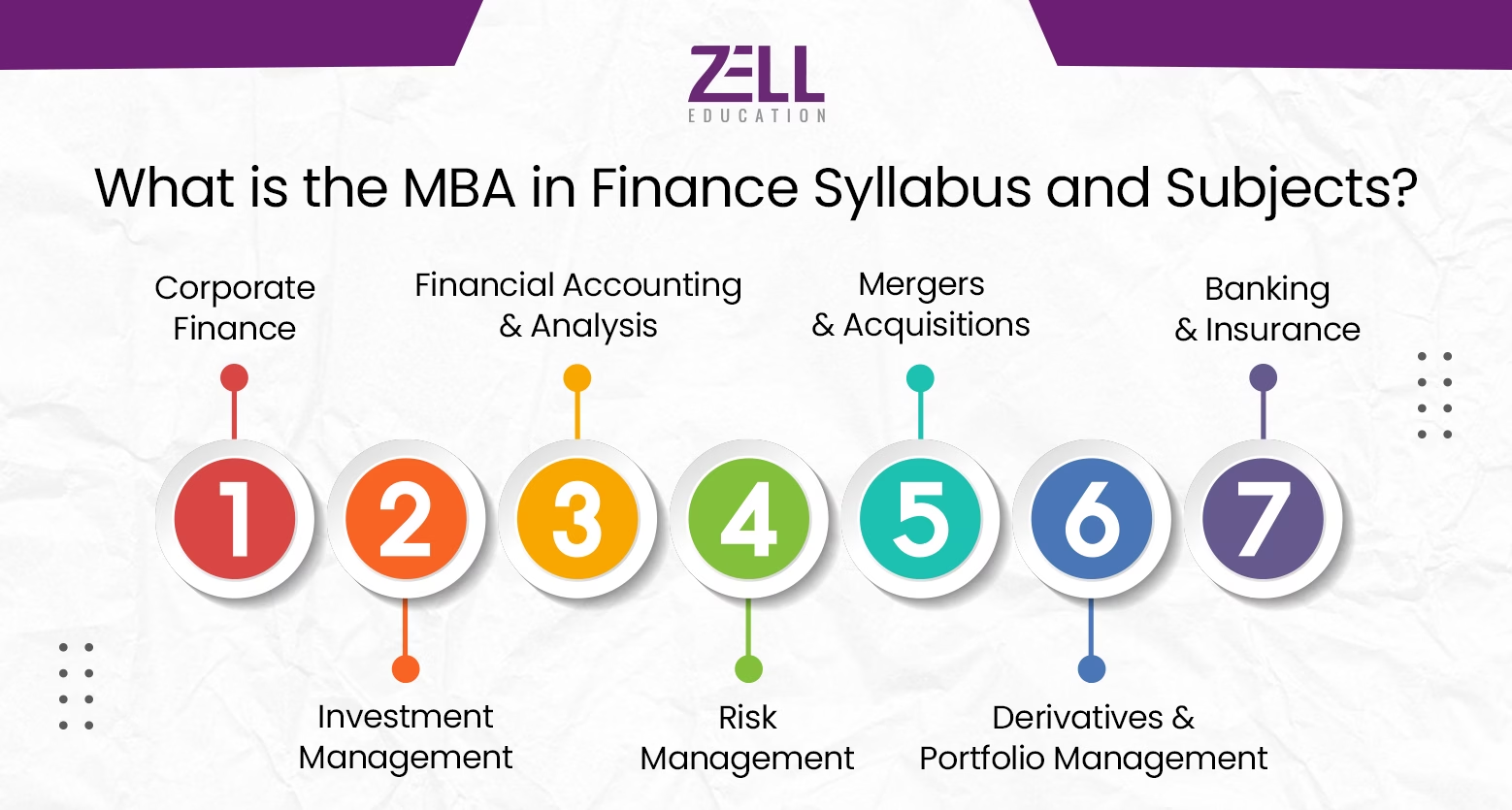
The syllabus covers core finance, managerial skills, and strategic decision-making. Typical subjects:
- Corporate Finance
- Investment Management
- Financial Accounting & Analysis
- Risk Management
- Mergers & Acquisitions
- Derivatives & Portfolio Management
- Banking & Insurance
It also provides electives like fintech, digital banking, and MBA in finance online courses to offer its international exposure to its students.
What is the MBA in Finance Course Duration and Structure?
The duration for an MBA in finance is 2 years divided into 4 semesters. Course structure:
- Year 1: Core management subjects, accounting, and finance fundamentals
- Year 2: Specialization courses, elective subjects, internships, and capstone projects
- Online/part-time finance MBA courses could have their duration extended to 2.5-3 years.
- Certain accelerated courses require only 12 to 18 months to complete.
Which Are the Top Colleges and Universities for MBA in Finance in 2026?
India has several reputed institutions for pursuing an MBA in finance. Top colleges include:
- Indian Institute of Management (IIM) Ahmedabad, Bangalore, Kolkata
- XLRI Jamshedpur
- SP Jain Institute of Management and Research, Mumbai
- NMIMS Mumbai
- FMS Delhi
Global institutions providing online MBAs in finance include Wharton, London Business School, and INSEAD.
What is the MBA in Finance Fees and ROI?
Tuition fees vary greatly depending on collegiate reputation, among other factors.
- Average fees in India: INR 8–25 lakh
- International programs: USD 30,000–70,000
- ROI is high because of high-paying MBA in finance jobs, with average starting salaries ranging from 12 to 25 lakhs per annum.
- Executive or online finance MBA programmes have flexible tuition payments with faster ROI.
Source of Reference for What is the MBA in Finance Fees and ROI: Collegedunia/MBA Finance Fees.
What Are the MBA in Finance Career Opportunities?
Various job opportunities await graduates in banking, finance, and investments. Common MBA in finance job titles:
- Investment Banker
- Financial Analyst
- Corporate Finance Manager
- Risk Manager
- Portfolio Manager
- Financial Consultant
Other areas include managing the treasury, financial planning, and fintech strategies, which provide professionals with an excellent professional pathway.
MBA in Finance vs Other MBA Specializations
MBA in Finance vs MBA in Marketing
| Aspect | MBA in Finance | MBA in Marketing |
| Core Focus | Financial management, investment, accounting | Market research, branding, sales |
| Average Salary (India) | INR 12–25 LPA | INR 8–18 LPA |
| Job Roles | Investment banker, financial analyst | Marketing manager, brand manager |
| Skill Emphasis | Analytical, quantitative | Creative, communication |
MBA in Finance vs MBA in HR
| Aspect | MBA in Finance | MBA in HR |
| Core Focus | Corporate finance, investments | Talent management, organizational behavior |
| Average Salary (India) | INR 12–25 LPA | INR 6–15 LPA |
| Job Roles | Financial manager, risk analyst | HR manager, recruiter |
| Skill Emphasis | Analytical, decision-making | Interpersonal, strategic |
Source of Reference for What Are the MBA in Finance Career Opportunities: Naukri/MBA Finance Jobs.
What Skills Will You Gain from an MBA in Finance?
MBA in finance provides professionals with technical as well as management expertise in finance. Key skills:
- Financial analysis and accounting
- Risk assessment and investment planning
- Corporate valuation and mergers
- Strategic decision-making
- Leadership and team management
- Proficiency in fintech and analytics tools
These skills improve employability within the corporate or business world or help them become entrepreneurs themselves for ACCA MBA or ACCA with MBA students.
Is an MBA in Finance Worth It in 2026?
Yes. High salaries, diverse job opportunities, and international job opportunities make an MBA in finance a good investment. Reasons to pursue:
- High ROI in comparison to other MBA concentrations
- Demand for finance professionals in the corporate, investment, and fintech industries
- Opportunities to work in India or abroad
- Opportunity for linking with certifications such as ACCA for enhanced recognition
For those students asking what is MBA in finance, it marks the start to becoming leaders in finance, banking, investments, and strategic planning in companies.
Want to Pursue MBA in Finance Career?
Book Your Free Counselling Session Today
FAQs on What is an MBA in Finance
What are the eligibility requirements for an MBA in Finance in 2026?
A bachelor’s degree in any subject, entrance exam results, and, for executive or part-time courses, work experience. Having ACCA certification could be an added advantage.
Which are the top colleges in India for MBA in Finance?
IIM Ahmedabad, IIM Bangalore, XLRI Jamshedpur, SP Jain Mumbai, NMIMS Mumbai, and FMS Delhi.
What subjects are taught in the MBA Finance syllabus?
Corporate Finance, Financial Accounting, Risk Management, Investment Analysis, M&A, Portfolio Management, Banking, and elective modules in fintech or online programs.
What are the career options after an MBA in Finance?
Investment banker, financial analyst, corporate finance manager, portfolio manager, risk manager, and financial consultant.
How much salary can I expect after completing an MBA in Finance?
Starting packages in India start from INR 12-25 LPA, based on the college, while international salaries are substantially higher.

Current Role
Co-Founder & CEO at Zell Education
Education
- ACCA – Association of Chartered Certified Accountants, Finance (2011 – 2014)
- Bachelor of Commerce (BCom), Financial Markets from H.R. College Of Commerce & Economics (2010 – 2013)
Location
Mumbai, India
Expertise
ACCA Certified
Why Zell?
- • Largest Provider for Global F&A Courses
- • 4.6 Google Review Rating
- • 1000+ Students placed Annually
- • 500+ Active Hiring Partners
- • Placement Opportunities at the Big 4
- • 100+ Global & Indian Rank Holders
- • 100+ Faculty Network
Speak to A Career Counselor
Zell's 10th Anniversary Offer - Avail a 10% Scholarship