
A private company vs public company differs in ownership, funding, and transparency. Public companies sell shares to the public, while private companies keep ownership limited. Understanding private vs public company helps choose the right business structure.
What Is a Public Company
Imagine walking past a stock exchange and noticing people watching the market closely. Those screens show the value of companies that anyone can invest in. This helps you understand what is a public company in a simple way.
A public company is a business whose shares are open for everyone to buy through the stock market. It must share its financial information openly so investors can see how the company is performing. It also follows strict rules set by market authorities.
- Anyone can buy its shares.
- It publishes open financial reports.
- It follows rules set by regulators.
- Shareholders become part owners.
People usually look at private company vs public company when they want to understand how ownership works. A private company limits who can buy its shares, while a public company opens its shares to everyone.
Here are simple points for private company vs public company
- A public company offers its shares to all investors while a private company keeps ownership limited.
- A public company shares more information while a private company keeps most details internal.
- A public company raises money from the market while a private company relies on private funding.
When you compare private vs public company, it becomes easier to see how transparency, ownership, and fundraising differ.
What Is a Private Company
A private company is a business where ownership stays within a limited group of people. It does not offer its shares to the general public. The control usually stays with founders, families, or selected investors, which allows them to make decisions without public involvement.
- Ownership stays within a chosen group.
- Shares are not traded on the stock market.
- Financial information is shared only with the owners.
- All major decisions remain within a small circle.
Many learners compare private firm vs public firm to understand how each business operates. A public firm opens its shares to the public, while a private firm keeps ownership closed and controlled.
- Private firms keep ownership limited while public firms allow wider investment.
- Private firms share fewer details while public firms must share regular reports.
- Private firms depend on private funding while public firms raise money from the market
People also look at public or private company when trying to understand rules and transparency. A public or private company faces different requirements. Public companies follow strict reporting rules while private companies have fewer disclosure obligations.
Another useful comparison is private company vs public company. This helps explain how ownership, access to funding, and business transparency change between the two structures.
- Private companies limit ownership while public companies allow open shareholding.
- Private companies keep information internal while public companies publish all major updates.
- Private companies raise funds from selected investors while public companies use the stock exchange.
Understanding private firm vs public firm, public or private company, and private company vs public company gives a clear picture of how each type of company functions and why businesses choose one model over the other.
Public vs Private Company: Key Differences
| Factor | Public Company | Private Company |
| Ownership | Shares owned by the general public and institutional investors | Shares owned by founders, families, or selected investors |
| Capital | Raises money through stock markets and public share offers | Raises money from private investors, banks, or venture capital |
| Regulations | Faces stricter rules from market authorities | Has lighter compliance requirements |
| Transparency | Must publish detailed financial reports openly | Shares financial information only with owners |
| Share Trading | Shares can be bought and sold freely in the market | Shares cannot be traded publicly |
| Governance | Decisions follow formal structures with boards and committees | Decisions made by a smaller group with more control |
| Size and Growth | Usually larger and able to scale faster due to wide funding access | Often smaller and grows based on private funding limits |
| Risk and Control | Higher scrutiny but wider risk sharing | More control but higher individual responsibility |
Advantages of Public Company
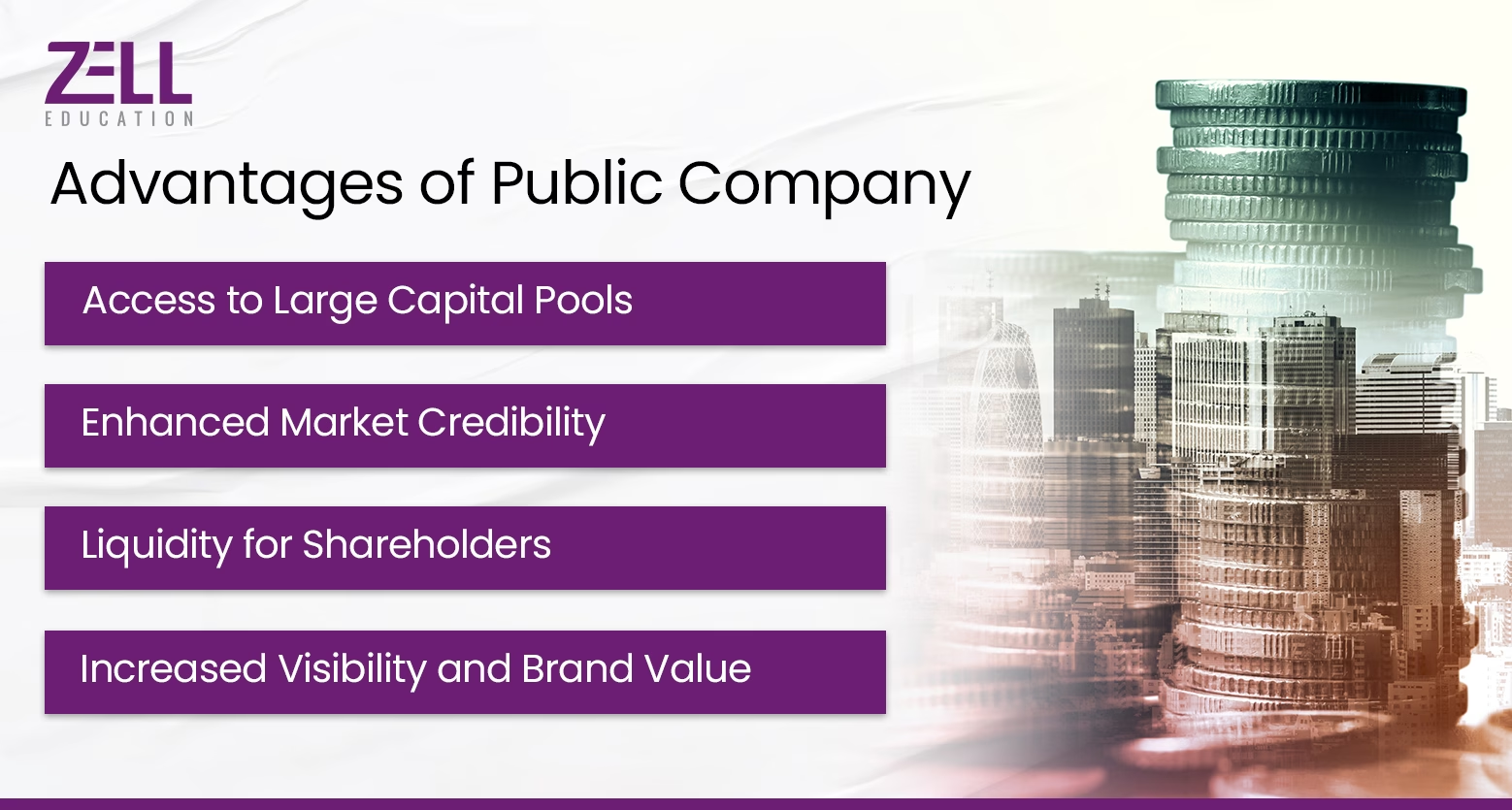
People often look at private firm vs public firm to see why many companies choose to list their shares. A public company gains several strong advantages that help it grow faster and earn wider trust. These benefits make a big difference when deciding between a public or private company and are easy to spot in any private business vs public business comparison.
Access to Large Capital Pools
A public company can raise money from the general public, large institutions, and global investors. This gives it access to far bigger capital pools than a private company. Some key advantages include:
- Ability to sell new shares in order to get money.
- Getting capital from all over the world.
- Financing large projects with ease.
When comparing private firm vs public firm, the ability to raise huge amounts of capital is one of the clearest differences. This also shows why private business vs public business models grow at very different speeds.
Enhanced Market Credibility
Public companies follow strict rules, regular reporting, and transparent practices. This improves their reputation in the market. Typical benefits include:
- Higher investor trust through verified information.
- Stronger partnerships and customer confidence.
- Perception of stability and reliability.
In most private company vs public company comparisons, credibility is a major advantage for public companies. The same advantage appears when studying private business vs public business, where public firms are seen as more reliable.
Liquidity for Shareholders
Shareholders in public companies can buy or sell their shares freely in the stock market, offering high liquidity. This means:
- Easy entry for new investors.
- Easy exit for existing investors.
- Fair pricing based on market demand.
This benefit stands out strongly in a private firm vs public firm comparison because private company shares are harder to transfer. Liquidity also becomes a key factor when evaluating private comapny vs public company structures.
Increased Visibility and Brand Value
Public companies receive more attention from media, analysts, and the general public, boosting visibility and brand recognition. Key benefits include:
- Greater presence in the market.
- Higher customer trust.
- Better reputation among investors.
Visibility becomes a clear advantage when comparing a public or private company. The difference is even more noticeable in private business vs public business discussions because public companies often enjoy stronger brand value.
Curious About Public vs Private Company?
Disadvantages of Public Company
When people compare private firm vs public firm, they often notice that public companies face several challenges despite their advantages. Knowing these drawbacks helps business owners decide whether a public or private company structure is the right choice. The same concerns appear in private business vs public business comparisons, where control, costs, and scrutiny can differ greatly.
High Regulatory Burden
Public companies must follow strict rules set by regulators to protect shareholders and maintain market integrity. This adds a heavy compliance workload. The challenges include:
- Regular audits and financial reporting.
- Filing detailed disclosures with authorities.
- Adhering to corporate governance rules.
In most private vs public company comparisons, regulatory burden is cited as a major disadvantage for public companies. Private firms have few such requirements, making compliance simpler.
Costly and Time-Consuming IPO Process
Going public requires preparing for an initial public offering, which can be expensive and slow. The process involves:
- Paying auditors, legal experts, and underwriters.
- Making a lot of paperwork and a brochure.
- Waiting for months to get the approval from regulators.
The IPO process is one of the most obvious costs and takes the most time when you compare a private company to a public one. This is also an important point in talks about private versus public business, where public companies have to pay a lot of money at the start.
Pressure from Shareholders
Public companies must satisfy the expectations of many investors. This pressure affects decisions and strategy. Challenges include:
- Meeting quarterly earnings expectations.
- Addressing shareholder demands and votes.
- Balancing short-term performance with long-term growth.
Many founders highlight this in private company vs public company comparisons. Private companies face less external pressures, giving them more operational freedom.
Loss of Control for Founders
When a company goes public, founders usually lose some control over decisions. Shares are owned by outside investors, and major actions may require board or shareholder approval. Key concerns include:
- Reduced decision-making power for founders.
- Influence of large institutional investors.
- Need to follow broader governance rules.
In private firm vs public firm comparisons, loss of control is a common reason some businesses remain private. This difference is clear in public or private company discussions and in private business vs public business analyses, where private companies maintain more autonomy.
Advantages of Private Company
When comparing private firm vs public firm, many people notice that private companies offer significant benefits for owners who value control, flexibility, and long-term planning. Choosing a public or private company structure affects transparency, growth, and operational freedom. The same factors are clear in private business vs public business comparisons.
More Control for Owners
Private companies give owners greater control over decisions and operations because shares are held by a limited group. Advantages include:
- Founders or selected investors maintain decision-making power.
- Less influence from external shareholders.
- Ownership stays concentrated, reducing conflicts.
In private vs public company comparisons, control is often cited as a major reason businesses remain private. This contrasts with public companies where founders must answer to a wider shareholder base.
Lower Regulatory Requirements
Private companies follow fewer rules than public companies. This reduces compliance costs and administrative work. Benefits include:
- Less frequent reporting and audits.
- Fewer mandatory disclosures to regulators.
- Simplified governance structures.
When studying private firm vs public firm, lower regulatory requirements make private companies easier to manage. This is a clear advantage in private business vs public business comparisons.
Flexibility in Decision-Making
Private companies can make fast decisions without waiting for shareholder approval or market reactions. Key advantages are:
- Quick responses to market opportunities.
- Ability to adjust strategies internally.
- Freedom to experiment with new ideas.
Many business owners highlight this benefit in private vs public company comparisons, especially when long-term vision and innovation are priorities.
Easier Long-Term Strategic Planning
With fewer external pressures, private companies can focus on long-term growth instead of short-term market expectations. Advantages include:
- Making long-term goals without the pressure of quarterly deadlines.
- Looking for long-term growth instead of short-term income.
- Making sure that business goals and the owner’s strategy are in line.
This advantage is clear in private firm vs public firm analyses and private business vs public business discussions. A private company can pursue strategies that best suit its owners’ goals without compromise.
Disadvantages of Private Company
When comparing private firm vs public firm, it is clear that private companies face certain limitations. Understanding these disadvantages helps business owners decide between a public or private company structure. The differences also become obvious in private business vs public business comparisons, particularly in funding, visibility, and growth potential.
Limited Access to Capital
Private companies cannot raise money from the public, which limits the amount of capital available. This can affect expansion plans. Key limitations include:
- Dependence on private investors or loans.
- Difficulty financing large projects.
- Limited funds for rapid growth.
In private vs public company comparisons, access to capital is often cited as a major constraint. Public companies can raise money by selling shares widely, which gives them more flexibility.
Share Illiquidity
Private companies don’t sell their shares with the public, so they are less liquid. This makes things hard for owners and investors:
- It’s harder to sell shares quickly.
- Transfers often need to be approved by other owners.
- Valuing shares can be harder.
When looking at private firm vs public firm, liquidity is a key difference. Public company shares can be bought and sold easily, providing flexibility to investors.
Lower Public Visibility
Private companies are less visible in the market because they do not release regular reports or hold public attention. This can affect credibility and opportunities:
- Fewer media mentions.
- Investors don’t know much about it.
- Less brand recognition than public companies.
This point is often stressed when talking about the differences between private and public companies or businesses. Public companies usually have better name knowledge and trust.
Potential Challenges in Scaling
Growing a private company can be slower due to limited capital and resources. Challenges include:
- Relying on private or internal money.
- Not as many people see it as public companies do.
- It takes a lot of planning and patience to grow your business.
When comparing private firm vs public firm, scaling is often easier for public companies because of access to larger funds and wider market opportunities.
Which Is Better: Public or Private Company?
Choosing between a public or private company depends on the business’s goals, priorities, and resources. Many people compare private firm vs public firm to see which structure suits them better. Each option has its own strengths and drawbacks that influence control, funding, transparency, and growth.
A public or private company can be better depending on what the owners value most. Public companies offer benefits such as:
- Access to large capital pools.
- Higher visibility and stronger brand recognition.
- Liquidity for shareholders.
Private companies provide advantages like:
- More control for owners.
- Make the rules that businesses must follow less strict.
- Being able to change your mind.
- Long-term strategic planning that is easier to do.
When studying private vs public company, these factors are critical:
- If fast growth, wide funding, and public trust matter, a public company may be better.
- If control, privacy, and less scrutiny are priorities, a private company may be more suitable.
Comparing private business vs public business also highlights differences in risk and accountability:
- Public companies face higher scrutiny and pressure from shareholders.
- Private companies maintain concentrated control and fewer compliance obligations.
In the end, picking a public or private company depends on what the business wants to achieve, how much money it needs, and whether it can handle reporting to the public and shareholders. Understanding the differences between a private firm vs public firm and a private vs public company makes it easier for owners to decide.
Want to Pursue CMA Accounting Career?
Book Your Free Counselling Session Today
Conclusion
Choosing between a public or private company depends on the priorities of the business and its owners. When comparing private firm vs public firm, it is clear that each structure has unique advantages and disadvantages. Public companies provide access to large capital, liquidity, and wider visibility, while private companies offer more control, flexibility, and fewer regulatory demands.
Understanding private vs public company and private business vs public business differences helps owners choose what fits their growth plans, risk comfort, and management approach. Insights gained through CMA certification further support informed decision-making by evaluating the strengths and challenges of public and private companies, ensuring the chosen structure aligns with both immediate needs and long-term goals.
FAQs on Public vs Private Company
What is the main difference between a public corporation and a private company?
A public corporation lets anyone buy its shares, while a private company keeps ownership limited to a small group of selected people.
Is it better to invest in public or private corporations?
Investing in public corporations gives you better liquidity and clearer information, while private corporations might offer higher growth but come with more risk and limited access.
What are the regulatory requirements for a public company?
Public companies need to follow strict rules for reporting, audits, and disclosures that are set by market regulators.
Can a private company go public?
Yes, a private company can turn into a public company by offering its shares to investors through an initial public offering.
What are the advantages of staying private?
Private companies have more control, more flexibility, and fewer regulatory obligations than public companies.

Current Role
Co-Founder & CEO at Zell Education
Education
- ACCA – Association of Chartered Certified Accountants, Finance (2011 – 2014)
- Bachelor of Commerce (BCom), Financial Markets from H.R. College Of Commerce & Economics (2010 – 2013)
Location
Mumbai, India
Expertise
ACCA Certified
Why Zell?
- • Largest Provider for Global F&A Courses
- • 4.6 Google Review Rating
- • 1000+ Students placed Annually
- • 500+ Active Hiring Partners
- • Placement Opportunities at the Big 4
- • 100+ Global & Indian Rank Holders
- • 100+ Faculty Network
Speak to A Career Counselor
Zell's 10th Anniversary Offer - Avail a 10% Scholarship