
IFRS S2 is a global sustainability reporting standard that provides guidance on the disclosures that companies make regarding information related to climate disclosures. IFRS S2 has been developed by the ISSB, which provides businesses with an opportunity to disclose their climate-related information uniformly. In this article, we will discuss the basics of IFRS S2, different pillars of IFRS S2, disclosures, the importance of IFRS S2, etc., for beginners.
Comprehensive Guide on ‘What Is IFRS S2?’
- IFRS S2: IFRS S2 is a global climate disclosure standard that helps businesses disclose their information related to climate disclosures in a uniform manner.
- ISSB Climate Standard: The ISSB climate standard provides a global sustainability reporting standard that helps businesses disclose their information in a transparent manner.
- IFRS S2 Climate-Related Disclosures: Businesses will have to make detailed IFRS S2 climate-related disclosures. This will include information related to governance, strategies, risk management, and emissions.
- IFRS S1 and S2: Most people who want to become experts in sustainability reporting want to learn about IFRS S1 and S2. It provides a foundation in global sustainability reporting.
- What is IFRS: Understanding What is IFRS is essential because sustainability standards like IFRS S2 complement traditional financial reporting frameworks.
- Diploma in IFRS: Professionals often pursue a Diploma in IFRS to understand evolving standards such as sustainability reporting and IFRS S2 disclosures.
The worldwide investment community now demands from companies that they provide answers to a single critical question regarding climate change. Climate risks now affect corporate strategies and investment choices and financial outcomes because of extreme weather events and regulatory changes.
In order to meet this increasing need for transparency, IFRS S2 was created as part of the global sustainability reporting standards. It ensures that companies make disclosures about their climate-related risks, emissions, and sustainability strategies in a structured manner to help investors make informed decisions.
Limited Offer: Speak to an IFRS specialist about your future
 Call our Experts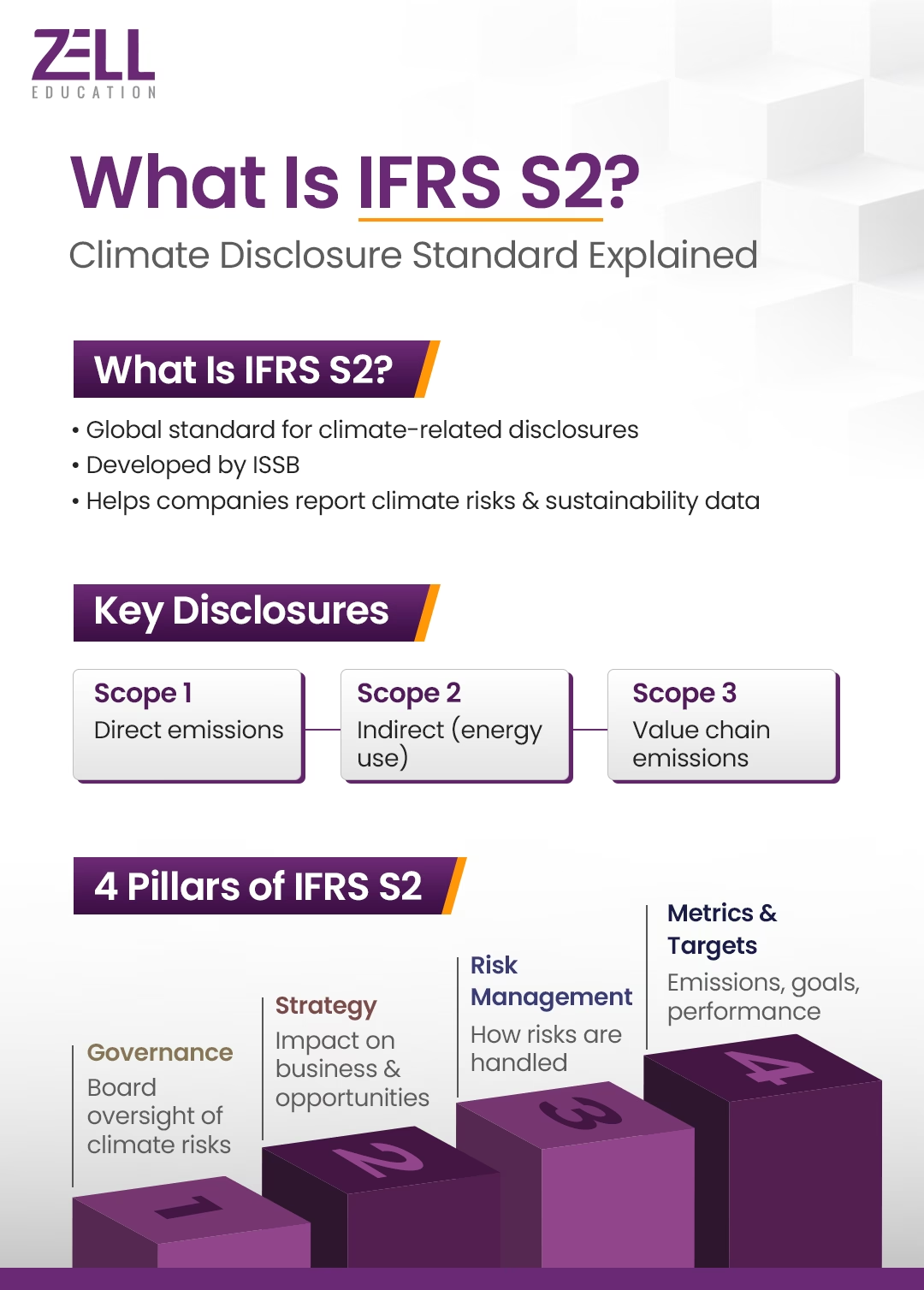
How Does the ISSB Framework Compare IFRS S1 and IFRS S2?
The sustainability reporting standards comprise two main standards. These are:
- IFRS S1 – General sustainability disclosures
- IFRS S2 – Climate-related disclosures
Together, IFRS S1 and S2 create a global baseline for sustainability reporting.
How Did Reporting Transition from TCFD to IFRS Sustainability Standards?
Prior to IFRS S2, companies across the globe have been relying on the recommendations made by the Task Force on Climate-related Financial Disclosures (TCFD). The major events that took place in the transition to IFRS S2 include:
- TCFD provided voluntary climate disclosure guidelines
- Sustainability reporting demand increased globally
- The ISSB introduced IFRS S2 to standardize reporting
With IFRS S2 climate-related disclosures, an information reporting standard was created.
What Is the Goal of Global Baseline Sustainability Disclosures?
The main aim of IFRS S2 is to ensure uniformity in the reporting of climate-related information. The major goals that IFRS S2 achieves include:
- Improving transparency for investors
- Standardizing global sustainability disclosures
- Supporting capital market decision-making
What Are the Four Pillars of IFRS S2 Disclosures?
IFRS S2 comprises four major pillars of climate-related disclosures. These four pillars ensure that companies disclose their information in a systematic manner.
Governance: How Do Boards Monitor Climate Risks?
IFRS S2 ensures that companies disclose their governance information in a clear manner. It includes the following information:
- Board oversight of climate issues
- Management responsibilities for sustainability strategy
- Climate-related decision-making processes
Strategy: How Do Companies Identify Climate Risks and Opportunities?
This pillar outlines the impact of climate change on business models. Companies must identify:
- climate-related risks
- sustainability opportunities
- long-term climate strategies
Physical Risks: Extreme Weather and Infrastructure
Physical climate-related risks include:
- floods and hurricanes
- droughts affecting supply chains
- infrastructure damage due to extreme weather
These climate-related risks must be disclosed by companies using IFRS S2.
Transition Risks: Policy Changes and Market Shifts
Transition climate-related risks include changes in the economy due to the transition to a low-carbon economy. Transition risks include:
- carbon taxes
- stricter climate regulations
- changes in consumer demand
Risk Management: How Are Climate Risks Integrated into Business Processes?
Companies must identify how climate change is managed within existing risk management systems. Key components include:
- climate risk identification methods
- integration with enterprise risk management
- monitoring and mitigation processes
Metrics and Targets: How Do Companies Measure Climate Progress?
This pillar requires companies to track sustainability performance using metrics and targets. Key disclosures include:
- emissions metrics
- energy consumption
- net-zero targets
What Are the Key Greenhouse Gas Emissions Reporting Requirements?
One of the most critical components of IFRS S2 is greenhouse gas emissions reporting. Companies must report greenhouse gas emissions for different scopes.
What Are Scope 1 and Scope 2 Emissions?
Under IFRS S2, companies are required to report direct and indirect emissions.
| Emission Scope | Description | Example |
| Scope 1 | Direct emissions from company operations | Company-owned factories |
| Scope 2 | Indirect emissions from purchased electricity | Electricity used in offices |
Why Is Scope 3 Reporting Challenging?
Scope 3 emissions are indirect emissions from the value chain of companies. The challenges in scope 3 emissions are:
- data collection from suppliers
- measurement complexity
- inconsistent reporting standards
Despite the challenges, IFRS S2 encourages companies to be transparent about their value chain emissions.
Why Do Industry-Specific Metrics Matter?
Different companies face different types of climate change risk. For instance:
- manufacturing companies track energy consumption
- banks evaluate financed emissions
- logistics firms track fuel efficiency
Want a 90% pass score? Message us for our IFRS success tips
 Chat with Mentor
Why Is IFRS S2 Important for Investors and Companies?
The introduction of IFRS S2 has significant implications for capital markets worldwide. This is because investors are increasingly relying on sustainability data while making investment decisions.
How Does Transparency Improve Capital Allocation?
The standardised disclosures as per IFRS S2 have helped investors in capital allocation. This is because IFRS S2 has provided the following benefits to investors:
- better risk assessment
- improved investment decisions
- greater market transparency
How Does IFRS S2 Reduce Greenwashing?
Greenwashing is the practice of making false claims by companies regarding their sustainability. IFRS S2 has solved this problem by introducing the climate standard. This is because:
- requiring standardized disclosures
- improving data comparability
- increasing regulatory oversight
Which Countries Are Adopting IFRS S2?
Most countries have started to adopt the climate standard as proposed by IFRS S2. For instance:
- United Kingdom
- Canada
- Australia
- Singapore
How Can Companies Prepare for IFRS S2 Compliance?
Careful preparation is required by organisations before they start implementing IFRS S2. Preparation includes improving data collection and governance structures.
What Is a Climate Gap Analysis?
A climate gap analysis is a tool used to identify gaps in disclosures by organisations. Steps include:
- reviewing current sustainability reports
- comparing them with IFRS S2 climate-related disclosures
- identifying reporting gaps
How Should Companies Improve Emissions Data Collection?
Data collected regarding emissions is very important for organisations in preparing their reports using IFRS S2. Steps include:
- implement carbon accounting systems
- automate data collection processes
- train sustainability teams
Why Should Financial and Sustainability Reporting Be Aligned?
IFRS S2 highlights the importance of integrating financial and sustainability reporting. Benefits include:
- consistent reporting cycles
- improved risk management
- better communication with investors
Aligning these reports using IFRS S2 helps organisations become transparent. Individuals interested in learning about sustainability reporting can take courses such as a Diploma in IFRS and learn how to effectively implement IFRS S2.
What Does the Future of Corporate Climate Transparency Look Like?
IFRS S2 is a significant step in the journey to a standardised system of climate reporting. It allows stakeholders to understand how companies manage their environmental risks and opportunities by requiring consistent disclosures about their climate performance.
As sustainability grows in importance in capital markets worldwide, IFRS S2 is set to play a vital role in informing corporate transparency and reliability in reporting climate change information.
FAQs on IFRS S2
What is the difference between IFRS S1 and IFRS S2?
The primary difference is that while IFRS S1 deals with overall sustainability information, IFRS S2 deals with disclosures related to climate change.
When does IFRS S2 become mandatory for companies?
The adoption of IFRS S2 will take effect in countries that choose to implement the standard for their financial reports beginning in 2024.
Do SMEs need to comply with IFRS S2?
The small and medium enterprise sector does not need to follow IFRS S2, yet large public companies will probably adopt the standard.
How does IFRS S2 relate to TCFD recommendations?
IFRS S2 is based on the TCFD framework and includes similar components such as governance, strategy, risk management, and metrics.
What are the disclosure requirements for Scope 3 emissions?
Companies are expected to report Scope 3 emissions where data is available and provide information about methodologies used in their measurement.

Current Role
Co-Founder & CEO at Zell Education
Education
- ACCA – Association of Chartered Certified Accountants, Finance (2011 – 2014)
- Bachelor of Commerce (BCom), Financial Markets from H.R. College Of Commerce & Economics (2010 – 2013)
Location
Mumbai, India
Expertise
ACCA Certified
Why Zell?
- • Largest Provider for Global F&A Courses
- • 4.6 Google Review Rating
- • 1000+ Students placed Annually
- • 500+ Active Hiring Partners
- • Placement Opportunities at the Big 4
- • 100+ Global & Indian Rank Holders
- • 100+ Faculty Network
Speak to A Career Counselor
Zell's 10th Anniversary Offer - Avail a 10% Scholarship