
Personal finance is more than just money management because it serves as the essential path to achieving financial independence. The guide provides personal finance tips while teaching you personal finance management through finance basics for beginners and other personal finance strategies, which will be available in 2026.
Comprehensive Guide on ‘Guide to Personal Finance’
- Personal Finance: Personal finance refers to the process of managing personal financial resources through different methods, which include budgeting, saving, investing, and debt management to reach personal financial objectives.
- Finance Basics for Beginners: It is important to learn basic finance for beginners in order to lay the groundwork for the achievement of wealth and other personal finance goals.
- Basic Finance: The fundamental principles of budgeting and compounding and risk management establish the necessary requirements that beginners must follow to attain their personal finance objectives.
- Learn Personal Finance: It is essential for everyone to learn personal finance in order to achieve financial independence and stability in the future.
- How to Manage Personal Finances: Knowing how to manage personal finances allows you to prioritise goals, reduce debt, and maximise wealth-building opportunities.
- Personal Finance Tips: The best personal finance tips include saving regularly, tracking expenses, and investing regularly over a period of time.
Imagine you get your paycheck, and before you know it, all your money is gone. It is as if it has been sucked away by all the bills and subscriptions you pay each month. It is not uncommon to not understand how to effectively manage your finances. However, that is exactly where personal finance comes in.
If you are interested in learning personal finance tips and basic finance, you will be amazed at how it can change your entire approach to finance. In this guide, we will cover practical strategies to budget, save, invest, and manage debt in 2026. By following these principles, you can learn how to manage personal finances effectively and secure a financially independent future.
“Talk to a finance expert now and get personalized guidance on budgeting, saving & investing!”
 Call Now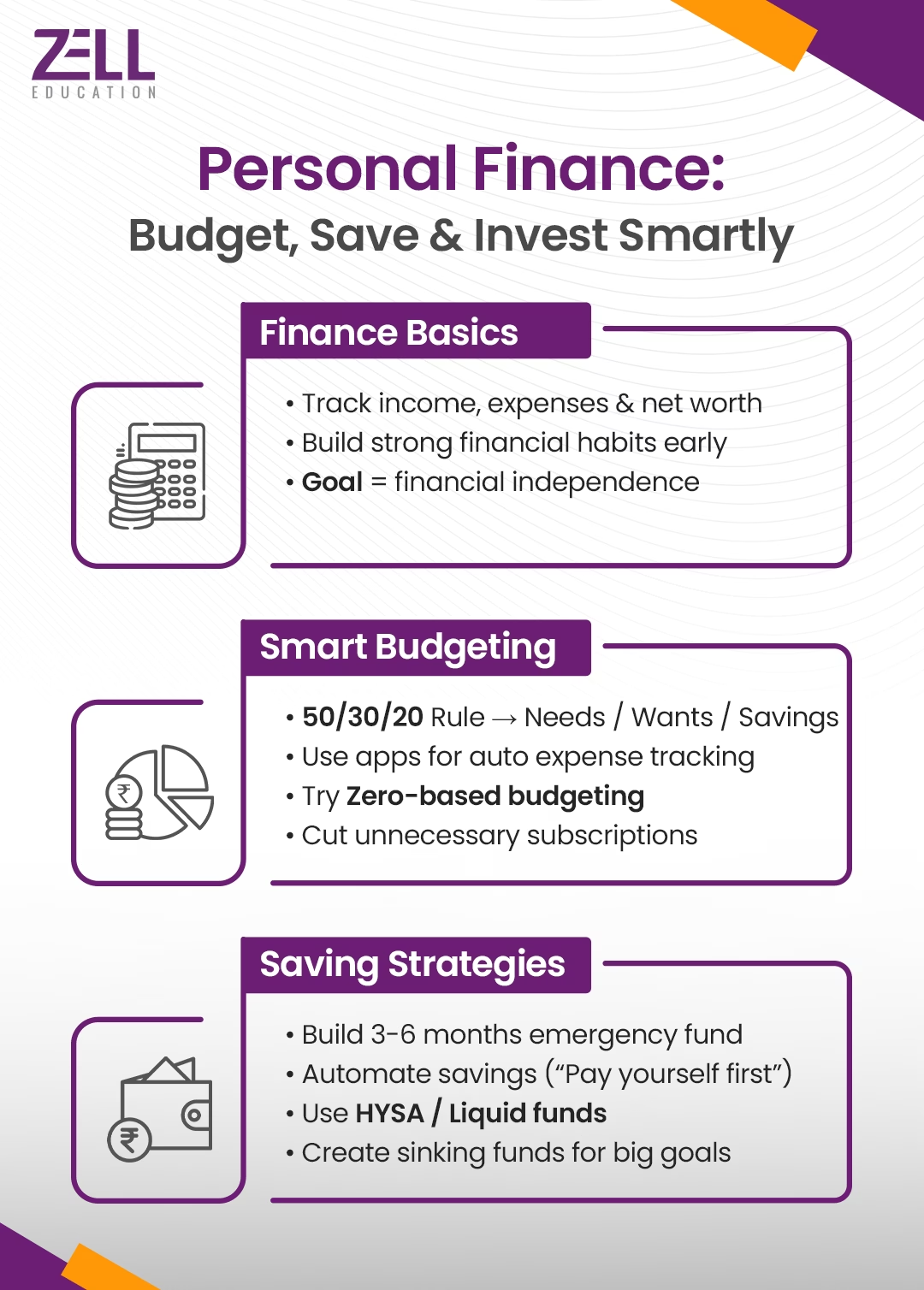
Why Is Financial Literacy Your Best Asset in 2026?
Financial literacy is the key to effectively managing your finances. With financial literacy, you will be able to apply all the personal finance tips you will learn and be able to build wealth that will ensure a financially independent future. It entails:
- Understanding income, expenses, and net worth
- Tracking spending patterns for smarter decisions
- Learning finance basics for beginners to avoid financial mistakes
How Is Modern Budgeting Evolving Beyond Spreadsheet Basics?
The process of managing budgets in 2026 now uses technology-based systems that eliminate the need for traditional budget tracking methods. Digital tools and automated systems now enable organisations to handle their financial processes with greater precision and speed.
The 50/30/20 Rule in a High-Inflation Economy
The 50/30/20 is a budgeting technique that ensures you effectively manage your finances. It entails 50% needs, 30% to wants, and 20% to savings.
Top AI Budgeting Apps for Auto-Tracking Expenses
The best AI budgeting apps that will help you effectively track expenses include YNAB, Mint, and Money Dashboard.
How to Use “Zero-Based Budgeting” to Maximize Every Rupee/Dollar
Zero-based budgeting ensures every unit of income is assigned a purpose, helping reduce waste and improve savings.
Managing Subscription Fatigue: Auditing Your Fixed Costs
The process of auditing your subscriptions needs to occur on a regular basis because this practice helps you to prevent financial losses. Financial planning requires this basic yet essential step for its optimisation.
What Are High-Impact Saving Strategies for 2026?
The automation of saving processes, together with disciplined financial management and efficient tools, creates the best return on investment for 2026 saving methods. To build saving routines that last for many years, people need to develop their ability to save money consistently.
Building an Emergency Fund: How Much is Enough?
Financial experts recommend that people establish emergency funds, which should cover their basic needs for 3-6 months.
High-Yield Savings Accounts (HYSA) vs. Liquid Funds
| Savings Option | Expected Returns | Liquidity | Risk Level |
| HYSA | 5–6% | High | Low |
| Liquid Funds | 6–7% | Very High | Low–Moderate |
Automating Your Savings: The “Pay Yourself First” Method
Save a fixed percentage of your income regularly. This should be done automatically to avoid spending on anything else.
Sinking Funds: Saving for Big Purchases Without Debt
Sinking funds are designed to assist in the savings process for big purchases, allowing individuals to avoid debt.
“Chat on WhatsApp, Get Instant Help to Start Your Financial Journey Today!”
 Chat on WhatsApp
How Is Investing Made Simple in 2026?
The investing environment today offers new investors access to investing platforms that are suitable for beginners. These platforms allow new investors to make various investment options. This ensures that even with little money, wealth can accumulate over time.
Index Funds and ETFs: The Foundation of a Lazy Portfolio
Index funds and ETFs are investing options that can help new investors begin their investing journey. These options allow investors to benefit from market performance.
The Rise of Fractional Investing in Real Estate and Blue-Chip Stocks
Fractional investing lets beginners buy portions of expensive assets, diversifying their portfolio with minimal capital.
Understanding Tax-Advantaged Accounts (PPF, ELSS, or 401k/IRA)
These accounts reduce tax liability while helping your investments grow for long-term wealth.
Rebalancing Your Portfolio: A Semi-Annual Checklist
Reassess portfolio allocation twice a year to maintain risk alignment and optimise returns.
How Can Debt Management Clear the Path to Financial Freedom?
Debt management can help an individual improve their financial status while accumulating wealth. This is because paying debts can help you achieve your financial goals.
Debt Snowball vs. Debt Avalanche: Which Strategy Wins?
- Debt Snowball: Pay off small debts first to gain motivation
- Debt Avalanche: Pay high-interest debts first to save money
Managing Credit Card Interest and Improving Your Credit Score
Always pay your bills on time to improve your credit score. Keeping your credit utilisation rate below 30% also helps.
How Can Future-Proofing Include Insurance and Estate Planning?
Insurance and estate planning can protect your financial assets to ensure your family remains financially sound. This includes:
- Life and health insurance coverage
- Wills and trusts for asset management
- Disability and critical illness protection
The given personal finance tips will assist your financial decisions and ensure your financial security.
Conclusion: How to Take Your First Step Toward Financial Independence
It is possible to become proficient in personal finance in the year 2026 by applying the personal finance basics for beginners, using modern personal finance tools, and employing effective and smart personal finance tips, along with pursuing a CFA course. This way, you can achieve your dreams of becoming financially independent and living a carefree life without any economic stress.
FAQs on Guide to Personal Finance
What is the simplest budgeting method for beginners in 2026?
The easiest way for beginners in 2026 is to use the 50/30/20 rule for managing basic finances.
How much of my salary should I save and invest every month?
You need to save and invest at least 20% of your salary each month.
Are index funds still the best investment for long-term growth?
Yes, index funds are considered to be a great investment option for long-term investors.
How many months of expenses should be in an emergency fund?
It is recommended to have an emergency fund to cover 3-6 months of your essential expenses.
Is it better to pay off debt or start investing first?
Prioritise high-interest debt repayment first, then allocate surplus income to investments.

Current Role
Co-Founder & CEO at Zell Education
Education
- ACCA – Association of Chartered Certified Accountants, Finance (2011 – 2014)
- Bachelor of Commerce (BCom), Financial Markets from H.R. College Of Commerce & Economics (2010 – 2013)
Location
Mumbai, India
Expertise
ACCA Certified
Why Zell?
- • Largest Provider for Global F&A Courses
- • 4.6 Google Review Rating
- • 1000+ Global Placement Partners
- • Placement Opportunities at the Big 4
- • 100+ Global & Indian Rank Holders
- • 100+ Faculty Network
- • 10,000+ Students Placed
Speak to A Career Counselor
Zell's 10th Anniversary Offer - Avail a 10% Scholarship