
Key Takeaways
- The average salary for a CFA in India ranges from ₹6 to ₹25+ lakh per annum (LPA)
- Factors affecting CFA salaries are experience, location, and employer type
- Cities like Mumbai and Bangalore often provides the best CFA career opportunities
Comprehensive Guide: CFA Salary in India
- What is CFA?
The CFA is a prestigious and globally recognised professional qualification awarded by the CFA Institute.
- What is the average CFA salary?
The average annual salary for a CFA in India ranges from ₹6 to ₹25 lakh or more
- What is the CFA entry-level salary?
Fresh CFA candidates can expect to earn between ₹6 and ₹12 lakh per annum
- What is the CFA mid-level salary?
Those clearing CFA Level 2 are generally paid between Rs 10 lakh to Rs 25 lakh per annum.
- What is the CFA senior-level salary?
CFA charterholders in senior roles can command salaries from ₹18 to ₹50 lakh+ per annum
- Which is the best city for CFAs to work in?
Globally, New York and London and, in India, Mumbai and Bangalore are the best cities
Find Out What CFA Professionals Earn in India
 Explore CFA Career
Introduction
A Chartered Financial Analyst (CFA) is a course that qualifies candidates to work in the field of finance. It is a globally recognised course that allows candidates to work in India as well as in countries like the US, UK, UAE, Hong Kong, and Australia.
The demand for CFAs has exploded, and many companies are looking for specialists to help with investment portfolio management. Furthermore, international companies in India are increasingly interested in employing people with globally accepted qualifications rather than local qualifications.
CFA Certification: What You Should Know
The Chartered Financial Analyst (CFA) is the world’s leading, globally recognised, financial analysis and investment management credential. Let’s explore the CFA world with a clear and detailed knowledge of its concepts.
What is the CFA Program?
What is CFA? The Chartered Financial Analyst (CFA) program is a highly prestigious certification and a very desired position across several multinational companies around the globe. It is one of the most respected credentials in finance, representing expertise in investment analysis, portfolio management and ethical financial decision making
CFA Eligibility
Students who have finished their graduation or are in their last year of graduating are eligible for CFA and may register for the CFA exams.
| Requirement | Details |
| Bachelor’s Degree | Completed bachelor’s degree or equivalent qualification |
| Undergraduate Student | Within 23 months of graduation for Level I registration |
| Work Experience Route | 4,000 hours of professional work experience and/or higher education over at least 3 years |
| Passport | Valid international travel passport required |
| Exam Language | Must be able to take exams in English |
| Academic Background | Any stream (Commerce, Science, Arts, Engineering, etc.) eligible |
| Age Limit | No minimum or maximum age limit specified |
CFA Exam Structure
The exam structure of the CFA is quite simple. It consists of 3 levels, i.e., Level 1, Level 2, and Level 3.
| CFA Level | Focus Area | Exam Format |
| CFA Level I | Investment Tools & Financial Concepts | Multiple-Choice Questions |
| CFA Level II | Asset Valuation & Financial Analysis | Item Set Questions |
| CFA Level III | Portfolio Management & Wealth Planning | Constructed Response + Item Sets |
| CFA Charterholder | Professional Experience + All Levels Passed | CFA Designation Awarded |
The CFA Journey in India
The CFA journey in India is a highly demanding but prestigious path for finance professionals. It comprises the following aspects:
- The CFA program is divided into 3 levels, and each level requires serious preparation.
- Average time for candidates to complete all three levels: 2-4 years
- The exams include topics such as ethics, economics, corporate finance, portfolio management and alternative investments, among others.
The CFA program requires intense dedication candidates are recommended to devote 300+ hours of study for each level. But the effort can be worth it.
- Entry level CFA candidates can expect salaries in the range of ₹6 to 12 lakh per annum in India
- Experienced shareholders can make ₹20 lakh and above depending upon their roles and expertise.
Want a Higher Salary in Finance? Start with CFA
 Book Free Counselling
CFA Salary Overview in India
The salary CFA professionals receive in India varies and depends on factors like experience, job role, industry, company size, and geographical location. Here’s an overview of CFA salary in India:
Average Salary
National Average: The average annual salary for a CFA in India is approximately ₹6,82,300, which is about ₹36,960 per month. This figure is ₹2,94,800 (+76%), higher than the national average salary in India.
Differenciating Aspects: Your salary after CFA may largely depend on the kind of work experience you have and your academic qualifications. Moreover, even after you start working as a financial analyst, the path of growth you experience and your salary package depend on your skills in finance and the kind of impression you make on your peers.
Salary by Job Role
Salaries for a CFA professional vary based on the scope and job role and also the size of the organisation that the employee is working in.
| Job Role | Average Salary (INR per annum) |
| Financial Analyst | 6-12 lakhs+ |
| Investment Banker | 10-35 lakhs+ |
| Portfolio Manager | 13-40 lakhs+ |
| Risk Manager | 9-30 lakhs+ |
| Equity Research Analyst | 8-20 lakhs+ |
| Wealth Manager | 7-25 lakhs+ |
Bonuses, profit sharing, and incentives can significantly boost total compensation, particularly in investment banking and portfolio management.
CFA Salary by Location
The CFA salary can vary by location based on the cost of living, presence of financial hubs and industries. Your industry choice matters, too. People who work in investment banking and asset management are paid more than those who work in corporate finance or risk management.
| Job Role | Mumbai (₹ LPA) | Bengaluru (₹ LPA) | Delhi NCR (₹ LPA) | Other Cities (₹ LPA) |
| Financial Analyst | 6 – 10 | 6 – 9 | 5.5 – 9 | 4.5 – 8 |
| Investment Banker | 12 – 22 | 10 – 18 | 11 – 20 | 8 – 15 |
| Portfolio Manager | 15 – 28 | 14 – 25 | 14 – 26 | 10 – 20 |
| Risk Manager | 10 – 18 | 9 – 17 | 9 – 16 | 7 – 14 |
| Equity Research Analyst | 7 – 13 | 6.5 – 12 | 6.5 – 12 | 5 – 10 |
| Wealth Manager | 8 – 15 | 7 – 14 | 8 – 15 | 6 – 12 |
Note: These ranges represent typical annual salaries for CFA candidates and charterholders across experience levels. Actual compensation varies based on the CFA level cleared, years of experience, employer, performance bonuses, and specialisation.
Scope of CFA
The CFA charter provides a gateway to elite, decision-making roles in the global finance sector, such as Portfolio Management, Investment Banking, Equity Research, and Private Equity.
Career Opportunities After CFA
The career scope of CFA opens doors to elite, high-paying roles in asset management, investment banking, and private wealth. CFA professionals can work in the following:
- Asset & Portfolio Management
- Investment Banking
- Equity Research
- Private Equity & Venture Capital
- Corporate Finance & Strategy
- Risk Management
Global Opportunities
A Chartered Financial Analyst designation, recognised in over 140+ countries, unlocks elite, high-paying career paths across the globe, including roles in investment banking, asset management, and private equity. Following are the best 10 countries for CFAs to work in:
- United Arab Emirates (UAE)
- United States
- Switzerland
- Singapore
- United Kingdom
- Hong Kong
- Canada
- Australia
- India
- Luxembourg
Top Recruiters
Top global and local firms recruit CFA charterholders for roles in investment banking, asset management, and corporate finance.
- Global Investment Banks: J.P. Morgan, Goldman Sachs, Morgan Stanley, Citigroup, HSBC, and Bank of America.
- Asset Management Companies (AMCs): BlackRock, HDFC AMC, ICICI Prudential AMC, and Kotak Mahindra AMC.
- Big 4 Consulting & Advisory Firms: Deloitte, EY, KPMG, and PwC.
- Credit Rating Agencies & Private Equity: CRISIL, S&P Global, and Moody’s.
CFA Salary Based on Levels
A CFA’s salary scales significantly as you progress through the levels. The breakdown below reflects typical base salary ranges for CFA candidates and charterholders in the Indian financial market:
| CFA Status | Typical Salary Range (₹ LPA) | Common Roles |
| Pursuing CFA Level 1 | 4 – 6 | Financial Analyst, Research Associate |
| Cleared CFA Level 1 | 5 – 8 | Equity Research Analyst, Credit Analyst |
| Pursuing CFA Level 2 | 6 – 9 | Investment Analyst, Risk Analyst |
| Cleared CFA Level 2 | 7 – 12 | Senior Analyst, Valuation Analyst |
| Pursuing CFA Level 3 | 8 – 13 | Portfolio Analyst, Corporate Finance Analyst |
| Cleared CFA Level 3 | 9 – 18 | Investment Analyst, Associate, Wealth Manager |
| CFA Charterholder | 15 – 35+ | Portfolio Manager, Investment Banker, Risk Manager |
CFA Salary in India Based on Job Profile
Based on what job profile you work in, your average salary after completing CFA might be as follows.
| Job profile | Average Starting Salary (in INR) |
| Financial Analyst | 4,00,000 to 7,00,000 |
| Portfolio Manager | 5,50,000 to 7,50,000 |
| Finance Manager | 7,00,000 to 10,00,000 |
| Financial Advisor | 4,00,000 to 5,00,000 |
| Investment Banker | 8,00,000 to 10,00,000 |
| Hedge Fund Manager | 9,00,000 to 15,00,000 |
CFA Job Profiles
If you intend to pursue a CFA course, numerous career profiles are available to you, depending upon your preferences and skills.
Financial Analyst
- As a Financial Analyst, you will be responsible for going through the financial data and determining the next steps that should be taken to maximise the amount of profit/revenue earned.
- A financial analyst will also predict financial outcomes based on the current market trends and participate in making business decisions.
The average salary of a Financial Analyst is around 47,000 per month.
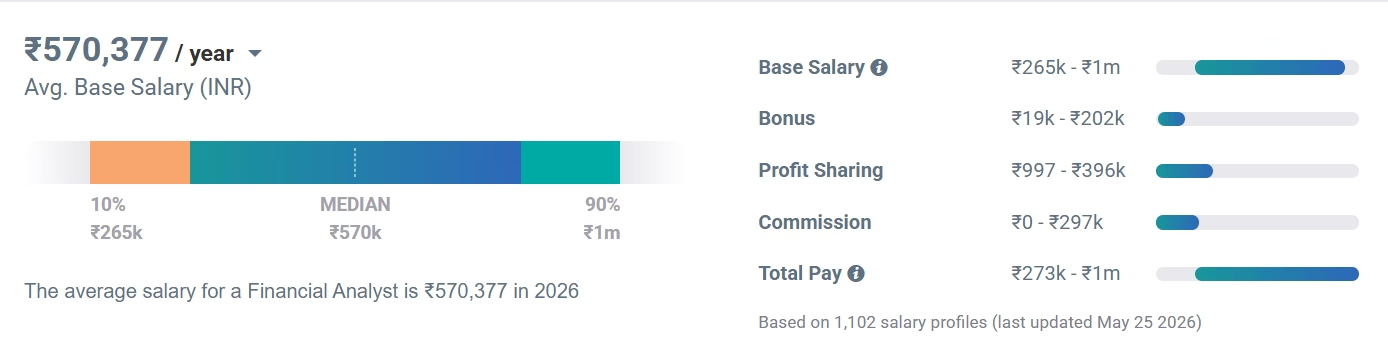 Source for Financial Analyst Salary – PayScale
Portfolio Manager
- A Portfolio Manager’s primary task is to make important decisions concerning investment, either for themselves or for a client. Such professionals employ several investment strategies to help their clients meet certain financial goals.
- This job requires a lot of research and strategic thinking to know when to let go of certain investments and when to modify them to get the best outcome.
The average salary of a Portfolio Manager is around 107,000 per month.
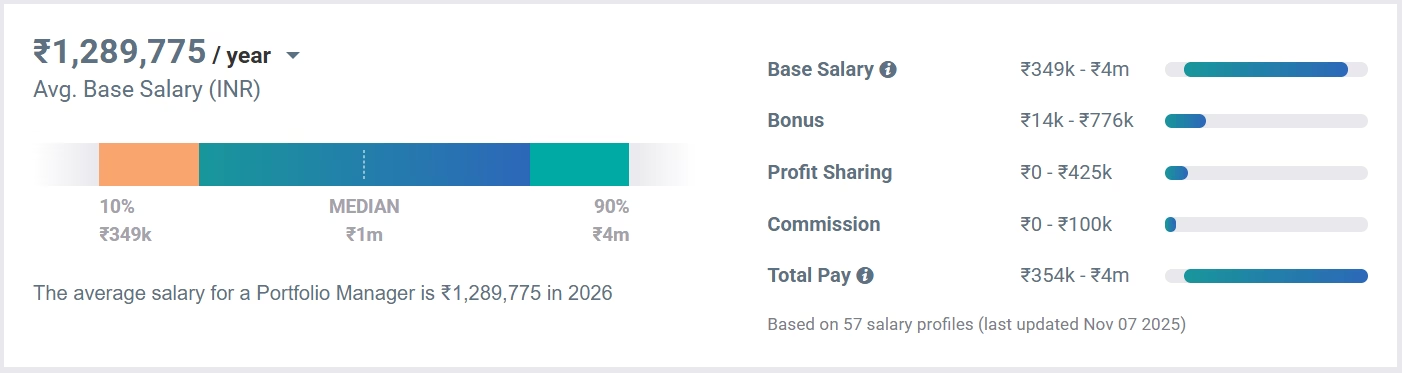
Source for Portfolio Manager Salary – PayScale
Finance Manager
- A Finance Manager is someone capable of overseeing the financial operations of a company. In a smaller company, they may be required to manage the entire portfolio of the company, whereas, in a larger company, they may be required to specialise in specific tasks and aspects of finance.
- Some tasks handled by a finance manager include budgeting, cash flow management, making financial forecasts, and managing potential risks.
The average salary of a Finance Manager is around 105,000 per month.
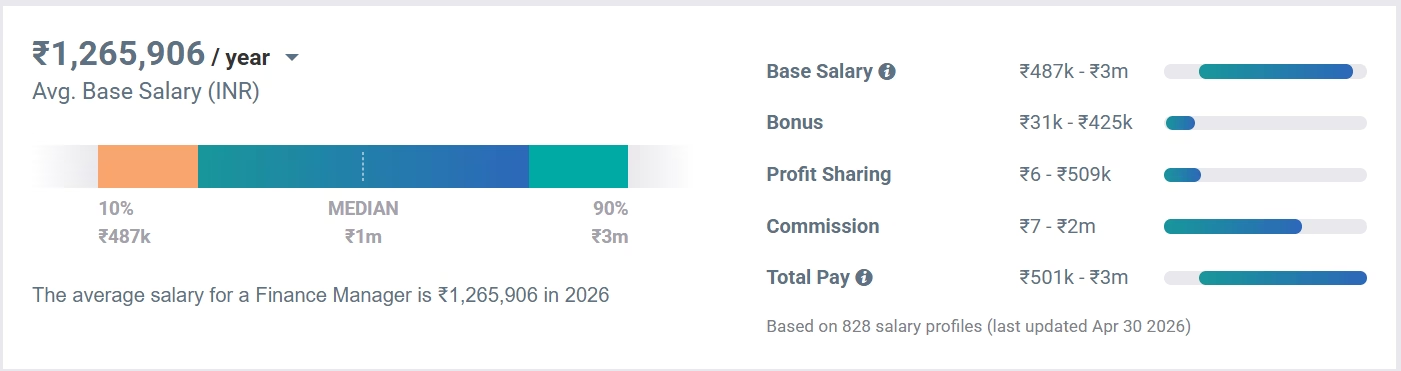
Source for Finance Manager Salary – PayScale
Financial Advisor
- The primary role of a Financial Advisor is to give guidance on how their client or a company can manage their money and finances in a better way.
- This includes making new trades, creating financial plans, evaluating existing investments, and making the necessary changes.
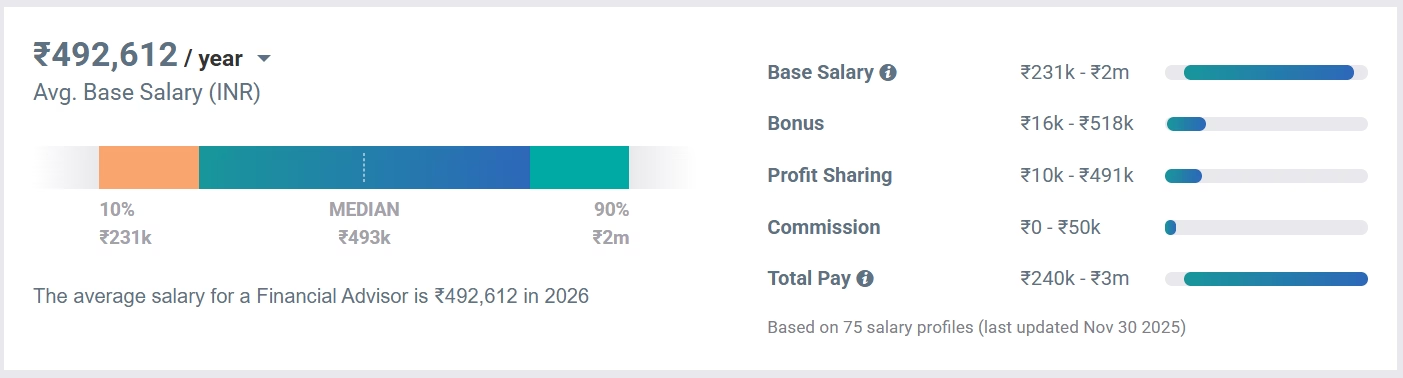
The average salary of a Financial Advisor is around 41,000 per month.
ALT Image – Average Salary of a Financial Advisor
Source for Financial Advisor Salary – PayScale
Investment Banker
- A career in investment banking has gained a lot of popularity in the last few years. One of the main reasons behind the increase in demand for CFA across the world is that people want to work as Investment Bankers in prestigious companies.
- An Investment Banker is someone who handles all the investments for a company, a client, or themselves. This includes issuing stocks, arranging purchases and sales, looking after mergers and acquisitions, and preparing bond offerings.
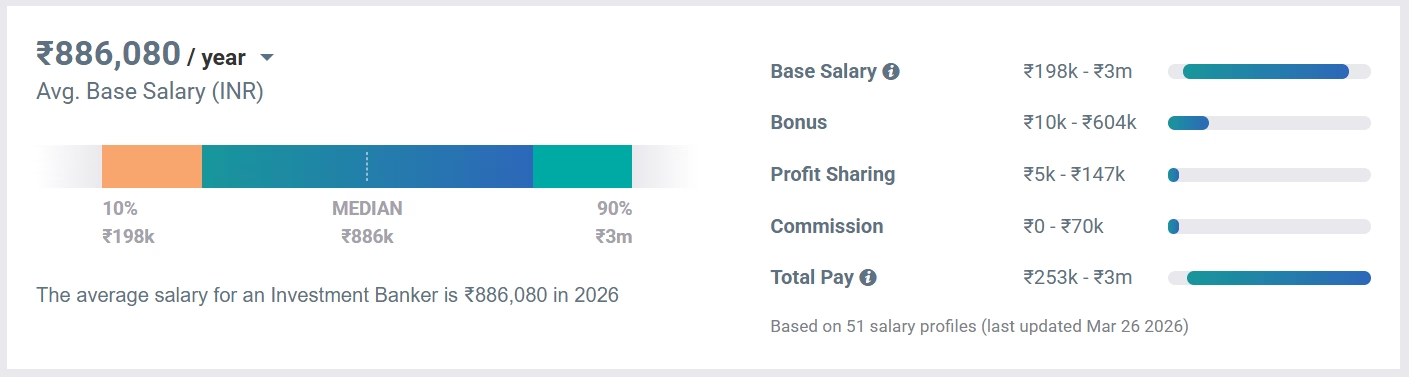
The average salary of an Investment Banker is around 74,000 per month.
Source for Investment Banker Salary – PayScale
Hedge Fund Manager
- A Hedge Fund Manager is someone responsible for looking after the operations of a hedge fund.
- Hedge funds are pooled investment funds made by high-net-worth individuals who have the potential to give high returns with the help of different kinds of investment strategies.
The average salary of a Hedge Fund Manager is around 74,000 per month.
Source for Hedge Fund Manager Salary – PayScale
Factors Influencing CFA Salaries
Other than the fact that CFA is itself a prestigious certificate to obtain a stable and secured income, several factors influence CFA salaries, and we will be discussing those factors in a more elaborate manner.
Educational Background
Educational background plays a pivotal role in determining the salary structures of CFA professionals in India. For example, a CFA professional with an MBA qualification will potentially have more earning prospects than a CFA professional with a B.Com.
Industry and Firm Size
The type and size of the industry also determine the salaries of CFA professionals. High-growth industries such as technology, finance, pharmaceuticals, and consulting generally offer higher pay scales due to their profitability and market demand.
On the other hand, traditional industries like manufacturing and retail might offer moderate compensation but often provide long-term job security and incremental growth.
Certifications
Additional certifications and global access to growth opportunities also affect the salary structure of CFA professionals. Employers seek professionals who have stable global exposure along with other prestigious certifications like ACCA, CFA or CA.
CFA vs. Other Financial Salaries and Career Growth Comparison
Below is a comparative table showcasing the average salaries and career growth prospects of CFA and other popular financial qualifications in India.
| Certifications | Average Salary (INR) | Career Growth Prospects | Industry Commonly Employed |
| CFA (Chartered Financial Analyst) | 8-20 LPA (varies by experience) | High in investment banking, asset management, equity research | Investment Banking, Portfolio Management, Equity Research |
| CA (Chartered Accountant) | 7-25 LPA | Strong in accounting, taxation, auditing, and finance | Auditing, Accounting, Taxation, Corporate Finance |
| ACCA (Association of Chartered Certified Accountants) | 6-15 LPA | Strong, especially in multinational firms | Financial Accounting, Compliance, Consulting |
| CPA (Certified Public Accountant – US) | 8-22 LPA | High in MNCs and consulting firms | Accounting, Auditing, Financial Reporting |
Future Trends and Market Outlook
Below is a table featuring major future trends and market outlook for CFA candidates in the year 2027 and onwards.
| CFA Future Trend | Market Outlook |
| Artificial Intelligence (AI) | Increasing demand for professionals who can combine AI with finance. |
| Data Analytics | Data-driven investment decisions are becoming industry standard. |
| ESG Investing | Sustainable and responsible investing continues to grow globally. |
| Private Markets | Rising opportunities in private equity and private credit. |
| Wealth Management | Growing demand due to increasing high-net-worth individuals. |
| FinTech Innovation | Technology is reshaping investment, banking, and financial services. |
| Risk Management | Strong demand as markets face economic and geopolitical uncertainty. |
| Alternative Investments | Increased investor interest in hedge funds and real assets. |
| Global Investing | Cross-border investment opportunities continue expanding. |
| Regulatory Compliance | Firms need finance professionals to navigate evolving regulations. |
| Financial Modeling | Advanced modelling skills remain highly valued by employers. |
| Digital Assets | Cryptocurrencies and tokenised assets are gaining institutional attention. |
| Behavioral Finance | Understanding investor behaviour is becoming increasingly important. |
| Corporate Finance | Demand remains strong for strategic finance and valuation roles. |
| CFA Charterholders | Employers continue valuing CFA skills across investment careers. |
Conclusion
In conclusion, CFA stands in a very stable position along with broader career scopes and high salaries. With India’s economic boom, multinational corporations have a constant need for CFA professionals with their knowledge and expertise. The salary structure of CFA professionals depends largely on various factors like the size of the firm, technological advancements, global exposure, certifications, and many other factors.
The Chartered Financial Analyst is a globally recognised qualification in the field of finance and investment. If you have recently completed your graduation or are appearing for your final semester, you may be eligible to become a CFA. Interested? We highly recommend checking out our Chartered Financial Analyst (CFA) course.
FAQ on CFA Salary in India
What is the average CFA salary in India?
The average salary of a CFA in India is usually between ₹6-25 LPA.
Does CFA Level 1 increase salary in India?
Clearing CFA level 1 can help in better jobs and salaries.
Which CFA job role offers the highest salary in India?
Portfolio Managers and Investment Bankers often earn the highest CFA salaries.
What is the CFA fresher salary in India?
In India, freshers CFA usually start with a salary of ₹6–12 LPA.
Does CFA salary increase after becoming a charterholder?
Yes, CFA charterholders tend to make significantly more than candidates.
Which cities offer the highest CFA salaries in India?
CFA salaries in Mumbai, Bengaluru, Gurgaon and Hyderabad are usually higher.
Is CFA worth it for salary growth in India?
Yes, CFA can seriously accelerate long term pay growth in finance careers.

Current Role
Co-Founder & CEO at Zell Education
Education
- ACCA – Association of Chartered Certified Accountants, Finance (2011 – 2014)
- Bachelor of Commerce (BCom), Financial Markets from H.R. College Of Commerce & Economics (2010 – 2013)
Location
Mumbai, India
Expertise
ACCA Certified
Why Zell?
- • Largest Provider for Global F&A Courses
- • 4.6 Google Review Rating
- • 1000+ Global Placement Partners
- • Placement Opportunities at the Big 4
- • 100+ Global & Indian Rank Holders
- • 100+ Faculty Network
- • 10,000+ Students Placed
Speak to A Career Counselor
Zell's 10th Anniversary Offer - Avail a 10% Scholarship