
Key Takeaways:
- There are 10 fundamental subjects covered under CFA Level 1 that help provide a solid foundation in finance and investment management.
- The CFA Level 1 examination design has 180 multiple-choice questions distributed throughout two computer-based testing sessions.
- The area of Ethical and Professional Standards has the greatest percentage allocation to the CFA Level 1 syllabus at 15-20%.
Comprehensive Summary on CFA Level 1 Syllabus:
What is the CFA Level 1 Syllabus?
The CFA Level 1 syllabus includes the fundamental knowledge for investment management, financial accounting, ethics and portfolio management broken down into ten key areas.
What is the CFA Level 1 Exam Format?
The CFA Level 1 exam has 180 multiple-choice questions (MCQs) in total, with two parts of 2 hours and 15 minutes each.
What is the CFA Level 1 Exam Registration Eligibility?
To register for the CFA Level 1 exam, a candidate must meet all CFA eligibility criteria (which include educational requirements or work experience) and must hold a valid passport.
What are the four subjects for CFA Level 1?
The subjects with the highest weighting within CFA Level 1 are: Ethical and Professional Standards, Financial Statement Analysis, Equity Investments, and Fixed Income.
How to prepare for the CFA Level 1 Exam?
To give yourself the best chance at passing the CFA Level 1 Examination, you will need to create a structured method of studying. You should spend a minimum of 300 hours studying, and you will want to take periodic practice or test exams.
Understanding the CFA Level 1 Syllabus
Students who can master the CFA Level 1 syllabus will develop the necessary skills for a successful finance career, as well as prepare for receiving the CFA credential that is accepted all over the globe.
The CFA Level 1 Syllabus is the foundation for the entire CFA Program and will introduce you to core concepts, including ethics, analysing financial statements, economic principles, fixed income, equity, and portfolio management.
There are 10 subjects, each with a different weightage, making it very difficult to prepare for the CFA Level 1 exam, especially if you are a first-time candidate! It is critical to understand the current eligibility requirements to sit for the CFA exam and make sure to register on time, as well as develop a structured plan to study for the CFA Level 1 Examination.
In this blog, we will provide you with an overview of the what is CFA Level 1 Syllabus, the weightage associated with each of the different subject areas, and the structure of the CFA Level 1 Exam, and provide you with strategies to effectively prepare for the CFA Level 1 Exam.
CFA Journey with a Personalised Study Plan
 Book a Free Counselling Session
What Is the CFA Level 1 Syllabus?
The CFA Institute provides a worldwide standard of philosophy that establishes the foundation of CFA certification, known as the CFA Level 1 Syllabus. It serves as an introduction to investment management, financial analysis, economics, ethics, and portfolio management.
If you’re unsure about what CFA means, CFA is short for Chartered Financial Analyst, which is considered a high-quality credential for people interested in working in either investment banking or in asset management, equity research, portfolio management, and financial consulting.
CFA Level 1 Exam Overview
The CFA Level 1 exam is conducted multiple times a year by the CFA Institute and is delivered through computer-based testing.
| Particulars | Details |
| Exam Level | Level 1 |
| Conducting Body | CFA Institute |
| Exam Format | Computer-based |
| Number of Questions | 180 multiple-choice questions |
| Exam Duration | 4 hours 30 minutes |
| Sessions | Two sessions of 2 hours 15 minutes each |
| Question Type | MCQ-based |
| Exam Frequency | Multiple windows annually |
| Number of Subjects | 10 |
| Recommended Study Hours | 300+ hours |
CFA Level 1 Eligibility and Registration
A candidate for the CFA Level I exam must fulfil any one of the following requirements:
- An undergraduate/post-secondary degree or be enrolled in an undergraduate program, who will graduate in the year of the examination.
- A minimum of four years of work and/or post-secondary education within the last four years.
- You possess a passport and can confirm with the CFA Institute during the time of application for the exam.
- You comply with the CFA Institute’s Qualification and Requirement criteria and the CFA Institute’s Professional Conduct Requirements.
CFA Level 1 Syllabus: Subject Weightage
The CFA Level 1 syllabus consists of 10 subjects with varying weightages. Understanding these weightages can help you prioritise your preparation effectively.
| Subject | Exam Weightage |
| Ethical and Professional Standards | 15–20% |
| Financial Statement Analysis | 11–14% |
| Equity Investments | 11–14% |
| Fixed Income | 11–14% |
| Portfolio Management and Wealth Planning | 8–12% |
| Alternative Investments | 7–10% |
| Quantitative Methods | 6–9% |
| Economics | 6–9% |
| Corporate Issuers | 6–9% |
| Derivatives | 5–8% |
Session-Wise Topic Distribution
The CFA Level 1 examination consists of two parts:
Part 1:
- Ethics + Professional Standards
- Quantitative Methods
- Economics
- Financial Statement Analysis
- Corporate Finance
Part 2:
- Equity Securities
- Fixed Income
- Derivative Securities
- Alternative Assets
- Portfolio Management
A two-part format gives candidates an opportunity to be prepared for related areas during the study period.
Benefits of Studying the CFA Level 1 Syllabus
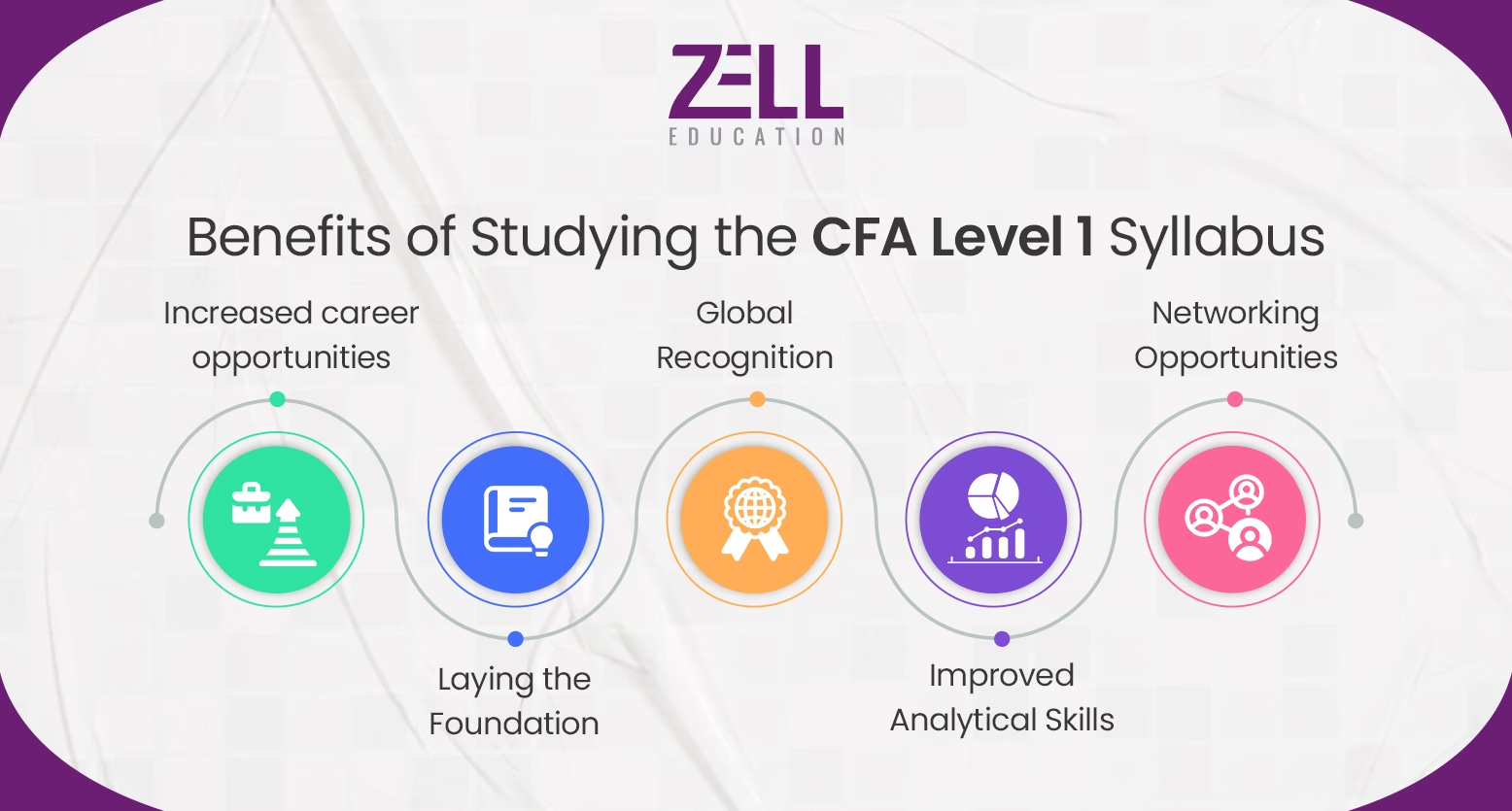
There are several benefits of passing the CFA Level 1 Syllabus. The following are some of the benefits:
- A solid understanding of finance
- A development of analytical skills
- The global brand for the CFA qualification
- Career prospects within investment management
- An in-depth knowledge in valuation
The types of positions that those looking to obtain their CFA qualifications can aspire to, as well as work in once certified, are the following:
- Investment Analyst
- Equity Research Associate
- Financial Analyst
- Portfolio Analyst
- Risk Analys
Prepare Smarter for the CFA Level 1 Exam
 Schedule a Free Consultation
CFA Level 1 Syllabus: All 10 Subjects Explained
1. Professional Ethics & Conduct
The Level 1 exam places the most emphasis on the topic of Ethics, which will be the exam table that all candidates will see when they are certified. The major content areas covered within this portion of the exam include:
- Code of Ethics for CFA Institute
- Professional Code of Ethics for CFA Institute members
- CFA Institute’s Ethical Decision-Making Framework
- GIPS – Global Investment Performance Standards
Additionally, candidates whose scores are high on Ethics can greatly influence their borderline pass/fail decision based upon the results of this section.
2. Financial Statement Analysis (11-14%)
This portion of the examination tests the candidate’s ability to analyse and interpret financial statements and assess both the present and the historical financial health of the entity being evaluated.
Some of the primary content areas covered in this section are:
- Income statement
- Balance sheet
- Statement of cash flows
- Financial Reporting Standards
- Ratio Analysis
3. Equity Securities (11-14%)
This section provides candidates with exposure to the equity markets along with the assessment of stock pricing and valuation methodologies. Some of the primary content areas addressed in the candidate’s study material for this section include:
- Market Structure
- Equity Securities
- Industry Analysis
- License and Company Analysis
- Valuation Fundamentals
4. Debt Instruments (11-14%)
Debt instruments and pricing make up a considerable part of the Fixed Income asset class.
Topics include the following:The various features of a bond
- Yield market measures
- Fixed-Income Risks
- Credit Analysis
- Securitised Products
5. Quantitative Analysis (6-9%)
Quantitative analysis will provide you with the analytical or mathematical tools necessary to assist in making investment decisions.
Topics include the following:
- Time Value of Money
- Probability Concepts
- Statistical Measures
- Hypothesis Testing
- Regression Analysis
6. Economic Theory (6-9%)
An understanding of economic theory will assist candidates in gaining a better understanding of both macroeconomic and microeconomic concepts.
Topics include the following:
- Supply and Demand
- Market Structure
- Monetary Policy
- Fiscal Policy
- International Trade
7. Corporate Finance (6-9%)
This subject revolves around the different principles used to make financial decisions in a corporate environment.
Topics include the following:
- Capital budgeting
- Cost of Capital
- Corporate Governance
- Working Capital
8. Derivatives (5% – 8%)
Financial devices are utilised as tools to reduce or prevent the chance of losing the value of your invested money in business operations. These products and services include the following:
- Forwards
- Futures Options
- Swaps,
- Derivatives application
9. Alternative Investments (7% – 10%)
Investments are different than conventional stocks or bonds as a way of expanding diversification away from standard assets or even to acquire benefits beyond those found in traditional investment markets. Key areas include:
- Private equity
- Hedging Funds
- Real assets
- Commodities
- infrastructure
10. Portfolio Management as well as Wealth Management (8% – 12%)
These subject areas incorporate the fundamentals of building an effective asset structure together with efficiently tracking assets within one or many persons or even establishments, typically over extended periods of time. Critical subject areas include:
- Risk-and-Return Relationships
- Diversification involved in a portfolio
- Portfolio Construction
- Defining your personal investment goals
- Concepts of Financial Planning
CFA Level 1 Study Plan and Preparation Strategy
Having a well-structured study plan in place can greatly improve your likelihood of passing the CFA exam.
How Much Time is Needed to Prepare for the CFA Level I Exam?
The CFA Institute has established that a minimum of 300 hours of study should be completed by candidates. However, individual preparation times will vary based on education level and experience gained by candidates.
How Long Will it Take to Prepare for the CFA Level I Exam?
A reasonable timeline to prepare for the Level I exam would consist of completing course materials in the first 3 months, reviewing the material and practising with questions during the 4th month, and simulating and reviewing exam performance in the 5th month.
High-Weighting Subjects:
- Ethics
- Financial Reporting
- Equity Security
- Fixed Income
Medium-Weighting Subjects:
- Portfolio Management
- Alternative Investments
Low-Weighting Subjects:
- Quantitative Methods
- Economics
- Corporate Finance
- Derivatives
It is recommended by book writers that you start with quantitative methods early, as they are tied to many of the other subjects, such as Fixed Income and Portfolio Management.
Tips to Crack the CFA Level 1 Exam
Average to Good preparation time for each of the CFA exams is between 5 and 6 months.
- Create a structured and realistic study schedule based upon what you know.
- Study the rules that govern the giving of their marks.
- Think of understanding a concept before memorising a formula derived from that concept.
- Work on the end-of-chapter questions for each chapter’s subject matter and consistently practise as many mock exams as you can.
Prepare for the exam with ethics in mind.
Why Study the CFA Level 1 Syllabus?
Create a system to track progress by reviewing each topic and its outcomes. One key reason to study CFA Level 1 material systematically is to build a comprehensive basic understanding of financial markets and investments.
Some examples of benefits associated with studying the CFA Level 1 syllabus include:
- Foundation for Level 2 and Level 3 of the CFA Program.
- Increases analytical and problem-solving ability.
- Higher Job Opportunities.
- Commonality with CPA, equity research, investment banking and portfolio management.
- Global Acceptance (CFA designation) as an acceptable level of proficiency.
CFA Level 2 Syllabus Overview
Application of Level I concepts in real-world investment situations is covered in the CFA Level II curriculum.
Some of the items or vignettes include the following:
- Item set/vignette questions
- Advanced analysis of financial statements
- Valuation of equity securities
- Fixed income analysis
- Portfolio Management Functions
Level II requires analytical competency as well as proficiency at the execution-based level.
CFA Level 3 Syllabus Overview
The CFA programme’s Level 3 focuses primarily on managing portfolios and planning for the wealth of individuals.
Key Topics:
- Asset Allocation
- Management of Wealth for Private Clients
- Management of Institutions’ Portfolios
- Management of Risks
- Performance Measurement
The assessment in level 3 is based on your ability to combine the various concepts and develop a portfolio plan in a live situation.
Conclusion
CFA Level 1 materials teach foundational knowledge of finance, investment analysis, ethics and portfolio management. An understanding of the overall subject matter, examination procedures, and subject weightings will help you create an efficient study schedule and effectively prepare for the examination.
If you’re new to CFA or actively preparing for your CFA registration, learning the CFA Level 1 curriculum is your starting point to getting your globally recognised CFA certification.
FAQs on CFA Level 1 Syllabus
What is the CFA Level 1 pass rate?
The pass rate for the CFA Level 1 exam is 45% in the 2026 examination window.
What is the CFA Level 1 subject weighted the most?
The subject Ethical and Professional Standards will receive a weighted average of 15%, accounting for the vast majority of CFA Level 1.
Does CFA Level 1 contain multiple-choice questions?
CFA Level 1 will consist of 180 multiple-choice questions, with the questions divided into two testing sessions.
What is the difference between the CFA syllabus and curriculum?
Syllabus provides the CFA Institute with a list of topics and their associated weights, whereas the CFA Curriculum includes comprehensive learning modules/readings and experiences, examples of applications, and practice questions.
Has the syllabus changed in CFA Level 1?
Although the CFA Institute will introduce marginally updated learning materials and Practicum modules, the basic weightings of core topics have not changed from 2020 for the CFA Level 1 exams in 2026.
How is the CFA Level 1 Exam structured into two sessions?
The CFA Level 1 exam consists of two computer-based sessions of 2 hours 15 minutes each with 90 multiple-choice questions in each session and an optional break in between.

Current Role
Co-founder and Executive Director at Zell Education
Education
- Chartered Accountant (CA) from The Institute of Chartered Accountants of India (2010 – 2015)
- Company Secretary (CS) from The Institute of Company Secretaries of India (2011 – 2013)
- Bachelor in Financial Markets, Finance, General from H.R. College Of Commerce & Economics (2010 – 2013)
Location
Mumbai, India
Expertise
CA Certified, CS Certified
Why Zell?
- • Largest Provider for Global F&A Courses
- • 4.6 Google Review Rating
- • 1000+ Students placed Annually
- • 500+ Active Hiring Partners
- • Placement Opportunities at the Big 4
- • 100+ Global & Indian Rank Holders
- • 100+ Faculty Network
Speak to A Career Counselor
Zell's 10th Anniversary Offer - Avail a 10% Scholarship