
It is rather puzzling for students pursuing a commerce background to decide between CA, CS, or CMA. Each of these courses provides opportunities in varied fields with different passing patterns and job prospects. It is vital to come to a conclusive decision between CA vs CS vs CMA which is better, to take advantage of the benefits.
How Do I Choose Between CA, CS, and CMA?
Picking the right profession to pursue post completion of your commerce graduation or 12th standard results depends on your aptitude & interests. All three courses – CA (Chartered Accounts), CS (Company Secretary) and CMA (Cost & Management Accounting) – have immense value in the Indian job market. All three have their specialised prospects in finance & accounting.
While selecting between CA vs CS vs CMA which is better, one usually takes into account:
- Difficulty level and pass percentage
- Scope in India and abroad
- Salary prospects and career growth
- Requirement of practical training or articleship
- Opportunities for entrepreneurship or independent practice
This blog will walk you through the comparison between CA vs CS vs CMA to ensure you make the right choice with respect to your eligibility, syllabus, job prospects, and salary offered.
Pro Tip: Although CA is considered the toughest among the three, equal effort is needed in CS and CMA too to crack them. It’s not necessary that you consider your career goals to match with public opinion.
What Are CA, CS, and CMA Courses?
What Is CA (Chartered Accountancy)?
CA is a professional accounting course offered under the regulations of the Institute of Chartered Accountants of India (ICAI). Chartered accountants deal with auditing, taxes, management finance, and corporate finance.
The CA coursework is composed of three levels:
- CA Foundation – for entry-level candidates after 12th.
- CA Intermediate – post-Foundation or direct entry for graduates.
- CA Final – after clearing Intermediate and completing articleship training.
CAs find high demand in audit firms, banks, and multinational companies. Some of the CAs open their own consultancy or advisory firms. This makes it both prestigious and entrepreneurial to pursue the course.
Example: Top audit firms like Deloitte, PwC, KPMG, and EY actively recruit CAs for roles in taxation, advisory, and financial audit.
What Is CS (Company Secretary)?
CS is a specialised course dealing with corporate law, secretarial practices, and governance. It is governed by the Institute of Company Secretaries of India (ICSI).
The CS subject consists of three levels:
- CS Foundation – for students after 12th.
- CS Executive – after Foundation or direct entry for graduates.
- CS Professional – the final level to practise as a certified Company Secretary.
CS professionals deal with the enforcement of business laws and the screening or draughting of legal documents. Their services can remain critical during the IPO or mergers & acquisitions process.
Fact: CS is identified as a niche profession, and there is increasing demand as a result of stricter standards of corporate governance in India.
What Is CMA (Cost & Management Accounting)?
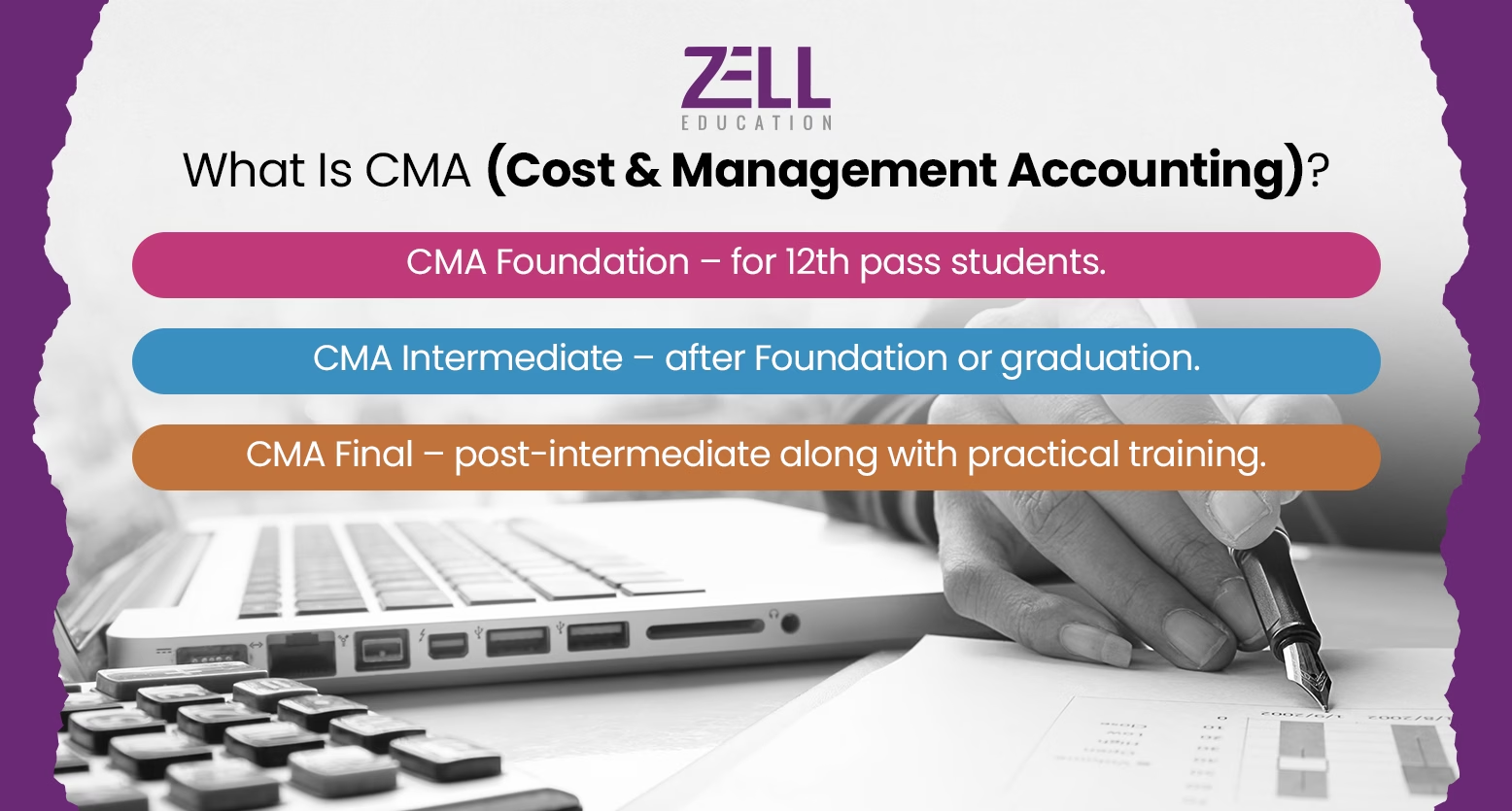
CMA is governed by the Institute of Cost Accounts of India (ICMAI) and aims at the management of costs and strategic decisions.
CMA course levels include:
- CMA Foundation – for 12th pass students.
- CMA Intermediate – after Foundation or graduation.
- CMA Final – post-intermediate along with practical training.
CMAs have specialised knowledge in the control of costs, budgeting, and financial analysis. This makes them essential in the finance teams of companies.
Example: CMAs are commonly employed in FMCG, manufacturing, and IT sectors for budgeting, variance analysis, and cost optimisation projects.
Curious About CA vs CS vs CMA?
What Are the Key Differences Between CA, CS, and CMA?
Governing Bodies and Course Structure
| Parameter | CA | CS | CMA |
| Governing Body | ICAI | ICSI | ICMAI |
| Exam Levels | Foundation, Intermediate, Final | Foundation, Executive, Professional | Foundation, Intermediate, Final |
| Course Focus | Auditing, Tax, Finance | Corporate Law, Governance | Cost Accounting, Management Accounting |
| Global Recognition | High | Moderate | Growing in Asia & Middle East |
How Long Are CA, CS, and CMA Courses?
| Parameter | CA | CS | CMA |
| Average Duration | 4–5 years | 3–4 years | 3–4 years |
| Practical Training | 3 years Articleship | 15 months Training | 3 years Practical Training |
It depends upon the speed at which a student can remove his exams. The CA vs CS vs CMA duration comparison indicates that CA is longer because it involves articleship and tough exams. A proper plan for studies and preparation for exams can ensure the completion of CA in 3.5 to 4 years instead of 5.
What Are the Focus Areas and Core Subjects?
| Course | Core Subjects | Key Skills |
| CA | Accounting, Taxation, Audit, Financial Management | Auditing, Tax Compliance, Financial Analysis |
| CS | Company Law, Secretarial Practice, Corporate Governance | Legal Compliance, Board Procedures, Secretarial Audit |
| CMA | Cost Accounting, Management Accounting, Financial Planning | Budgeting, Cost Control, Strategic Decision-Making |
Are Articleship or Practical Training Required?
- CA: 3-year articleship under a practising CA firm is mandatory.
- CS: 15-month training program after Executive level.
- CMA: 3-year practical training in finance or accounting departments is required.
Practical training will ensure hands-on experience in their respective fields, which is very important while considering ‘CA vs CS vs CMA which is better?’. The hands-on training can include networking and then directly be followed by job offers.
Who Is Eligible for CA, CS, and CMA Courses?
- CA: Minimum 50% in 12th for Foundation; graduates can enter directly.
- CS: Minimum 50% in 12th for Foundation; graduates can enter Executive directly.
- CMA: 12th pass or graduation with minimum 50% marks.
These courses have slightly varied eligibility criteria; however, analytical skills are a must. Students with a background in commerce have a cut above the rest advantage. But non-commerce students can join CMA or CS courses with proper qualification. Many students combine CMA with MBA or CA for enhanced career prospects.
What Career Opportunities Exist After CA, CS, and CMA?
Career After CA
- Roles: Auditor, Tax Consultant, Finance Manager, CFO, Investment Banker
- Industries: Accounting firms, banking, MNCs, consulting
- Specialization options: International taxation, forensic audit, corporate finance, advisory services.
Source of Reference for CA Course Details – The Institute of Chartered Accountants of India
It can be noted that certain CAs have their private practices in auditing, accounting, and tax services.
Career After CS
- Roles: Company Secretary, Legal Advisor, Compliance Officer
- Industries: Corporate law departments, SEBI-registered companies, private limited companies, bank
- Key responsibilities: Corporate governance, legal compliance, secretarial audits
Source of Reference for CS Course Details – The Institute of Company Secretaries of India
The demand for CS professionals is increasing with increased regulations related to corporate governance in India.
Career After CMA
- Roles: Cost Accountant, Management Accountant, Financial Analyst, Budget Manager
- Industries: FMCG, Manufacturing, IT, Banking
- Responsibilities: Budgeting, cost analysis, strategic financial planning, variance analysis
Source of Reference for CMA Course Details – The Institute of Cost Accountants of India
There are many CMAs who find employment in production cost optimisation.
What Is the Salary Comparison Between CA, CS, and CMA in India?
| Course | Average Salary (India) | Starting Salary (India) |
| CA | 8–12 LPA | 6–7 LPA |
| CS | 7–10 LPA | 5–6 LPA |
| CMA | 6–9 LPA | 5–6 LPA |
The package varies depending on experience, location, and specification. Generally, CAs get slightly better pay, although CS and CMA experience high demand in niche industries. From the comparison of the CA vs CS vs CMA salary in India, it is evident that all three offer very lucrative pathways if pursued successfully.
Having a focus area such as International Taxation (CA), Compliance (CS), or Management Accounting (CMA) can greatly enhance your remuneration.
Which Course Should You Choose?
Based on Career Goals
- Choose CA if your goal is auditing, taxation, finance, or corporate advisory.
- Choose CS if you want a career in corporate governance, secretarial practice, and legal compliance.
- Choose CMA if you are interested in cost control, budgeting, and strategic financial management.
Based on Interest Areas
- Love numbers, taxation, auditing → CA
- Interested in law, board procedures, corporate compliance → CS
- Passionate about cost management, budgets, and strategic finance → CMA
Think carefully about work-life balance. CS involves less travelling than CA. CMA provides experience in administration and with the corporate offices.
Want to Pursue CMA Accounting Career?
Book Your Free Counselling Session Today
Conclusion: Making the Right Career Choice in Commerce
Getting It Just Right in Business While making a choice between CA vs CS vs CMA, which is better, one needs to consider the job potential and remuneration.
- CA can have high-paying job opportunities in finance.
- CS offers expert knowledge in law and governance. This is particularly suitable for companies.
- CMA is ideally suited for employment in the fields of cost & management accounting. Its demand is also increasing in the field of business decisions.
Every course is not superior to the other; it depends on your objectives, aptitude level, and how committed you are. By proper planning and dedication, it is possible to have a successful life in each of the above courses. Adding certifications like the CFA course to CA, CS, or CMA can add a lot to your overall prospects.
FAQs on CA vs CS vs CMA
Which is better: CA, CS, or CMA?
All courses have high regard. Choose according to your interests. CA is in high demand, CMA is strategic finance-based, and CS is specialised in corporate governance.
Can I pursue more than one of these courses together?
Students can always undertake CA with CMA or CS courses to have extra skills to qualify for jobs.
Which course offers the highest salary?
This is because CA always provides the highest entry-level remuneration and experience wage rates, followed by CS and CMA.
Which course is easier to clear – CA, CS, or CMA?
CMA is slightly less tough compared to CA or CS. But it requires proper preparation.
What is CFA and can it complement CA, CS, or CMA?
CFA is a finance certification with a focus on investment management. It is always very advantageous to have CFA certification together with CA or CMA.

Current Role
Co-Founder & CEO at Zell Education
Education
- ACCA – Association of Chartered Certified Accountants, Finance (2011 – 2014)
- Bachelor of Commerce (BCom), Financial Markets from H.R. College Of Commerce & Economics (2010 – 2013)
Location
Mumbai, India
Expertise
ACCA Certified
Why Zell?
- • Largest Provider for Global F&A Courses
- • 4.6 Google Review Rating
- • 1000+ Global Placement Partners
- • Placement Opportunities at the Big 4
- • 100+ Global & Indian Rank Holders
- • 100+ Faculty Network
- • 10,000+ Students Placed
Speak to A Career Counselor
Zell's 10th Anniversary Offer - Avail a 10% Scholarship