
The article includes a lot of information about the differences between CFP and CFA certifications, such as career opportunities and remuneration. It also offers advice on how finance professionals would like to choose the certification according to what they would like to pursue in terms of a career in the field of investment management and financial planning.
Comprehensive Guide on ‘CFA vs CFP’
- CFA Certification Overview: CFA certification grants international qualification to investment management professionals who receive this designation as a result of attaining it as a sign of professionalism in the field of finance by establishing their expertise and skill in equity research and managing portfolios.
- CFP Certification Overview: The Certified Financial Professional certification programme is a training programme that trains advisors to provide financial planning services in personal finances, retirement planning, tax management and wealth advisory services to individual and family clients.
- CFA Careers: CFA certification leads the person to a higher level of career as an executive, like an equity analyst, a portfolio manager, a risk manager and an investment banker.
- CFP Careers: Financial professionals who graduated from CFP certification programmes enjoy a broad-based career choice, as they are allowed to work as financial advisors, wealth managers and personal finance consultants in both financial and non-financial organisations.
- Salary Potential: CFA and CFP holders will be able to enjoy high salaries. Nevertheless, the CFP remunerations are determined by work experience, industries, and job duties.
- International Certification: CFA certification is popular in investment banking and asset management roles across the globe, and CFP certification is popular in financial planning and advisory roles throughout the world and the US.
The majority of the students intending to study finance in the next few years would desire to major in investment management and personal financial planning. Nevertheless, they become mixed up in CFA and CFP credentials. Investment banking professionals are successful following the acquisition of certain qualifications, yet there were others who discovered their strength in the CFP certification. The strategic decision-making process will require the professionals to search through each inch of the two, including scope, structure of examination, career prospects and industry acknowledgement.
What Is CFA?
Introduction to CFA Certification.
One of the most reputable certifications across the world is the Chartered Financial Analyst (CFA). The CFA programme offers high-quality educational material encompassing equity valuation, fixed income analysis, derivatives, corporate finance, portfolio management and investment ethics. The CFA programme equips professionals to devise investment strategies in the process of managing large investment resources.
The certification is perfectly good when the aspirant wants to pursue a career in investment banking, hedge funds, private equity, or corporate finance departments of multinational companies. CFA charterholder asset management professionals are acclaimed as the most trustworthy experts in the sphere of investment guidance services.
Eligibility Criteria for CFA
In order to join the CFA programme, one should match the following conditions:
- Applicants must possess a bachelor’s degree in any field or finish their last year at school.
- The charter also demands its candidates to have at least four years of professional work experience in financial or investment or related areas.
- The candidates should be able to perform financial modelling using their data analysis skills and quantitative execution of the tasks.
CFA eligibility makes sure that the candidates are prepared for the very demanding curriculum and are able to transfer learnt principles into real-life finance situations.
CFA Exam Structure and Levels
The CFA programme consists of three distinct levels that make it up.
- Level I: The level is concerned with ethics, investment instruments and fundamental financial concepts.
- Level II: The programme imparts on the students the value of assets and financial analysis of making intricate investment choices.
- Level III: The course instructs students regarding the management of investment portfolios and the development of wealth plans by application.
Those candidates who pass the three levels of the programme, along with their necessary work experience, will be awarded the CFA designation, which continues to have global prestige.
Curious About CFA?
Career Opportunities After CFA
CFA offers various employment opportunities, and some of them are investment banking, asset management and research jobs, and positions in portfolio management.
Roles and Responsibilities of CFA Professionals
- Conduct comprehensive evaluations of financial reports as well as investment opportunities.
- Develop and manage investment options that deliver financial solutions to institutional clients as well as a client.
- Offer advisory services relating to mergers and acquisitions, along with capital fundraising techniques.
- Monitor market trends so as to make informed suggestions in making investment decisions.
Industries Where CFA Is in Demand
- Banks offering investment services, as well as broking firms and equity research companies.
- Mutual funds and hedge funds are investment management firms.
- The international compound investment departments.
CFA certification helps the professionals to be prepared to operate at a high level and handle high responsibility in these industries.
What Is CFP?
Introduction of CFP Certification
Certified Financial Professional (CFP) is a professional designation of professionals working in the area of personal finance, wealth management, and financial planning. The financial advisor course that is based on CFP training provides the student with the capability of dealing with every financial part of the needs of the clients. This course will refer to investment management, insurance solutions, taxation policies, estate planning methods, and retirement planning.
The CFP-certified members are the professional counsellors of the clients who desire to be financially secure over a long period, and they help them make an informed decision on their savings, investments, and risk management.
Eligibility Criteria for CFP
The qualification requirements of CFP are:
- The applicants are expected to possess a bachelor’s degree or professional qualification in finance, accounting or any other related field.
- The candidate should possess experience in the sphere of financial services, banking or advisory.
- The candidate must demonstrate comprehensive understanding of finance, investment and accounting concepts.
- The evaluation criteria enable financial professionals to assess their competence in addressing client needs and providing expert financial advice.
CFP Exam Structure
The examination of CFP covers all financial planning areas. Based on the CFP exam requirements, students have to demonstrate knowledge in:
- Risk management, financial analysis and investment planning.
- Estate planning, tax planning and retirement.
- case study evaluation and scenario test evaluation.
The CFP syllabus equips the candidates to provide full financial planning services to their clients.
Career Opportunities After CFP
The professionals in CFP are engaged in banks, financial advising firms, consultative firms, wealth management and insurance firms.
Roles and Responsibilities of CFP Professionals
- The financial planning process requires CFP professionals to develop financial plans that address the special needs of their clients.
- The recommendations made by the financial expert involve investment plans, insurance, retirement plans and tax-saving plans.
- This process starts with risk assessments, and the financial expert would then give recommendations on the most appropriate strategies to be used in asset distribution.
- The financial expert notices the investment portfolios of the clients and will provide recommendations on what should be changed in case of a change in the objectives of the clients.
Industries Where CFP Is in Demand
- Wealth management companies and privately owned banks.
- Courses and consultancy services of an independent financial advisor.
- Planning of corporate HR/employee benefits.
CFA vs CFP: What Are the Key Differences?
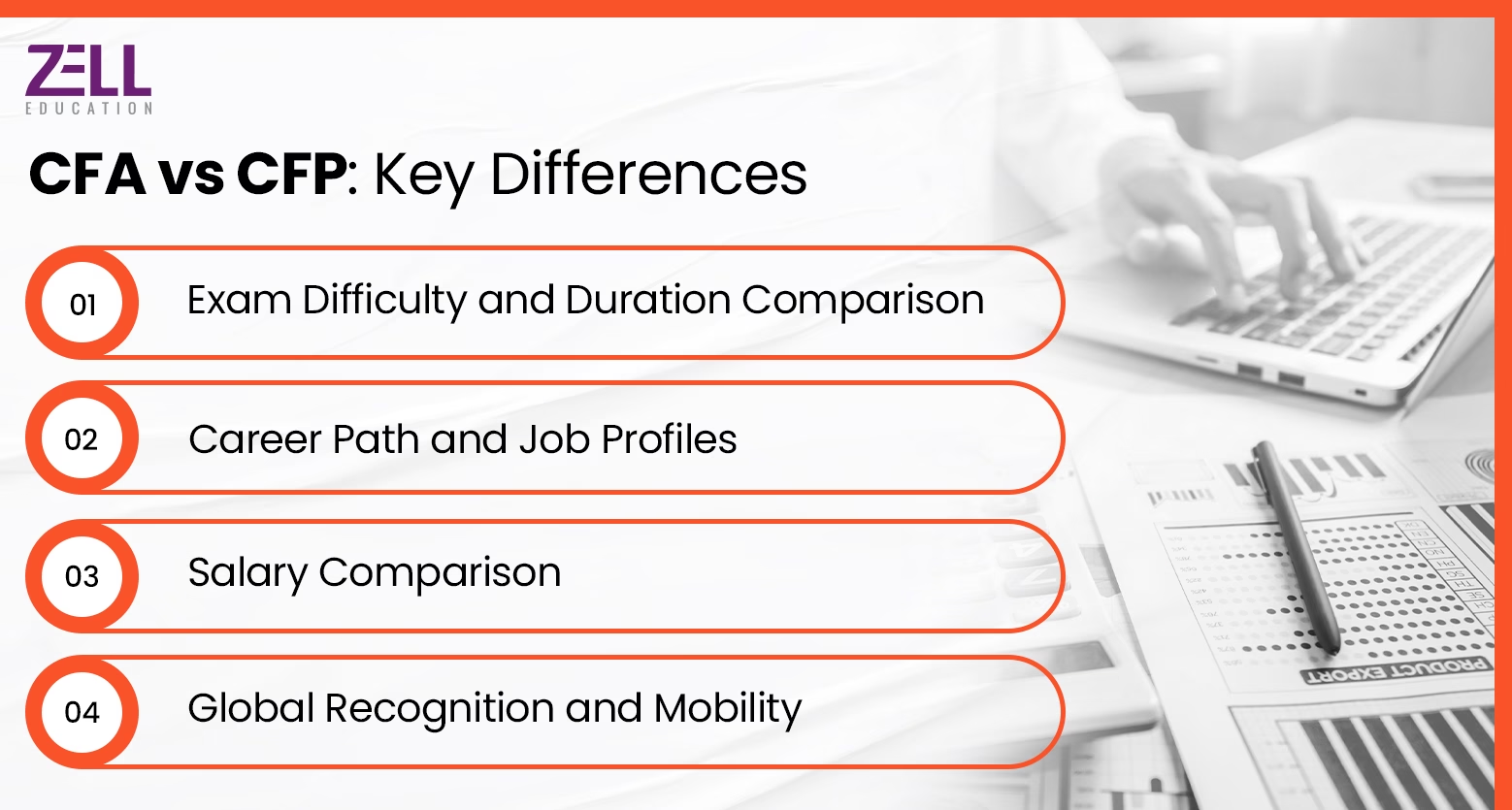
Focus Areas (Investment vs Financial Planning)
CFA educates students on the topics of analysis of investments, management of portfolios and corporate finance. CFP specialises in individual financial planning, retirement, insurance and wealth planning.
Exam Difficulty and Duration Comparison
- CFA also demands more studying time since it has three levels of examination which test quantitative-level skills.
- The CFP exam does not take a lot of time when it is taken since it examines necessary practical skills in managing personal finances.
Career Path and Job Profiles
CFA creates investment banking, asset management, research and corporate finance employment opportunities. The certification of CFP allows one to be employed in the financial advisory business, wealth management, and personalised consultancy of clients.
Salary Comparison
- The charterholders of CFA receive more salary at investment banking and financial services.
- The advisory roles of CFP professionals are paid competitive salaries that encompass the rich-net-worth clientele and performance bonuses.
Global Recognition and Mobility
- CFA certification is used to gain recognition of investment positions globally, and this increases the working capabilities of the professionals around the world.
- The CFP certification is very highly regarded in India, the US, and some other nations as a device in the advisory business of financial planning and wealth management.
How to Choose Between CFA and CFP?
Assessing Your Career Goals
What is CFA? The CFA course is the most appropriate for the candidates who want to work in investment banking, equity research, and portfolio management. The certification of CFP, on the other hand, is appealing to individuals who would like to be financial advisors, wealth managers and financial planners of individual clients.
Considering Your Interests and Strengths
- CFA is the most suitable option to apply to the candidates that have solid analytical skills and experience in finance.
- The CFP programmes enable such candidates who would want to become financial consultants to develop their advisory skills.
Industry Demand and Long-Term Growth
CFA has been in the advantageous position of maintaining market demand in corporate finance, investment banking, and management of assets. The fact that more people and their families have been becoming aware of the concept of personal finance has been contributing to the growth of popularity of the CFP certification.
ROI of Certification
The study time required to complete CFA is higher compared to other programmes because of the vast contents covered, although the payoffs of its income over a career are higher. The CFP curriculum has the advantage of both a brief completion programme and a good monetary advisory profession.
Tips for Preparing for CFA and CFP Exams
Study Plans and Resources
- The applicants of CFA are prescribed to adhere to the official CFA curriculum, mock examinations, practice questions, and the Internet study material.
- CFP students undergo organised financial advisor training coupled with simulations of practice and case-study materials.
Time Management and Exam Strategy
- Provide enough time for each domain or level.
- The practice tests should be done within the given time constraints to ensure that you develop confidence in the exams.
- The results of your mock tests should be your basis for the weak areas that you need to study.
Professional Guidance and Coaching Options
- Coaching programmes combined with mentorship alongside online forums provide the users with specialised support, which holds them responsible for their progress.
- Peer study groups enable students to have locations where they can gain resources to understand how CFA and CFP concepts apply in real-life circumstances.
Want to Pursue a CFA Accounting Career?
Talk to Our Expert Today
Conclusion
The issue of CFP vs CFA is to be determined by your career goals, ability, and interests. CFA fits well for persons engaged in investment banking, financial research, and corporate finance, whereas CFP fits well for the financial advisor engaged in wealth management and personal finance planning. In the decision-making process, it entails the knowledge of the examination procedure, qualification requirements, career opportunities, the CPF remuneration versus the CFA remuneration, and the global acceptance of the two titles. Both certifications are preparation and guidance towards a successful career in finance.
FAQs on CFA vs CFP
What is the distinction between CFA and CFP?
CFA certification is more investment management, equity research and corporate finance, whereas CFP certification is more concerned with personal financial planning, wealth management and advisory services.
Which is the more investment banking-friendly certification, CFA or CFP?
CFA certification is the best option to work in investment banking, portfolio management and asset management.
Is it possible to become a CFA and CFP?
Yes, it can, and you will need to organise your study timetable since the CFA certification requires much study time, and the CFP certification requires study time.
Compare CFA and CFP – How many years does it take?
To complete all three levels of the CFA programme, I have to have 3 or 5 years of work experience as well. Completion of the programme can be in 12 to 18 months depending on the study schedule and pace of the individual.

Current Role
Co-Founder & CEO at Zell Education
Education
- ACCA – Association of Chartered Certified Accountants, Finance (2011 – 2014)
- Bachelor of Commerce (BCom), Financial Markets from H.R. College Of Commerce & Economics (2010 – 2013)
Location
Mumbai, India
Expertise
ACCA Certified
Why Zell?
- • Largest Provider for Global F&A Courses
- • 4.6 Google Review Rating
- • 1000+ Global Placement Partners
- • Placement Opportunities at the Big 4
- • 100+ Global & Indian Rank Holders
- • 100+ Faculty Network
- • 10,000+ Students Placed
Speak to A Career Counselor
Zell's 10th Anniversary Offer - Avail a 10% Scholarship