
Investment banking is often associated with long hours, high stress, and intense workloads. Many considering a career in investment banking are concerned about the investment banking work schedule. The investment banking career path can seem overwhelming, especially with the notorious investment banking hours.
But how much of this is myth, and how much is reality?
This article looks at the reality of long working hours in investment banking, the effect on professionals, and the trade-offs between compensation, career growth, and personal life. A better understanding of investment banking work and why the hours are so long will put the aspiring candidate in a better position to prepare for the challenges that lie ahead.
Essential Insights into IB Working Hours and Career Demands
The investment banking industry is widely recognised for its fast-paced nature, high-stakes transactions, and notoriously long schedules that challenge professionals daily.
- IB Working Hours Structure: A typical day for an investment banker usually starts at nine in the morning and extends well into the late night.
- IB Working Hours Myth: While the media often highlights hundred-hour workweeks, most professionals average between sixty and eighty hours during standard operational periods.
- IB Working Hours Drivers: Bankers work long schedules to meet urgent client needs, satisfy tight deal deadlines, and outperform peers in a highly competitive market.
- IB Working Hours Health: Sustained long periods of work can lead to burnout, significant stress, and fatigue, making physical and mental wellness essential for survival.
- IB Working Hours Pay: Exceptional salaries and high bonuses serve as financial compensation for the sacrifice of personal time and the intense pressure of banking.
- IB Working Hours Balance: Setting clear boundaries and prioritising healthy habits like regular exercise can help professionals effectively manage the demanding investment banking work schedule.
What is the Structure of Investment Banking Workdays?
A day in the life of an investment banker is pretty fast and demanding. It usually starts around 9 AM, though the starting time varies, and more come in early if there is a critical deal going on. The work involves meetings, conference calls, financial modelling, research, and preparation for client presentations.
Evenings often extend beyond the standard hours, with work continuing well into the night, especially during peak periods like mergers or IPO preparations. While some evenings may finish at 9 or 10 PM, it is not unusual to work until midnight or later.
These investment banking hours may differ depending on the firm; however, for the most part, bankers have to work through the weekends owing to meeting certain deadlines or just addressing last-minute client needs, so it is unpredictable.
What is the Myth vs. Reality of the 100-Hour Workweek?
It would be regarded as a myth. Though long, the number of hours does vary from firm to firm. Yeah, bankers could manage to put in up to 100 hours when it was most busy, for certain periods in some banks.
Hence, for these top ones that include, but are not limited to, Goldman Sachs, JPMorgan, and Morgan Stanley, bankers do really have to put in 100-plus hours in some very hectic periods; they might average anything within 60-80 hours a week, with some heavy periods needing extras.
Investment banking hours may be above and beyond the norm of a single workweek, but they usually don’t reach 100 hours all the time.
The myth is often sensationalised in media portrayals, while the reality is such that bankers go through periods of varying work depending on the time of year, deal flow, and firm-specific demands.
What is the Impact of Long Hours on Bankers?
It is usually considered an emotionally and physically ruthless job, and these investment bank working hours have their own effects on every professional who is a part of the investment banking environment.
Long hours in investment banking can be extremely detrimental and lead to burnout. Working for extended lengths consistently leads to stress, fatigue, and poor mental health. Bankers often experience sleep deprivation due to tight schedules that barely leave time to rest and maintain a life outside of work. This is the constant pressure that has accounted for many professionals burning out and quitting the field after a few years of working.
Another effect of long hours is the stress on personal relationships. An inability to spend quality time with family and friends can be a serious downside of the job. Many investment bankers feel that personal life is sacrificed to work, leading to feelings of isolation or dissatisfaction. Indeed, the balance between work and personal life is so unbalanced in investment banking that some bankers develop anxiety or depression due to an inability to disconnect from work.
The long working hours also affected physical health. Sitting long, having food at the wrong times, and stress from big deals take a greater toll on the general health condition of an investment banker. Some firms have really worked on maintaining the atmosphere inside the firm to create a balance between office work and life; still, in reality, hours are very difficult to get along with.
Why Do Investment Bankers Work Such Long Hours?
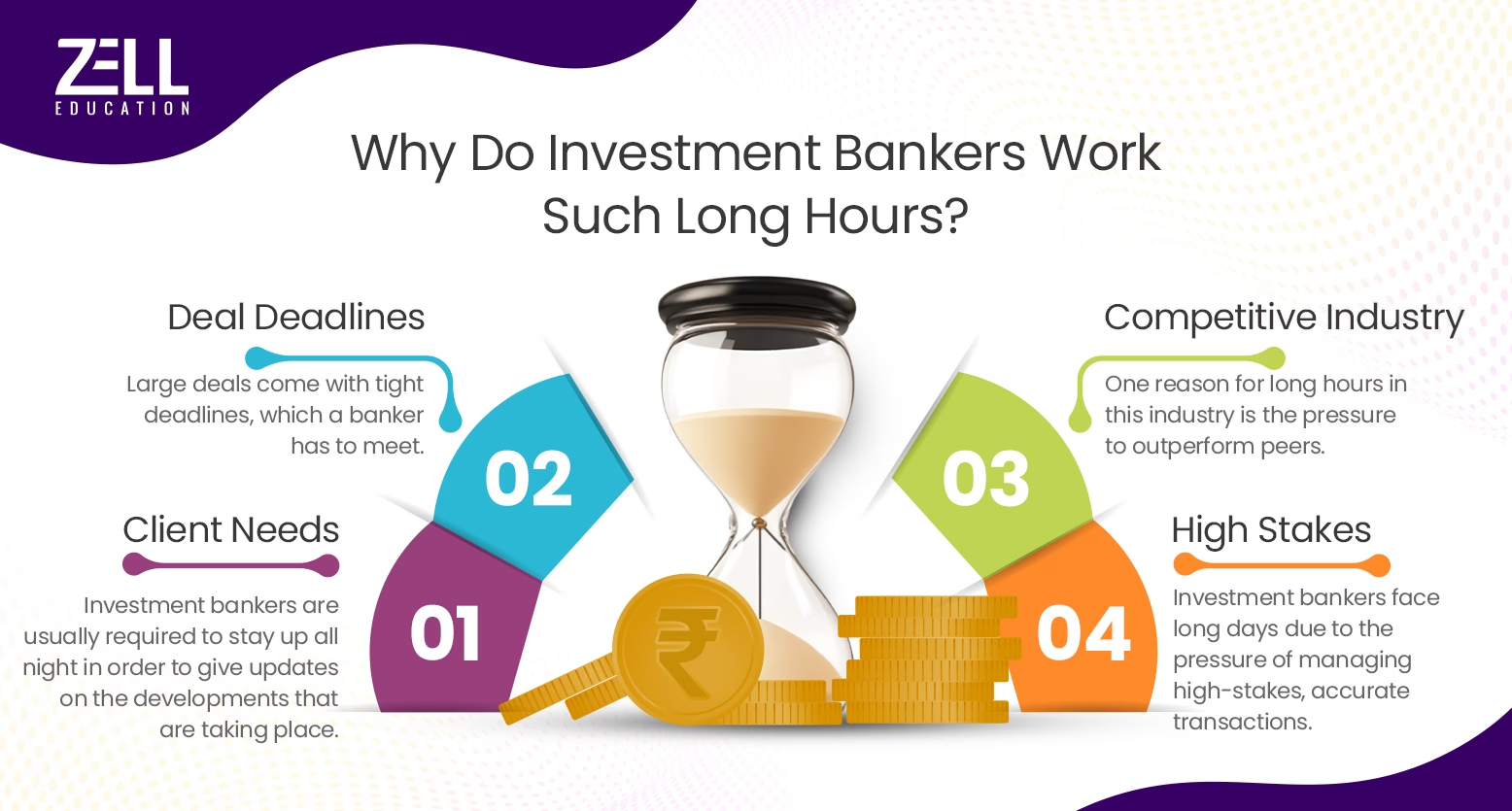
The reasons lie like investment banking work itself.
Client Needs:
The clients require speed and efficiency; hence, investment bankers are usually required to stay up all night in order to give updates on the developments that are taking place.
Deal Deadlines:
Large deals come with tight deadlines, which a banker has to meet. Hence, the hours at work are really long to keep up and finish on time.
Competitive Industry:
Investment banking is tremendously competitive. Probably one major reason for such long hours in this industry is that employees feel compelled to do more than others and outperform their peers.
High Stakes:
Investment bankers handle large transactions, and the pressure to make sure everything is accurate and goes well makes for long days.
These are all contributing factors for putting in long hours, but this is a demanding, rewarding career.
How Is AI Redefining the “Daily Grind” for Analysts?
Speed is still a priority, but the investment banking profession is gradually being impacted by technology in a big way. By the year 2025, more than 80% of the leading investment banks will have adopted AI-driven systems and workflows for carrying out the boring tasks that used to result in 100-hour weeks.
These changes represent:
- Replacing Humans with Machines in Data Gathering: The AI tools are able to give you a summary of 500-page-long regulatory documents and earnings call transcripts within a few seconds, activities that took junior analysts hours to perform via manual research.
- Creating & Pitch Books: The usage of LLMs (Large Language Models) is being practised for making initial drafts of pitch books and assembling materials, thus allowing the bankers to concentrate on more advanced conflicts, such as strategy, rather than just slide formatting.
- Gaining More: Financial modelling and data input will be made easier through the use of AI-enabled Excel add-ins, thereby totally eliminating the “drudgery” of the job.
It also indicates that the career of a banker remains very demanding, but at the same time, the priority is changing from physical work to complex analysis and client interaction at a very early stage in one’s career.
How Do Investment Banking Compensation and Career Growth Align with Long Hours?
Investment bankers are among the highest-paid professionals in the finance industry. This high remuneration often compensates for the investment banking hours, though it doesn’t negate the intense pressure of the job.
Salaries in investment banking are very role-dependent and even more so experience-dependent. The base salary for an entry-level analyst at a top investment bank can range from $100,000 to $150,000 per year, with the potential for up to 100% or higher bonuses. Moving along the investment banking career path, salaries rise accordingly, and vice presidents and managing directors are paid in millions of dollars each year, contingent upon performance and bonuses.
But let us not forget, all these monetary benefits come at a price. The professionals have long working hours in investment banking, which often comes at the cost of personal time, health, and relationships. To the candidates who are considering this field, it’s time to weigh the investment banker salary against the work-life balance and personal well-being that it will cost.
What are the Tips for Maintaining Work-Life Balance in Investment Banking?
Although investment banking occupations are a hectic activity, actions that will help alleviate them in maintaining a good personal life or well-being would be required.
- Set Boundaries: Set clear boundaries for work-life and communicate when you need time off.
- Keep Healthy: Regular exercise and sleep can balance stress and even enhance productivity despite long hours.
- Use Downtime Wisely: During quieter periods, take advantage of the time to recharge and reconnect with family.
- Delegate: Time and delegation are needed to maintain the balance of workload.
- Seek Support: Businesses these days take very good care of their employees. Approaching HR or a manager can help lessen the burden of stress.
With these strategies in place, it is possible to have a balance even with the hours of investment banking.
Conclusion
It is considered that the work environment of an investment bank involves very long hours, a high level of stress, and tremendous pressure. The hours of work and the reality of long workweeks involved in investment banking are some things a candidate should know when it is financially rewarding and offers career advancement opportunities through an investment banking certification.
Success lies in understanding the nature of the work, managing expectations, and maintaining a work-life balance. Notwithstanding the demanding hours in investment banking, appropriate strategies would see one navigate the intensity of the job while pursuing a fulfilling career.
FAQ on Investment Banking Working Hours
How many hours do investment bankers work in a typical week?
Analysts usually clock 60–80 hours weekly, but “live deals” can push this to 100. While gruelling, it’s a fast track to expertise.
What are the hours for investment banking in India specifically?
In India, expect 9–12-hour days frequently. The market is competitive, and client demands often dictate schedules.
Do investment bankers get weekends off to rest and recharge?
Rarely. While firms like Goldman Sachs have protected Saturdays, urgent deals often override them. You are essentially “on-call” 24/7, making true downtime a luxury for those in the junior ranks.
Is an investment banker a stressful job compared to other finance roles?
It is widely ranked as the most stressful job in finance. High stakes, tight deadlines, and sleep deprivation are standard.
Will investment banking be replaced by AI tools in the future?
No, but the “grunt work” will be. AI is currently automating data entry and research, potentially reducing the IB Working Hours spent on manual tasks.
Who earns more, a CA or investment banker in the Indian market?
While top CAs earn well, investment bankers generally have higher starting packages and significantly larger performance-based bonuses.
Why do investment bankers leave after 2 years of working?
Most leave due to burnout or to pivot into Private Equity. The intense hours are often viewed as “paying your dues” to unlock elite exit opportunities that offer better long-term balance.

Current Role
Co-Founder & CEO at Zell Education
Education
- ACCA – Association of Chartered Certified Accountants, Finance (2011 – 2014)
- Bachelor of Commerce (BCom), Financial Markets from H.R. College Of Commerce & Economics (2010 – 2013)
Location
Mumbai, India
Expertise
ACCA Certified
Why Zell?
- • Largest Provider for Global F&A Courses
- • 4.6 Google Review Rating
- • 1000+ Global Placement Partners
- • Placement Opportunities at the Big 4
- • 100+ Global & Indian Rank Holders
- • 100+ Faculty Network
- • 10,000+ Students Placed
Speak to A Career Counselor
Zell's 10th Anniversary Offer - Avail a 10% Scholarship