
This blog post compares self-finance course vs regular course, highlighting differences, benefits, costs, placements, and how to choose which course is best suited for a particular career path.
How Do You Choose the Right Course Type for Your Education?
Deciding between a self-financed course vs a regular course is one of the most critical academic choices that students in India have to make. Each type of course has certain distinctive benefits and drawbacks, as well as career perspectives.
Increasingly, the face of higher education is changing as more students consider self-finance courses vs regular courses in a quest to discover which course best suits them. It is imperative to understand that there is a distinct difference between the two course structures as far as pricing is concerned.
We will discuss what is distinctive about each type before showing a side-by-side comparison.
What Is a Self-Finance Course?
A self-financed course is one in which the entire education cost is to be paid by the student, and no funding is received from the government or a university grant.
In this type of course offering, colleges are able to handle costs such as infrastructure, personnel, and facilities through tuition costs. This financial system makes colleges more flexible in structuring a new curriculum that is relevant to industries.
Key Features of Self-Finance Courses
- Higher fees compared to regular courses due to no government funding.
- Flexible admissions and wider seat availability.
- Upgraded infrastructure and tech-driven teaching.
- Curriculum is often aligned with market needs and industry standards.
- Focused on practical exposure and employability.
The concept of the self-finance course has moved on from what it meant in terms of funding, and this is a new form of education that is skills-focused in a way that equips students to succeed in the international job market.
Examples of such programmes are BBA (Self Finance) and MBA (Self Finance), as well as globally accepted certifications of CPA & ACCA through Zell Education.
Therefore, when individuals enquire about what self-finance course meaning, the response is that they are flexible, future-focused, and self-funded academic programmes designed in accordance with today’s competitive job market.
Curious About Self-Finance Course vs Regular Course?
What Is a Regular Course?
A regular course is also called a government-aided course. This type of course is either partly or fully sponsored by the government.
These programmes are usually offered by state universities or government colleges. They are found to be more affordable.
Characteristics of Regular Courses
- Lower fees due to government subsidies.
- Limited seats and highly competitive admission processes.
- Fixed curriculum approved by universities.
- Faculty appointments are based on university or government policies.
- Focused more on theoretical knowledge than skill-based training.
Though various programmes help in making education affordable, these often fail to keep pace with the latest trends in various industries, thereby making it a reason why many students choose a self-finance course vs regular course.
What Are the Key Differences Between Self-Finance and Regular Courses?
We will examine the difference between a regular vs. self-financed course to help us choose what is best suited for us.
Admission Process & Fees
Regular Courses:
- Admission is based on merit, entrance exams, or government quotas.
- Seats are limited, so cut-offs are high.
- Fees are comparatively lower, thanks to subsidies.
Self-Finance Courses:
- Offer flexible or direct admission options.
- Fees are higher since students cover full costs.
- Greater seat availability for diverse applicants.
In affordability, a conventional course is the best choice. Yet if one wants much flexibility in the timing of admission, a self-financing course is much more convenient.
Curriculum & Infrastructure
Regular Courses:
- May follow a previous year’s syllabus that is outdated in terms of industry developments.
- Upgrading the infrastructure needs funding that is sourced from the government.
Self-Finance Courses:
- Curricula are often revamped to keep pace with changing industry standards.
- Colleges make a direct investment in smart classrooms, software, and labs.
- Collaboration with international institutions (like Zell Education) allows one to obtain international certifications such as CPA and ACCA, among others.
In the comparison between self-finance course vs regular course, in terms of curriculum innovation and readiness to use technology, self-financed schools are ahead.
Placements & Career Prospects
Regular Courses:
- Placement opportunities depend on college’s reputation.
- Limited exposure to private-sector networks.
Self-Finance Courses:
- Designed to improve employability through skill-based modules.
- Include internships, industry tie-ups, and placement assistance.
- Better suited for global careers, especially in finance, IT, and business.
Source for Information on Difference Between Self-Finance and Regular Courses – Careers360
If career advancement in a short span of time is what one aspires to, then self-financing courses are more job-oriented than conventional ones.
What Are the Pros and Cons of Self-Finance Courses?
It is important to conduct a comparative analysis between the self-financed course and the normal course since there are pros as well as cons of both.
Advantages of Self-Finance Courses
- Flexible Admissions: No need to rely on government quotas/cutoffs.
- Modern Curriculum: Latest curriculum designs that match international industry standards.
- Improved Infrastructure: Institutions themselves invest in labs, libraries, and learning aids.
- Career-Centric: It emphasises skills that ensure greater employability, internships and certifications.
- International Exposure: Tie-ups with international education service providers.
Disadvantages of Self-Finance Courses
- Higher Fees: Can be expensive for some students.
- Varying Quality: Quality may differ between institutions.
- Less Government Oversight: Some courses might lack standardisation.
Even if self-financed colleges provide better career readiness, the price is higher; therefore, these are best suited for those who value learning over costs.
Which Course Type Should You Choose?
Your choice between a self-finance course vs regular course needs to be driven by your intentions, preferences & financial planning. Ask yourself the following:
- What’s my career goal?
- If you want government or academic roles, regular courses work.
- For private or global jobs, self-finance courses are better aligned.
- Do I need flexibility in admissions?
- If yes, self-financing programs allow easier access.
- How important is modern infrastructure and exposure?
- If you want real-world learning and advanced labs, choose self-finance.
- What’s my budget?
- Regular courses are budget-friendly but limited in opportunities.
Real-Life Example
A B.Com student looking to pursue a worldwide accountancy-related career may not readily be able to find relevant studies in a regular B.Com course. Nonetheless, in this particular choice of a self-financed course that is combined with CPA/ACCA through Zell Education, having international experience is well worth paying the extra cost for.
For those who place a high value on quality, relevance, and importance in one’s career, a self-financing course of this kind is often a much more valuable investment than taking a formal university course.
How to Evaluate Colleges Offering Self-Finance and Regular Courses
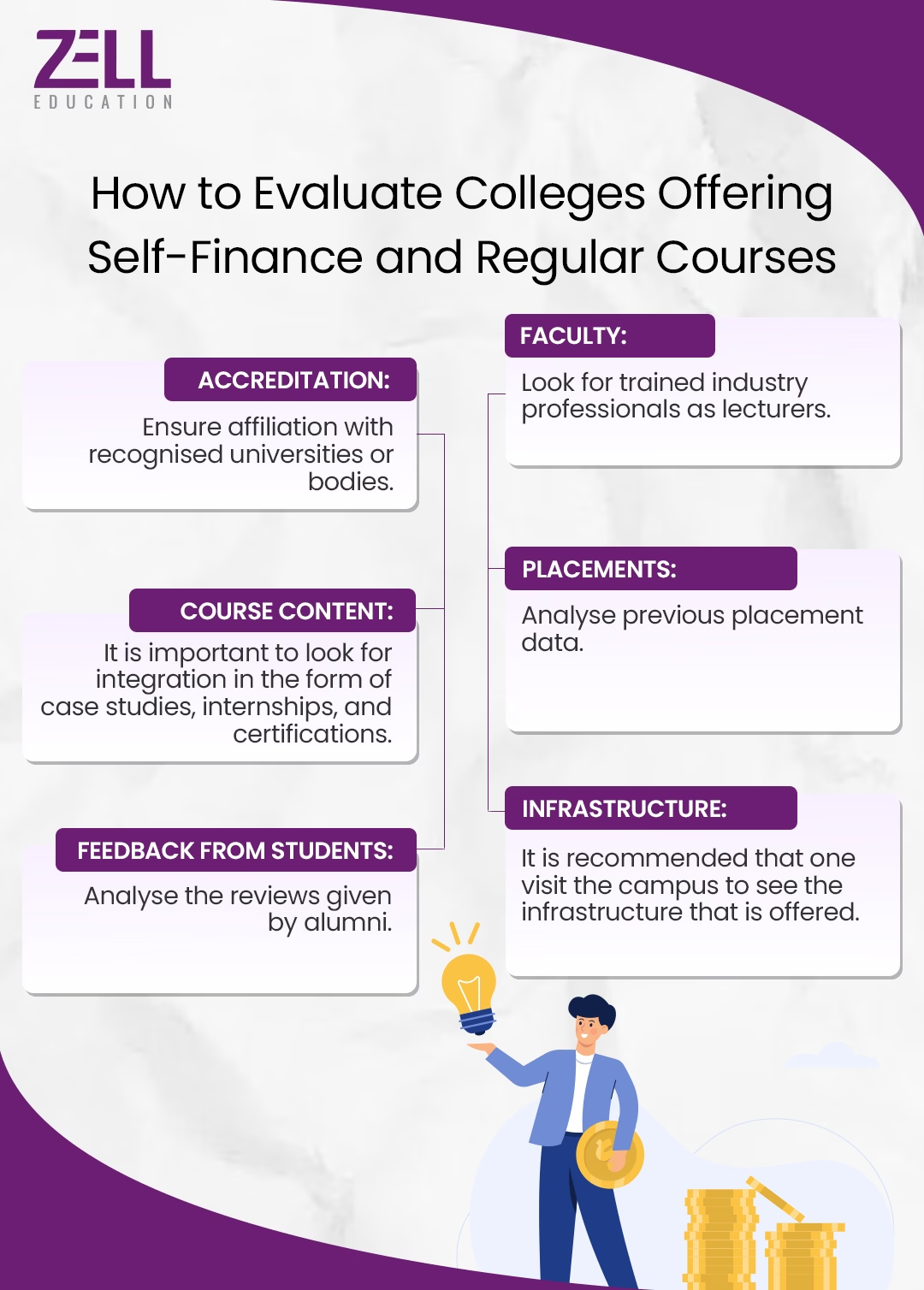
Self-finance course vs regular course comparison considerations require a thorough analysis of institutions.
Important Evaluation Criteria
- Accreditation: Ensure affiliation with recognised universities or bodies.
- Faculty: Look for trained industry professionals as lecturers.
- Placements: Analyse previous placement data.
- Course Content: It is important to look for integration in the form of case studies, internships, and certifications.
- Infrastructure: It is recommended that one visit the campus to see the infrastructure that is offered. Online tours can also
- Feedback from Students: Analyse the reviews given by alumni.
A great example of this is Zell Education, which is doing a phenomenal job in providing globally relevant, self-sustaining programmes that help in acquiring international certifications as well as successful careers. It is important to conduct extensive research before joining any place of education.
How Can Self-Finance Courses Impact Future Careers?
Investing in a self-finance course is investing in future career growth. Since these programs are built around industry requirements, students graduate with in-demand skills and global exposure.
Career Advantages of Self-Finance Programs:
- Direct access to corporate internships.
- Skill-based learning tailored to job markets.
- International collaboration opportunities.
- Exposure to advanced tools and technologies.
Conventional education is often expected to focus on theory, which results in a delay in acquiring skills that lead to employment until a further course of professional training is acquired. In this way, when considering the analysis of regular vs self finance education, the long-term perspective of education often supports a course of education that is self-financed if skills-based.
Want to Pursue CPA Accounting Career?
Book Your Free Counselling Session Today
Conclusion: How to Make an Informed Decision
In conclusion, both the self-financing option and the regular course offer benefits — what matters is what you consider important.
As a student looking for affordability as well as depth in areas of study, a conventional course is the best option. However, if one is looking towards equipping themselves in terms of ready-made skills in the corporate sector and advanced learning arenas, as well as international experience, the array of self-financing schemes is a great
The self finance course meaning today, is synonymous with opportunity, a gateway to hands-on learning, global credentials, and career growth.
At Zell Education, self-financing courses are designed to equip students with international qualifications that are globally accepted. No matter what course you choose in accounting, finance, or business management, a well-chosen self-financing course will help you succeed in a rapidly changing job market.
Between Self-Finance Course vs Regular Course, there’s no one-size-fits-all answer — but for most modern learners seeking employability, flexibility, and skill-based learning, self-financing courses come out on top.
FAQs on Self-Finance Course vs Regular Course
Which is better: self-finance or regular course?
It is dependent on what one wants to achieve. Self-financing courses provide exposure and flexibility, as well as worldwide acceptance, as opposed to conventional courses that are less expensive.
Are self-finance degrees equally valid?
Yes. Degrees that are self-financed are offered by reputable universities, making them valid in the job field as well as in further studies, international programmes, etc.
Do self-finance students get placement opportunities?
Definitely. This is where institutions such as Zell Education come in, offering great placement services, internships, and industry collaboration to increase one’s chances.
Why are self-finance courses more expensive?
These programmes are not government-funded. They charge higher tuition to cover the cost of infrastructural development and new curriculum, as well as the industries’ recruitment of new faculty.

Current Role
Co-Founder & CEO at Zell Education
Education
- ACCA – Association of Chartered Certified Accountants, Finance (2011 – 2014)
- Bachelor of Commerce (BCom), Financial Markets from H.R. College Of Commerce & Economics (2010 – 2013)
Location
Mumbai, India
Expertise
ACCA Certified
Why Zell?
- • Largest Provider for Global F&A Courses
- • 4.6 Google Review Rating
- • 1000+ Global Placement Partners
- • Placement Opportunities at the Big 4
- • 100+ Global & Indian Rank Holders
- • 100+ Faculty Network
- • 10,000+ Students Placed
Speak to A Career Counselor
Zell's 10th Anniversary Offer - Avail a 10% Scholarship