
As you begin your CPA journey in the year 2026, it is very important that you understand the entire process of acquiring CPA license. This CPA guide breaks down the education, exam, experience, and ethics requirements, along with state-specific rules, to help you navigate the path efficiently.
What is a CPA license?
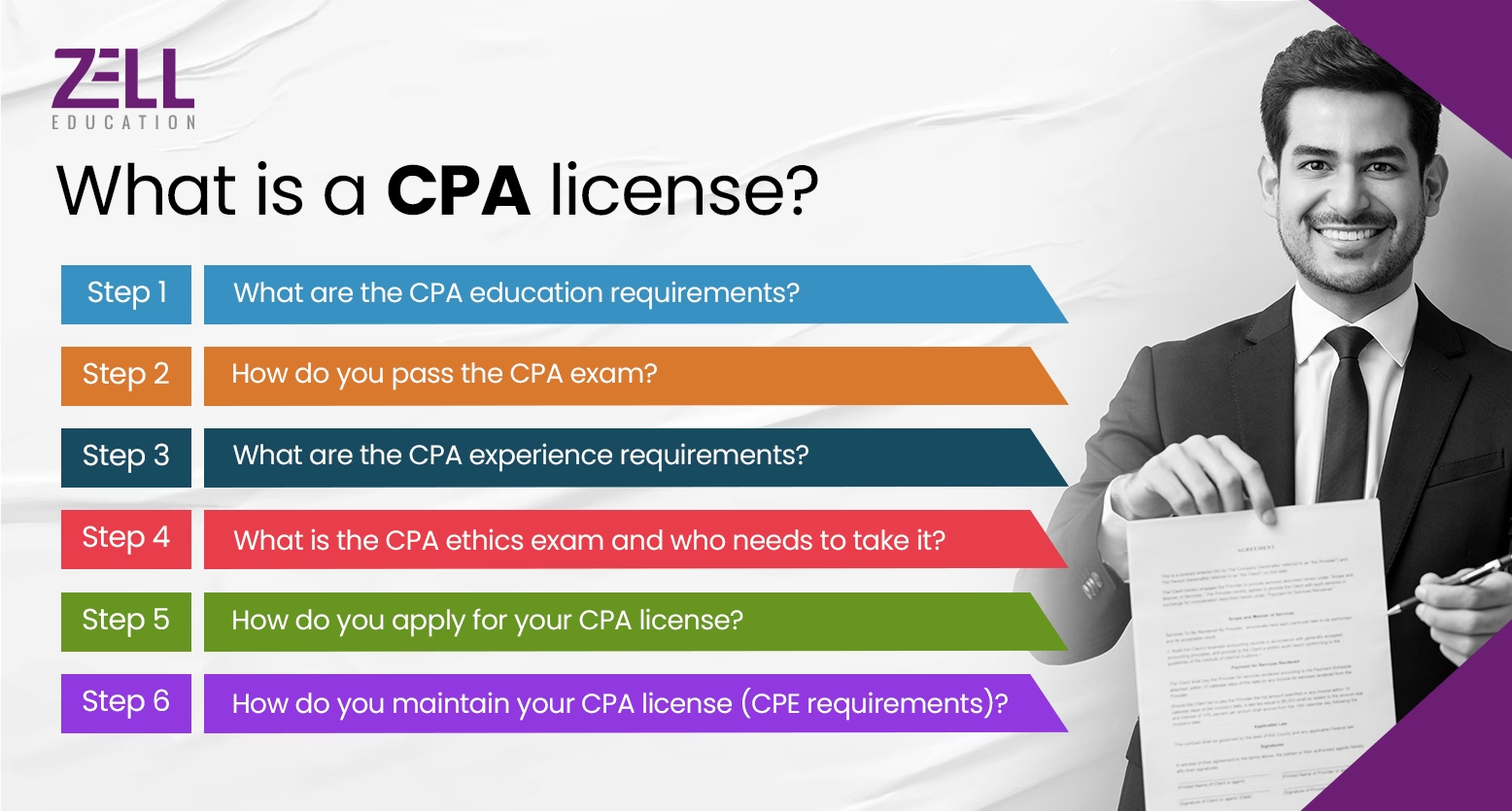
The CPA license is the recognised credential that empowers accountants or bookkeepers to offer public accounting services. Unlike the CPA exam or the CPA certificate, becoming a CPA license holder provides them with the unique right and permission to sign an audit report, provide tax services, or make financial representations.
The CPA license not only displays an accountant’s expertise, but it also shows they take ethics seriously, which is indispensable if they plan on progressing through an organisation. The next step on the CPA career path is acquiring a CPA license.
The CPA license opens the door for you to senior positions in finance, accounting, or as a consultant. The whole programme is designed in a manner that ensures a CPA license holder meets all the criteria.
Step 1: What are the CPA education requirements?
Before attempting the CPA exam, candidates must meet specific educational standards. Most states require:
- A bachelor’s degree in accounting or a related field
- Completion of 150 credit hours, which often includes additional coursework beyond a standard 4-year degree
- Courses in Accounting, Auditing, Taxation, Business Law
Source of Information for Requirements to obtain a CPA License – AICPA & CIMA
All the individuals vying for this position understand accounting as a result of these. This requirement is significant in ensuring that all aspiring individuals meet the CPA requirement in education qualifications.
Tip: Often, a master’s degree or additional coursework will meet the requirement of 150 credit hours, which will help increase the skills of the accountant going into the CPA exam.
Step 2: How do you pass the CPA exam?
The CPA exam encompasses four difficult modules, including:
- Auditing and Attestation (AUD)
- Business Environment and Concepts (BEC)
- Financial Accounting and Reporting (FAR)
- Regulation (REG)
Each section assesses knowledge, application skills, and professional judgement. The common preparatory tools used by examinees on the CPA exam include review courses, practice exams, and personalised schedules of study based on their strengths and weaknesses. The completion of all four parts of the exam is an important step in your CPA exam experience.
Step 3: What are the CPA experience requirements?
For a CPA license, work experience needs to be completed. CPA requirements include that most states demand:
- 1–2 years of professional accounting experience
- Supervision by a licensed CPA
- Experience in areas such as auditing, taxation, financial reporting, and consulting
This allows the candidate to apply their knowledge from school in a real-world environment. Organising this experience effectively is an important step in completing the CPA requirement.
Step 4: What is the CPA ethics exam and who needs to take it?
The CPA ethics exam tests your knowledge of ethics and your responsibilities as an accountant, as well as your awareness of regulatory issues. The exam is a CPA requirement in most states in order to become a certified public accountant.
Key points:
- Emphasises professional ethics and decision-making
- May be an online or state-specific exam
- Requirements apart from CPA exam performance and work experience
Passing the ethics exam demonstrates your readiness to handle complex ethical situations, a cornerstone of your CPA journey.
Step 5: How do you apply for your CPA license?
After completing your education, CPA exam, work experience, or ethics, you can apply for a CPA license. The licensing will be done by the state board of accountancy. The steps will include:
- Submitting official transcripts and exam results
- Verifying work experience
- Completing state-specific application forms and fees
However, after approval, you will receive your official licence, which will give you the right to practise public accounting.
Step 6: How do you maintain your CPA license (CPE requirements)?
Continuing the CPA can entail various levels of Continuing Professional Education (CPE). The following points summarise key information concerning becoming a CPA.
- Completion of 40-80 hours of CPE every year, according to the state.
- Accounting courses on updates, ethics, and industry practices
- Continuing Professional Education reporting requirement by state board.
The perpetually learning element ensures that all CPAs remain competitive and professional and continue to remain reputable through their licence.
Got Questions Regarding Step-by-Step Guide to CPA License Requirements in 2026?
Click Here for a Free Counselling Session
What are the CPA license requirements by state?
The specific CPA requirement can differ by state within the US, including educational, experience, or ethics exams. There could be states which can be considered easy or tough regarding experience or the ethics exam.
- California & New York: Require 150 credit hours, 1 year of experience, and ethics exam
- Texas & Florida: 150 credit hours, 1–2 years of experience, and CPE requirements
- Simpler states: Some have lower experience or educational credit requirements
It is always important for the candidate to ensure that they comply with the state board’s requirement on the CPA requirement.
Want to Pursue CPA Accounting Career?
Book Your Free Counselling Session Today
Conclusion: How to start your CPA journey in 2026
Starting your CPA journey in 2026 requires careful planning and dedication. Follow these steps:
- Meet education requirements (150 credit hours recommended)
- Pass all sections of the CPA certification exam
- Complete supervised work experience
- Pass the ethics exam
- Apply for your CPA license
- Maintain your license through CPE
Through an awareness of this information, individuals hoping to become accountants can efficiently make their way into becoming certified public accountants. Hence, there will be lasting professional development and integrity for the accountant.
FAQs on CPA License Requirements
What are the main requirements to get a CPA license in 2026?
You still have to finish your education (150 credit hours), then take the CPA exam, gain experience, and then take the ethics exam.
How many years of experience are needed for a CPA license?
Most states require 1–2 years of professional accounting experience under a licensed CPA.
Do I need 150 credit hours to become a CPA?
Yes, most states follow the requirement of 150 credit hours, which can come from the completion of a bachelor’s degree or a master’s degree.
Which states have the easiest CPA license requirements?
The states with less experience or more flexible exam requirements could make it an easier state. Requires research. Check your state board.
What is the CPA ethics exam, and who needs to take it?
It tests your knowledge of professional ethics and is a requirement of all states’ CPA examinees.

Current Role
Co-Founder & CEO at Zell Education
Education
- ACCA – Association of Chartered Certified Accountants, Finance (2011 – 2014)
- Bachelor of Commerce (BCom), Financial Markets from H.R. College Of Commerce & Economics (2010 – 2013)
Location
Mumbai, India
Expertise
ACCA Certified
Why Zell?
- • Largest Provider for Global F&A Courses
- • 4.6 Google Review Rating
- • 1000+ Students placed Annually
- • 500+ Active Hiring Partners
- • Placement Opportunities at the Big 4
- • 100+ Global & Indian Rank Holders
- • 100+ Faculty Network
Speak to A Career Counselor
Zell's 10th Anniversary Offer - Avail a 10% Scholarship