
Getting into investment banking at the age of 30 may sound difficult, but it is totally possible with the right preparation, commitment, and approach. At 30, you have valuable experience, maturity, and a network that can really give you an upper hand.
Why People Consider Investment Banking at 30
Many professionals wonder about getting into investment banking at 30. There is a misbelief that investment banking is only for young graduates in their early twenties. This is not true because at the age of 30, you bring in a lot of experience, maturity, and a professional network that can help you succeed. With proper planning, dedication, and strategy, getting into investment banking at 30 is achievable.
Understanding the Investment Banking Career Path
Before we go any further, let us understand what is investment banking. It is a branch of finance that helps organisations in raising capital, advising on mergers and acquisitions, and providing strategic financial assistance. Investment bankers examine data, create financial reports, and work on transactions that demand precision and strategic thinking.
Most careers begin with analysts. The average age of investment banking analyst is typically between 22 and 25. Associates are slightly older, with the investment banking associate age often falling between 26 and 28. Even though these are common ages, entering at 30 is possible with the right approach.
Typical Entry Routes Into Investment Banking
If you are getting into investment banking at 30, there are several entry routes:
- Pursuing an MBA from a reputed business school for technical knowledge and networking.
- Lateral entry from consulting, corporate finance, private equity, or treasury roles.
- Completing investment banking courses to gain technical skills if you have a non-finance background.
- Applying to boutique investment banks or smaller firms that value experience over youth.
For example, a 30-year-old professional with consulting experience in financial modelling can enter as an associate in a boutique investment bank and progress quickly.
Key Skills and Qualifications Required
Certain skills are important to succeed, while investment banking job requirements typically include:
- Strong analytical and quantitative skills
- Financial modelling and valuation expertise
- Ability to interpret financial statements
- Excellent communication and presentation skills
- Problem-solving under pressure
- Ability to work long hours and manage complex projects
Completing investment banking courses can help develop these skills and make your application more competitive. Many programmes include case studies, simulations, and real-world examples. Meeting the investment banking job requirements is essential for anyone aiming for entry at 30.
Got Questions Regarding Getting Into Investment Banking at 30?
Click Here for a Free Counselling Session
Challenges of Entering Investment Banking at 30
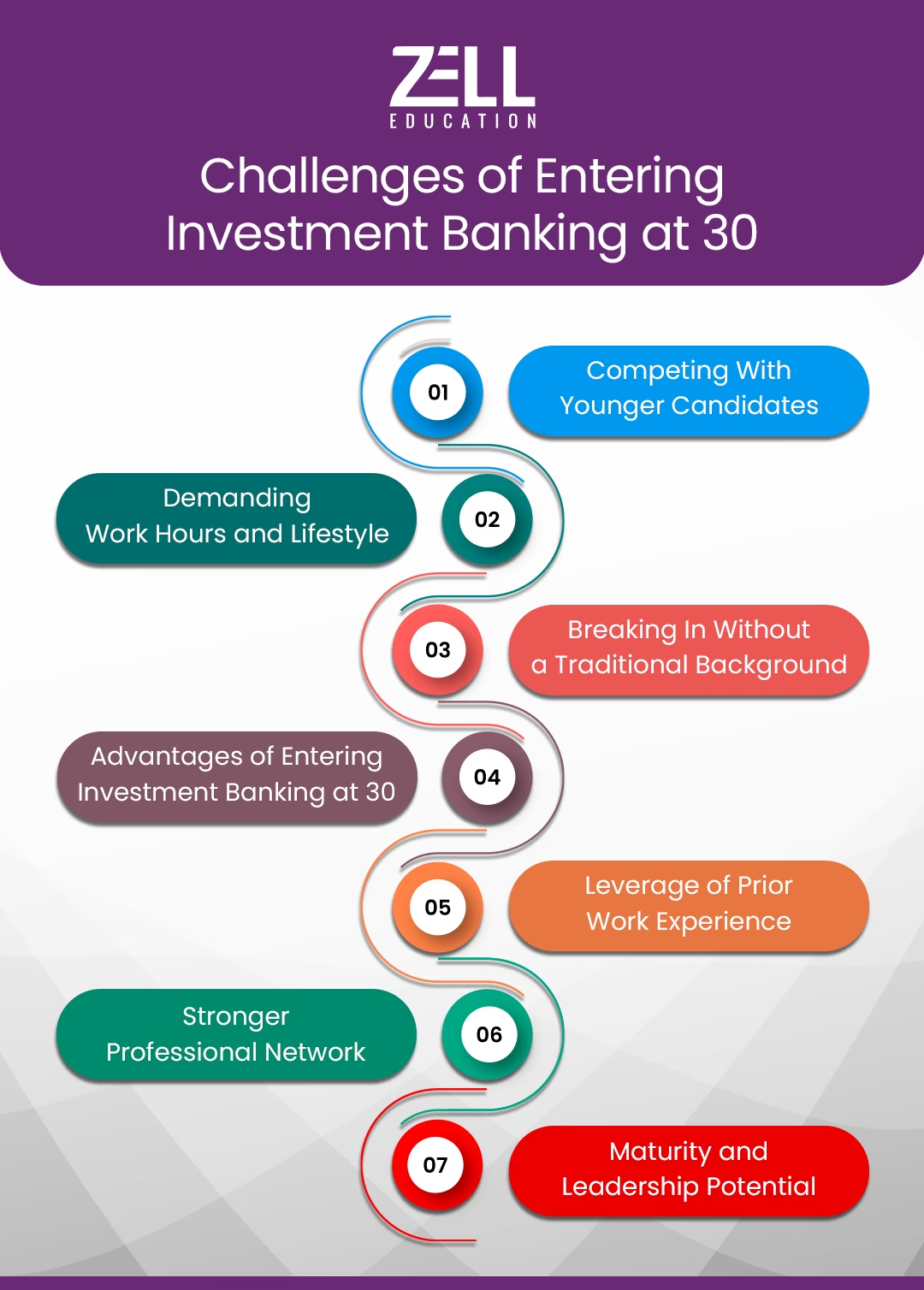
Starting at 30 comes with unique challenges, but they can be overcome.
Competing With Younger Candidates
Most people that look for entry-level jobs are recent college graduates who are willing to take lower pay. You need to show how your experience and maturity help you make better decisions and handle your clients better.
Demanding Work Hours and Lifestyle
Investment banking is known for long workdays, tight deadlines, and pressurising projects. Balancing work and personal life at 30 can be difficult. Late nights, early mornings, and frequent travel are common.
Breaking In Without a Traditional Background
If you do not have a prior finance background, then entering is more difficult. Recruiters often prefer candidates with an MBA or completion of investment banking courses. Bring up skills that can be used in different situations, like leadership, client management, and project completion. Knowing what an investment banking job requires can help you figure out how your past skills apply.
Advantages of Entering Investment Banking at 30
While there are challenges, starting at 30 also brings advantages.
Leverage of Prior Work Experience
You probably have years of experience by the time you’re 30. If you know about operations, strategy, and management, you have an advantage over younger candidates. If you have worked in investment banking before, you may be able to start as an associate instead of an analyst. This is especially true if you are younger than most entry-level associates.
Stronger Professional Network
Networking is crucial in investment banking. At 30, you have a good network from previous roles, alumni, and mentors. These connections can help you secure interviews, referrals, and insights that younger candidates may not access.
Maturity and Leadership Potential
Maturity and professional judgement are truly valued. By 30, you have likely handled complex projects, managed teams, and made strategic decisions. These qualities help in client interactions and internal leadership.
Pathways to Investment Banking at 30
Several strategies can help you successfully enter investment banking.
MBA as a Gateway to Investment Banking Roles
An MBA is one of the most common pathways. It provides credibility, technical knowledge, and access to campus placements. Many professionals use an MBA to transition from consulting, corporate finance, or any other field.
MBA programmes also offer internships, live projects, and case competitions, which are valuable to recruiters. They can make your application stronger than younger candidates with little work experience. Bearing in mind the average age of an investment banking analyst can help you plan the timing of your MBA effectively.
Lateral Entry Through Finance or Consulting Experience
Another way is to use lateral entry. As an associate, a person can work in corporate finance, consulting, private equity, or accounting. Firms value prior experience and maturity, which justifies entry at 30. Bearing in mind the investment banking associate age trends can help you position yourself strategically.
Networking and Industry Connections
Networking is important. Attend conferences, join professional communities, engage with alumni, and seek mentorship. A lot of jobs are filled through recommendations instead of official hiring. A strong network can compensate for starting at 30. Understanding investment banking job requirements ensures that your networking targets the right roles.
Career Outlook and Growth Potential
Getting into investment banking at 30 doesn’t stop you from growing in the long term.
Roles You Can Target at the Age of 30 or More
Depending on your experience and skills, you can target roles such as:
- Investment banking associate
- Corporate finance manager
- Private equity associate
- Financial consultant for mergers and acquisitions
- Boutique investment banking advisor
Source for various Job Roles in Investment Banking – Indeed/Career Advice
Most investment banking associates are in their mid to late twenties, but you can start at 30 and get promoted faster if you have a lot of experience. Knowing the average age of an investment banking analyst can help you figure out where you fit in the chain of command.
Long-Term Career Progression
With dedication, career progression can be rapid. You can move to vice president, director, or managing director roles. Your maturity, leadership, and prior experience make you effective in client management and team leadership. Meeting investment banking job requirements will help you succeed in promotions.
Practical Tips for Breaking In at 30
Here are actionable strategies:
- Complete investment banking courses to gain technical expertise.
- Leverage prior work experience to demonstrate transferable skills.
- Use your business network to find people to help you and get referrals.
- Target lateral entry roles where prior experience is valued.
- Prepare for long hours and high-pressure environments.
- Customise your resume and interviews to highlight your value at 30.
For example, a consultant transitioning into investment banking can highlight experience with strategy advice, financial modelling, and client presentations. Understanding investment banking job requirements will enable you to demonstrate the appropriate talents.
Want to Pursue Investment Banking Career?
To Book Your Free Counselling Session
Conclusion: Is 30 Too Late for Investment Banking?
No, 30 is not too late. While challenges exist, experience, maturity, and networking give you a competitive edge. Completing investment banking courses, pursuing an MBA if necessary, and leveraging prior experience make getting into investment banking at 30 achievable.
Age 30 can even be ideal for entering as an associate because your skills and experience are valued more than your age. Many professionals have transitioned successfully, which proves that preparation matters way more than your age. Bearing in mind the average age of investment banking analysts and investment banking associate age trends will help you plan your journey strategically.
FAQs on Getting Into Investment Banking at 30
Is 30 too old to start a career in investment banking?
No, 30 is not too old if you use your skills and knowledge well.
Can I get into investment banking without an MBA at 30?
Yes, if you have the right skills and maybe complete some investment banking courses.
What roles are suitable for career changers entering investment banking?
Roles like associate, corporate finance manager, or private equity associate are suitable.
How can prior work experience help in investment banking at 30?
It gives you leadership and strategic insight, and allows entry at a higher level, meeting investment banking job requirements.

Current Role
Co-Founder & CEO at Zell Education
Education
- ACCA – Association of Chartered Certified Accountants, Finance (2011 – 2014)
- Bachelor of Commerce (BCom), Financial Markets from H.R. College Of Commerce & Economics (2010 – 2013)
Location
Mumbai, India
Expertise
ACCA Certified
Why Zell?
- • Largest Provider for Global F&A Courses
- • 4.6 Google Review Rating
- • 1000+ Global Placement Partners
- • Placement Opportunities at the Big 4
- • 100+ Global & Indian Rank Holders
- • 100+ Faculty Network
- • 10,000+ Students Placed
Speak to A Career Counselor
Zell's 10th Anniversary Offer - Avail a 10% Scholarship